The Biological Reality: Resilience and Truth in the Age of Ideology
Navigating the Lumpy Nature of Species
When we look at the natural world, we don't see a blurred spectrum of organisms. We see distinct, "lumpy" categories. This discreteness is the core of Speciation, a problem that even Charles Darwin struggled to solve in his landmark work. While Darwin explained how adaptations arise through natural selection, he offered little insight into why biological life organizes itself into separate, non-interbreeding units rather than a continuous slide from one form to another. Understanding this lumpiness requires looking at reproductive isolating barriers—the mechanisms that keep gene pools from mixing. These can be physical, such as geographical distance, or biological, such as temporal isolation where plants flower at different times.
From a psychological perspective, this biological reality reflects a fundamental truth about growth: clarity often comes from boundaries. Just as species require reproductive isolation to maintain their unique evolutionary path, our personal development requires us to identify the discrete values and truths that define who we are. When we understand the mechanisms that create and maintain these boundaries in nature, we gain a deeper appreciation for the structured complexity of life. It reminds us that resilience isn't just about surviving; it's about maintaining the integrity of our "package" even as we adapt to changing environments. The transition from a continuous evolutionary process to a discontinuous biological reality is one of nature's most profound achievements, echoing the human journey from messy potential to defined purpose.
The Erosion of Scientific Integrity by Ideology
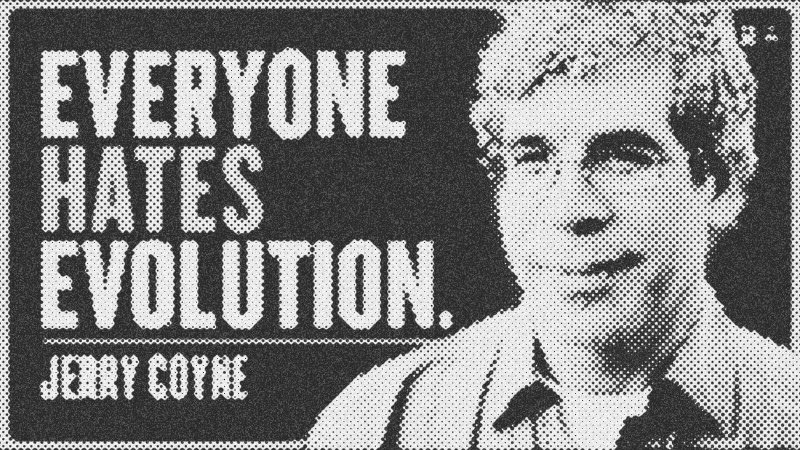
There is a troubling trend currently impacting academia and public discourse: the prioritisation of political sensibilities over empirical evidence. Jerry Coyne identifies several areas where biological facts have become "hot potatoes" due to ideological pressure. These include the reality of biological sex as a binary, the genetic basis of human behavior, and the existence of biological differences between human populations. This erosion of science is driven by what can be termed the reverse naturalistic fallacy—the insistence that nature must conform to how we want the world to be. When ideology dictates what is allowed to be true, science ceases to be an objective search for reality and becomes a tool for social engineering.
In our personal lives, we often face a similar internal struggle. We may want the world to work in a certain way to avoid discomfort or to support our existing beliefs. However, growth requires the courage to face the world as it is, not as we wish it to be. When we ignore biological realities, such as the limits of human malleability or the inherent differences in our temperaments, we set ourselves up for frustration. True resilience is built on the foundation of truth. If we cannot acknowledge the biological constraints we operate within, we cannot effectively navigate them. We must learn to distinguish between the compassion we feel for others and the factual reality of the human condition. One does not have to cancel out the other; we can be both empathetic and grounded in truth.
Challenging the Blank Slate and Behavioral Genetics
The concept of the "blank slate"—the idea that humans are infinitely malleable and that all behavior is a result of socialization—is a comforting but scientifically inaccurate myth. Behavioral Genetics consistently shows that almost every human trait has a significant genetic component, often around 50%. This includes everything from our propensity for risk-taking to our likelihood of developing certain habits. Denying these genetic influences isn't just a scientific error; it's a psychological burden. It places the entire weight of personal success or failure on environment and willpower, ignoring the internal hardware we were born with.
Embracing our genetic predispositions is an act of self-awareness. It allows us to stop fighting against our nature and start working with it. If you know you are genetically inclined toward high sensation seeking, you can choose to satisfy that drive through productive avenues like entrepreneurship rather than destructive ones. This isn't about biological determinism; it's about understanding the deck of cards you've been dealt so you can play your hand more effectively. When we accept that our genes provide a framework for our lives, we can focus our energy on the areas where we truly have the power to change. This shift from total malleability to strategic adaptation is where real personal transformation begins.
The Paradox of Modern Survival and Gene Erosion
A fascinating, albeit controversial, concept is the disgenic theory of gene erosion, often associated with John Tooby. The premise is that modern technology and medicine have removed the natural selection pressures that once filtered out deleterious mutations. Ancestrally, poor eyesight or a weakened immune system might have prevented an individual from passing on their genes. Today, glasses, inhalers, and advanced healthcare allow these traits to persist and accumulate in the human gene pool. This creates a "crumbling genome" where we become increasingly dependent on external technological supports to maintain our standard of living.
This biological paradox has a direct parallel in our psychological development. When we remove all friction and challenge from our lives, our "mental immunity" weakens. Just as the genome might accumulate mutations without selection pressure, our character can accumulate weaknesses when it isn't tested. We need a certain level of challenge—what some call Antifragility—to thrive. While we should be grateful for the medical advances that save lives, we must also recognize that ease can lead to stagnation. Building resilience requires us to intentionally seek out the "selection pressures" that sharpen our minds and strengthen our resolve, ensuring that we don't succumb to a kind of psychological decrepitude born of too much comfort.
Reclaiming Wonder Through Empirical Truth
At the heart of the scientific endeavor is a sense of wonder—a deep, almost spiritual appreciation for the complexity of the universe. This wonder is only possible when we are willing to follow the evidence wherever it leads, even when it is uncomfortable. The pursuit of truth, whether it's through the lens of Evolutionary Biology or personal self-discovery, is the ultimate path to freedom. When we stop trying to coerce nature into fitting our political or personal narratives, we open ourselves up to the true awe of existence. We are part of a 4-billion-year-old lineage of survivors, shaped by the harsh but beautiful laws of the natural world.
To achieve our full potential, we must become scientists of our own lives. This means observing our behaviors, testing our beliefs, and being willing to discard what doesn't work. It means standing firm in our truth even when the cultural tide suggests we should self-censor. Dr. Coyne's commitment to biological fact over ideological convenience is a model for personal integrity. By grounding ourselves in reality, we build a foundation that no social trend or internal doubt can shake. Growth is not about becoming someone else; it's about discovering the profound, lumpy, and magnificent reality of who you were always meant to be.
- Behavioral Genetics
- 6%· concepts
- Charles Darwin
- 6%· people
- Chris Williamson
- 6%· people
- David Buss
- 6%· people
- Disgenic theory of gene erosion
- 6%· concepts
- Other topics
- 72%
Spicy Ideas From Evolutionary Biology - Dr Jerry Coyne
WatchChris Williamson // 1:18:31
