The Cringe Resistance: Navigating Authenticity and Modern Stagnation
The Architecture of Cringe and the Death of Sincerity
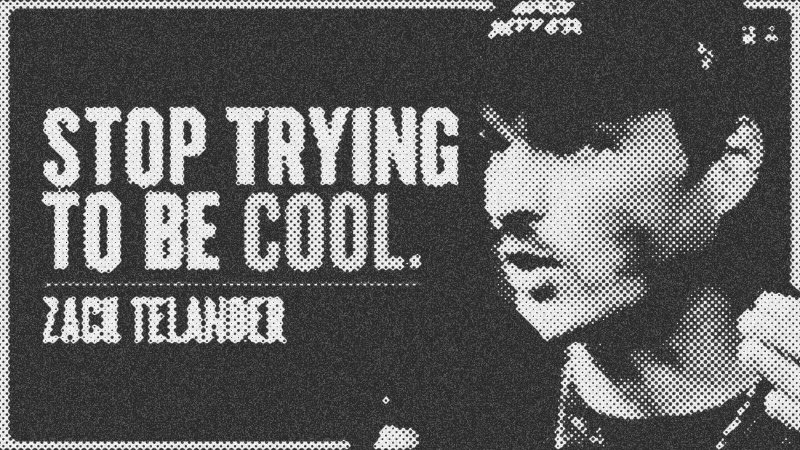
Our modern social fabric is increasingly defined by an invisible, suffocating force: the fear of being seen as earnest. This psychological barrier, colloquially known as cringe, acts as a self-imposed prison for potential. When we label an action or a statement as cringe, we are often reacting to a display of vulnerability or unpolished ambition. This reaction is not merely a social preference but a defense mechanism used by the stagnant to justify their own lack of movement.
Those who occupy the critique sphere often use irony as a shield. Irony provides a comfortable distance between the speaker and their beliefs, ensuring they never have to stand behind a conviction that could be challenged. If you never earnestly try, you can never fail; if you never fail, you can never be mocked. However, this safety comes at a devastating cost. Everything truly desirable—deep connection, professional mastery, and personal breakthrough—resides on the other side of this perceived embarrassment. To achieve greatness, you must first be willing to be a fool. You must be willing to endure the sardonic gaze of the ironic observer who remains safely in their cage while you attempt to fly.
The Ironic Fortress: How Social Media Weaponizes Mockery
The digital age has hyper-charged our sensitivity to social judgment. The Comment Section has fundamentally altered human psychology by creating an environment where a low-effort, contrarian response can garner more social validation than the original work of art or thought. We have moved into an era of "ratioing," where the goal is to tear down sincerity through superior snark. This creates a landscape where the safest path is to stay silent or remain eternally ironic.
This shift has profound implications for how we perceive reality. We are now constantly aware of an "Eye of Sauron"—a collective, judgmental gaze that waits for the slightest slip-up or moment of hypocrisy. This constant scrutiny forces a performative filter onto every interaction. Even when we believe we are being sincere, there is a lingering awareness of how that sincerity might be clipped, memed, or mocked. Breaking free from this requires a radical commitment to personal truth over public perception. It requires acknowledging that the critic is often just someone whose own dreams have become accessible only in sleep, leading them to resent those who pursue theirs in the daylight.
Redefining Cool: Beyond the Mask of Aloofness
What does it actually mean to be Cool? Traditionally, we associate coolness with emotional restraint and a lack of concern for the opinions of others. Recent cross-cultural psychological research suggests a more complex profile. Coolness is often a cluster of traits: extraversion, hedonism, power, adventurousness, openness, and, perhaps most importantly, autonomy.
There is a sharp distinction between being "good" and being "cool." Goodness is associated with reliability, conscientiousness, and warmth—traits that build stable societies. Coolness, however, is inherently unpredictable. It is a signal of being ahead of the curve, of having the autonomy to ignore convention. This is why "trying" to be cool is the fastest way to become cringe. Authenticity is the bedrock of coolness; the moment an action feels contrived or designed for a specific reaction, the aura of autonomy vanishes. In the realm of music and art, this is why we are drawn to artists like Sleep Token or Denzel Washington, who maintain a level of distance or mystery, refusing to engage in the constant, thirsty feedback loop of modern social media promotion.
The Paradox of Ambition and Gratitude
A recurring struggle for the high-achiever is the tension between future-oriented drive and present-moment peace. Many feel that being content with the present will kill their hunger for the future. Conversely, they worry that their relentless pursuit of goals is robbing them of their only life: the one happening right now.
This is not a problem to be solved, but a duality to be managed. We must be capable of "gratitude maxing"—finding profound, visceral joy in a cold glass of Fanta or a quiet evening with family—while simultaneously remaining "dreampilled," with our heads in the clouds and our feet moving toward massive goals. The ability to look at a mundane moment and say, "This is it," without losing the fire to create something better, is the ultimate psychological skill. It requires using your senses to ground yourself in the physical world while allowing your intellect to play with abstract possibilities. This balance is often easier to find after major life transitions, such as becoming a parent, which provides a visceral sense of purpose that bypasses intellectual vanity.
The Accuracy Budget and the Freedom to Think
In a world obsessed with correcting others, we have lost the "Oxford Manner"—the ability to play gracefully with ideas. We now operate under a regime of "experts only," where no one is allowed to speak on a topic unless they possess an illustrious history and formal credentials in that specific domain. While expertise is valuable, this rigid gatekeeping stifles innovation and cross-pollination between fields.
We should instead consider the concept of an Accuracy Budget. When a person consistently provides value and represents facts accurately in their core domain, they should earn the right to speculate and explore ideas in other areas. The internet, however, treats every misstep as a sign of total incompetence. If a doctor makes a mistake in a percentage calculation on Twitter, his entire medical career is called into question. This climate prevents the "graceful play" necessary for intellectual growth. We must allow ourselves and others the latitude to be wrong as part of the process of finding what is right.
The Brutal Sincerity of Physical Suffering
Physical endeavors like running provide a unique antidote to the ironic, digital world. Running is inherently sincere. You cannot ironically run a marathon; the fatigue, the heart rate, and the lactic acid are undeniable realities that demand total presence. Zack Telander’s 100-day running streak highlights a profound mindset shift: the transition from the mind as an unruly classroom to a disciplined environment where the "kids" (the intrusive thoughts of quitting) finally start to listen.
This is why we are seeing a massive resurgence in endurance sports and hybrid training. In a world of sterile, optimized AI content, the spectacle of a human pushing themselves to the brink of collapse—whether in the Tour de France or a local 5K—is deeply romantic. It represents a "suffering story" that cannot be faked or automated. This performance serves as a salve for the soul, providing a tangible metric of growth that social media metrics can never replicate. Results are the ultimate defense against the cringe critic. When you can point to a finished race or a personal best, the opinions of the ironic observer become irrelevant.
Conclusion: Choosing the Human Connection
Ultimately, the journey of personal growth leads away from the digital abstraction and back toward the visceral. The most significant moments of gratitude often come from simple, interpersonal recognition—a fan at a bar who recognizes your work or the deep bond of a friendship that survives the transition into adulthood.
As we navigate the complexities of modern identity, the goal should not be to reach a state of perfect, unbothered peace, but to stay in the arena. We must be willing to be cringe, willing to be wrong, and willing to suffer for the sake of a story worth telling. The fear of judgment is a ghost that only has the power we give it. By focusing on performance, authenticity, and the radical appreciation of the small things, we reclaim our lives from the critics and the algorithms. Growth happens one intentional, possibly embarrassing, step at a time.
- AG1
- 5%· products
- Andrew Huberman
- 5%· people
- Andy Elliott
- 5%· people
- Authenticity
- 5%· concepts
- Chris Williamson
- 5%· people
- Other topics
- 76%
Everything You Want Is On The Other Side Of Cringe - Zack Telander
WatchChris Williamson // 1:47:39
