Jordan Peterson warns unlived potential becomes a personal hell after ten years
The Weight of the Unlived Life
We often treat our potential as a comforting safety net, a distant promise that we will eventually become the people we imagine ourselves to be. However, Jordan Peterson reframes this perspective with a chilling urgency: your unlived potential isn't a neutral reserve; it is a ticking clock. When we remain stagnant in roles or lives we despise, we aren't just standing still—we are deteriorating. The "little hell" of a job you hate today doesn't stay small. Left unaddressed for a decade, it metastasizes into a profound sense of failure and bitterness that poisons your character and your future.
The challenge many of us face is the paralysis of choice. We are so afraid of making the wrong move that we make no move at all, failing to realize that inaction carries a heavier price tag than almost any calculated risk. Inaction is a silent predator because it is easy to hide from in the short term. You can mask the rot with distractions, but your conscience—that internal compass—never stops tracking the gap between who you are and who you could be. To bridge this gap, we must shift our focus from the broad, overwhelming horizon of "potential" to the immediate, actionable reality of the present moment.
Incremental Mastery and the Reward Architecture
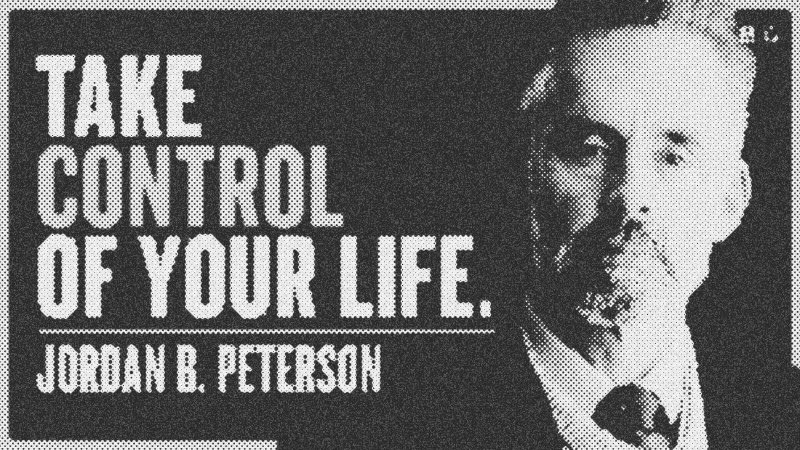
One of the most profound psychological traps is the crushing weight of our own ideals. When you posit a high goal, you simultaneously create a judge that highlights your current inferiority. If the ideal is too lofty and the distance too great, the resulting shame can paralyze growth. This is where Jordan Peterson advocates for a radical restructuring of our internal reward systems. Instead of punishing yourself for the distance between your current state and the ultimate ideal, you must learn to reward yourself for incremental, measurable progress.
In clinical practice, this often looks like "micro-analysis." If a goal feels impossible, you haven't broken it down into small enough pieces. For someone struggling to regain control of their life, the first step isn't a career overhaul—it might simply be opening a single drawer in a messy room and looking at it. This sounds trivial, even pathetic, to the ego. Yet, it is the only way to establish a trajectory. Once a direction is set, these small gains begin to compound. Like a B. F. Skinner box experiment, immediate rewards for behaviors that approximate the goal are what actually rewire our neurochemistry. You must have the humility to be "pathetic" today so that you can be slightly more competent tomorrow. This compounding interest of the soul is virtually unstoppable over a long enough time horizon.
The Biological Imperative of Play
In our culture of over-optimization, we have begun to view play as a luxury or, worse, a waste of productive time. However, Jordan Peterson argues that play is a primary mode of human cognition and social integration. It is not just an activity; it is a specialized biological circuit essential for the development of the prefrontal lobe—the part of the brain responsible for our highest-order thinking. When we lose our capacity to play, we lose our ability to adapt.
Play is the antidote to the rigid excesses of order. It allows us to engage in the "dance" of social interaction, characterized by wit, banter, and reciprocity. If you find yourself in a state where play is impossible, it is a diagnostic signal that your motivational systems are out of balance. True productivity must be sustainable, and sustainability requires the restorative power of play. For those of us who have turned our lives into a series of billable hours or self-improvement checklists, the most productive thing we can do is often to step back and re-learn the art of the moment. Whether it is joking with family or engaging in a genuine, unscripted dialogue, play is the mechanism through which we stay human in a world that demands we be machines.
Confronting the Fog of Self-Deception
We are remarkably good at not seeing what is right in front of us. Jordan Peterson notes that people rarely "repress" their problems in the classical Freudian sense; instead, they simply fail to unpack them. We live with a sense of "disquiet"—a vague, nauseating feeling that something is wrong—but we refuse to give that feeling a name because once a problem is named, it becomes real and demands action. This is what it means to "hide things in the fog."
Maintaining this fog requires a tremendous amount of energy. It’s like living in a house with a dishwasher sitting in the middle of the kitchen for weeks or unopened wedding gifts five years after the ceremony. These aren't just clutter; they are portals to a personal hell. They represent the negotiations we haven't had, the responsibilities we've abdicated, and the truths we've refused to speak. To move forward, we must practice a form of mental hygiene where we delve into trouble as it arises. The alternative is to wait until the small problem grows into a monster that eventually breaks down the door. Truth-telling, both to others and to oneself, is the most adventurous and terrifying path available, but it is the only one that prevents the ultimate tragedy of a life lived in blindness.
The Call of the Conscience and Destiny
Your conscience is not just a collection of social taboos; it is the voice of your better self attempting to manifest. When certain things "bug" you more than others, that is a signal of your specific, idiosyncratic path. You have an instinct for growth that is as real as your instinct for hunger. If you ignore the unfulfilled obligations that haunt you, you aren't just being lazy—you are refusing your own destiny.
This sense of calling often manifests as guilt, which many try to medicate or distract away. But Jordan Peterson suggests we should view this torture as a gift. It is the engine that pulls us toward our potential. By turning our problems into goals, we find the meaning that sustains us through suffering. Whether it is through the Past Authoring Program to understand our history or the Future Authoring Program to map our desires, the goal is to become transparent to ourselves. We are noble, though broken, creatures. The adventure of life lies in accepting the burden of our own potential and moving toward it with every bit of integrity we can muster. It’s not about finding happiness; it’s about finding the truth, because the truth is the only thing that will actually set you free.
- Jordan Peterson
- 36%· people
- 12 Rules for Life
- 7%· books
- B. F. Skinner
- 7%· people
- Beyond Order
- 7%· books
- Chris Williamson
- 7%· people
- Other topics
- 36%
Jordan Peterson - How To Add Urgency & Purpose To Life
WatchChris Williamson // 1:30:09
