Dr. K warns screen scrolling numbs your feelings and stalls growth
The Digital Anesthetic and the Loss of Human Stagnation
Every time you hit a transition in your day, a subtle itch begins. You step into an elevator, stand in line for coffee, or rise from your desk. Without thinking, your hand slips into your pocket. Your phone is out. Face ID unlocks the screen in milliseconds. This rapid loop represents more than a habit. It is a biological escape hatch. Modern technology acts as a powerful anesthetic. It systematically numbs negative emotional circuitry.
When we browse social media, play video games, or consume pornography, we are not just seeking pleasure. We are actively running away from discomfort. Dr. K points out that these digital tools suppress the limbic system. If you feel lonely, bored, or anxious, a quick scroll shuts those feelings down. It feels like a relief in the short term. In the long term, this chronic avoidance creates deep stagnation. We remain stuck in life because we refuse to feel the very emotions designed to move us forward.
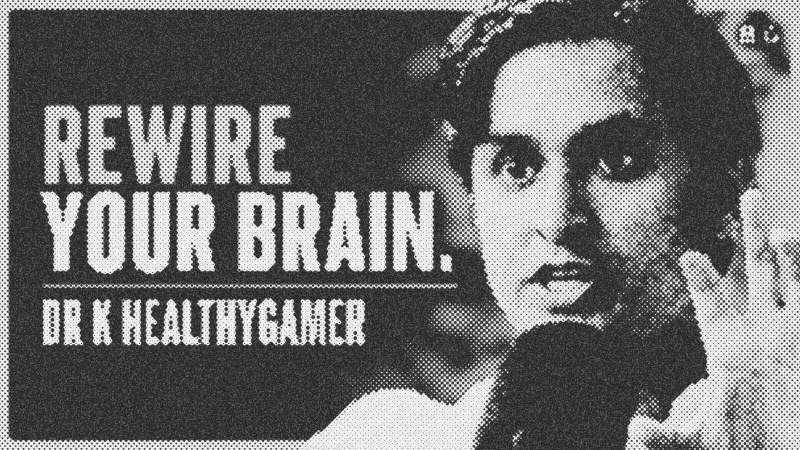
Humans did not evolve to be happy all the time. Negative emotions are features of our survival, not bugs in our system. Anatomically, our limbic system rests right next to the hippocampus. This is where learning and memory take place. The proximity is not accidental. Strong feelings anchor deep lessons. Anxiety warns us of danger. Shame drives us to correct our mistakes. When we bypass these feelings with a screen, we lose the essential raw data we need to change our circumstances. We trade our long-term growth for immediate comfort.
This avoidance creates a generation of people who feel completely paralyzed. They cannot understand why they lack the motivation to apply for promotions, leave bad relationships, or start new projects. The answer lies in their pocket. By constantly soothing every micro-moment of discomfort, they starve themselves of the emotional friction required for action. They are chemically content with being stuck.
The Biology of Trauma and the Survival Value of Pain
To understand why we run, we have to look at how our brains process painful memories. In Eastern traditions, unprocessed emotional energy is called a samskara. In Western psychology, we call it trauma. Both concepts describe the same phenomenon. A highly emotional event occurs, we fail to digest it, and the experience goes dormant in our subconscious mind.
When we encounter a trigger later in life, that dormant emotion rushes back with its original physiological force. Chris Williamson shares an insight from trauma expert Paul Conti. A traumatic event can actually reach backward in time, coloring and distorting our memories of things that happened before the event occurred. This mechanism is terrifying because it robs us of our ability to fact-check our own lives.
Yet, this distortion is a survival mechanism. Our brains are not wired to perceive objective reality. They are wired for survival. Consider a simple evolutionary example. If you visit a watering hole five times safely, but on the sixth visit a crocodile attacks you, your brain does not calculate a safe percentage. It immediately biases all past memories. It tells you the watering hole was always dangerous. This is a survival feature. In the wild, assuming safety is a quick way to get killed.
This survival bias creates a fundamental neurological asymmetry. Our negative emotional circuitry can be activated by hypothetical future losses. We can feel the pain of a future failure today. However, our dopaminergic centers—the areas responsible for pleasure and reward—do not fire for hypothetical wins. You cannot feel the biological satisfaction of winning a trophy until you actually hold it. We are structurally skewed toward the negative. This asymmetry keeps us safe, but it also makes us highly risk-averse and prone to chronic worry.
Why the Modern World Stretches Attention to the Breaking Point
Anxiety, depression, and attention deficits are the defining struggles of the modern era. To understand why they are rising, we must examine where our minds live. The mind can exist in only three places: the past, the present, or the future.
When our attention is pulled constantly to the past, we fall into regret and shame. This is the breeding ground for depression. When our minds are dragged into the future, we obsess over hypotheticals. This produces runaway anxiety. The only escape from this mental tug-of-war is the present moment.
This is why technology is so addictive. Playing a fast-paced video game forces your attention into the present. For a moment, you are not worrying about tomorrow's presentation or yesterday's argument. The technology acts as an external anchor for your attention. But this shortcut comes with a steep price. By relying on a screen to hold your attention, your frontal lobes weaken. You lose your self-directed attentional control.
When you turn off the screen, your unconditioned mind immediately drifts back to its default states of anxiety or depression. The modern mental health crisis is fundamentally an attentional crisis. Jonathan Haidt explores this in his work on The Anxious Generation, highlighting how social media has systematically fractured the attention span of young people. Without the ability to consciously direct our focus, we are completely at the mercy of whatever thoughts our subconscious minds throw at us.
Reconnecting Men to Their Bodies and Redefining Therapy
Therapy often fails men because the entire field is built on a female clinical model. Historically, the majority of therapists and patients have been women. This has biased our understanding of emotional processing. We assume that talking about feelings is the only way to heal them. For many men, this assumption is false.
Many men suffer from normative male alexithymia. This is a clinical term for an inability to identify and describe one's own emotional state. Men are often conditioned to feel only one acceptable emotion: anger. Everything else—sadness, fear, loneliness, shame—gets funneled into frustration or numbness. When an alexithymic man sits on a therapy couch and is asked what he feels, he genuinely does not know. He feels outgunned and empty.
To bridge this gap, men must reconnect with their emotions through their physical bodies. Every emotion has a physiological map. We feel butterflies in the stomach, tightness in the chest, or a lump in the throat. By focusing on these concrete physical sensations, men can bypass their linguistic blocks. They can look at their body's reactions and rationally deduce what they are feeling.
Furthermore, men often require instrumental support rather than purely emotional support. They do not just want to vent. They want to solve problems. Traditional therapy actively discourages therapists from giving concrete advice or helping patients build their lives. This is why coaching has exploded as a field. Men need a mix of emotional excavation and action-oriented strategies to build a life worth living.
Dissolving the Ego to Defeat the Prison of Comparison
Our modern lives are entirely performative. We track our worth in numbers: followers, subscribers, bank accounts, and job titles. This comparison game is fueled entirely by the ego, or what Eastern philosophy calls the ahamkara. The ego is the part of the mind that constructs identity. It creates the concept of 'me' and 'you.'
Once the ego establishes this boundary, comparison becomes inevitable. To think someone is better or worse than you, you must have a rigid sense of self-identity. This identity is a mental abstraction, not a physical reality. You cannot biopsy a human and find a "winner" or a "loser." These are judgments, and judgments are not reality.
When we tie our self-worth to our external accomplishments, we step onto a treadmill that never stops. This is the phenomenon of moving goalposts. A million subscribers feels like a victory for a day; then, the ego demands two million. If your worth is tied to something external, it will never be enough.
To find true peace, we must practice dissolving the ego. This does not mean losing your drive. It means separating your actions from your identity. You can control your efforts, but you can never control the outcome. You can write the book, but you cannot force people to buy it. When you let go of the need to control the outcome, you free yourself from the pain of failure. You learn to sleep peacefully because you did everything within your power, and the rest belongs to the world.
- Chris Williamson
- 17%· people
- Dr. K
- 17%· people
- Healthy Gamer
- 17%· companies
- Jonathan Haidt
- 17%· people
- Paul Conti
- 17%· people
- The Anxious Generation
- 17%· books
How to Cure Your Anxious Mind - Dr K HealthyGamer (4K)
WatchChris Williamson // 2:07:42
