The High-Stakes Shift: Navigating the Business and Psychology of the Cannabis Gold Rush
The Paradox of Progress: Inside the Modern Cannabis Industry
The most striking feature of the current global economy is not a digital breakthrough, but the rapid emergence of a plant-based industry from the shadows of prohibition. For decades, cannabis existed in a cultural and legal darkness, but today it represents one of the most significant business opportunities of our generation. As Chris Walsh, CEO of Marijuana Business Daily, explains, the industry has undergone a metamorphosis from a underground counterculture to a multibillion-dollar corporate powerhouse. This transition is not merely about retail sales; it is a psychological and regulatory puzzle that challenges our perceptions of law, social norms, and personal wellness.
At the heart of this evolution is a staggering contradiction. In the United States, we see a patchwork of legality where over 38 states permit medical use and 17 allow recreational consumption, yet the substance remains strictly illegal at the federal level. This "stupid situation," as Chris Walsh describes it, creates a unique high-pressure environment for entrepreneurs. They must build sustainable, transparent companies while operating in a federal gray area that most traditional CEOs would find impossible to endure. This tension defines the current state of growth: a relentless push forward against a backdrop of institutional resistance.
The Legal Tightrope and Federal Inertia
How does a multibillion-dollar industry thrive when the central government remains technically opposed to its existence? The answer lies in a delicate dance of "low enforcement priorities." Under various administrations, starting significantly with the Barack Obama, the federal government began looking the other way, provided that states implemented rigorous regulatory frameworks. This shift from active raids to a cautious truce allowed the industry to balloon.
The momentum became self-sustaining. As more states legalized, the tax revenue and job growth reached a critical mass that made federal interference politically expensive. We are currently witnessing a domino effect where even traditionally conservative regions are feeling the pressure to legalize, driven by overwhelming public support—now exceeding 90% for medical use. The industry has effectively outrun the law, creating a reality where federal change is no longer a question of "if" but "when."
The Allure of the Counterculture vs. Corporate Norms
One of the most profound psychological shifts in this space is the tension between the "stoner" heritage and the new "suit" reality. Early pioneers often operated out of basements or on street corners, fueled by a rebellious spirit and a deep connection to the plant. Today, those same pioneers are being replaced or joined by MBAs and former politicians. The John Boehner now sits on a cannabis board, signaling that the establishment has not just accepted the industry—it wants to own it.
This corporate shift is a double-edged sword. On one hand, it brings the sophistication, quality control, and safety regulations necessary for mainstream acceptance. On the other, it risks alienating the very people who built the culture. There is a palpable nostalgia for the "romance" of the underground, where buying cannabis felt like an act of defiance. For many, the transition to an "Apple Store" style dispensary—like those seen at MedMen—feels sanitized. Yet, this sanitization is exactly what allows a "soccer mom" or a corporate professional to feel comfortable exploring the benefits of the plant without the stigma of criminality.
Economic Resilience and the Pandemic Effect
While most sectors of the economy crumbled during the 2020 lockdowns, the cannabis industry experienced an unprecedented surge. In a move that would have been unthinkable a decade ago, most states deemed cannabis dispensaries "essential businesses." This was a watershed moment for the industry’s legitimacy. While the world stayed home, cannabis sales skyrocketed to an estimated $20 billion in the US alone.
The pandemic acted as a massive experiment in consumer behavior. With more disposable income from stimulus and nowhere to go, people turned to cannabis for stress relief, sleep aid, and recreation. This wasn't just a temporary spike; it brought new demographics into the fold who had previously been hesitant. The industry is now larger than the NFL in terms of revenue and is on track to surpass the craft beer market. This growth proves that the "novelty factor" of legalization hasn't worn off. Even in mature markets like Colorado, sales continue to hit record highs, suggesting a permanent shift in how society consumes relaxants.
Diversification and Delivery: From Suppositories to Micro-dosing
The innovation in product delivery is perhaps the clearest sign of a maturing market. The industry has moved far beyond the joint. We are now seeing a massive range of consumer-packaged goods: mints, lozenges, powders, and even topicals. This diversification allows for precise control over the experience.
Micro-dosing, through products like one-milligram THC mints, is a particularly significant trend. It mirrors the way people use a single glass of wine to unwind rather than seeking a heavy intoxicant. By lowering the barrier to entry and removing the need to smoke, companies are making cannabis a routine part of wellness. From water-soluble powders to products designed to enhance intimacy, the goal is ubiquity. The industry is no longer just selling a high; it is selling a lifestyle and a specific set of biological outcomes.
The Psychedelic Frontier and the Future of CBD
As cannabis settles into its corporate skin, eyes are already turning toward the next frontier: psychedelics. Companies are beginning to explore the therapeutic potential of mushrooms and other substances, though the path forward is significantly more complex. Unlike cannabis, which has a clear recreational path, the future of psychedelics likely lies in guided, clinical settings. The potency and psychological depth of these substances require a level of aftercare and "set and setting" that the current dispensary model isn't built for.
Simultaneously, the CBD market continues to expand, though it faces its own set of challenges. Often referred to as a "fad" by critics, CBD has found its way into everything from fish oil to bath bombs. While the science is still catching up to the marketing, the consumer demand is undeniable. The real future of the industry lies in the "minor cannabinoids" like CBN and CBG, which offer targeted benefits for sleep and inflammation without the psychotropic effects of THC. We are moving toward a world of hyper-targeted plant medicine, where the plant is deconstructed into its most useful parts.
Conclusion: A New Paradigm of Growth
The cannabis industry serves as a masterclass in resilience and adaptation. It has successfully navigated a transition from a criminalized subculture to an essential pillar of the modern economy. For anyone interested in personal growth and potential, the lesson here is clear: progress often happens in the face of immense resistance. The "American Dream" is alive in this sector, not because it was easy, but because it required a fundamental shift in mindset from both the providers and the public.
As we look toward 2025 and beyond, the industry is projected to double in size again. The barriers to entry are rising as regulations tighten, but the opportunity for innovation remains vast. Whether it's the "craft cannabis" movement mirroring artisanal coffee or the integration of cannabis into mainstream healthcare, we are only at the beginning of this journey. The shadows have retreated, and what remains is a robust, exciting, and deeply complex industry that is reshaping our world one intentional step at a time.
- Barack Obama
- 6%· people
- California
- 6%· places
- CBD
- 6%· products
- Chris Walsh
- 6%· people
- Colorado
- 6%· places
- Other topics
- 72%
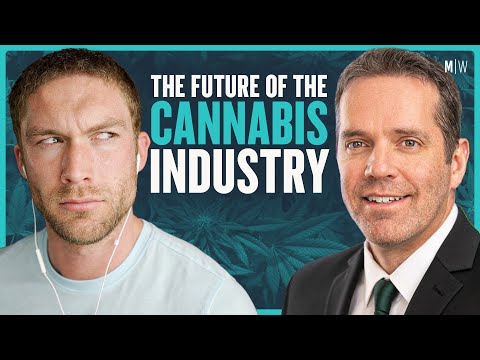
How Does The Cannabis Industry Work? - Chris Walsh | Modern Wisdom Podcast 333
WatchChris Williamson // 58:37
