The Evolution of Resilience: Leadership, Modern Masculinity, and the Psychology of Growth
The Architecture of High-Performance Leadership
True excellence in leadership rarely stems from a single flash of genius. Instead, it is built upon a foundation of specific, repeatable behaviors that define the world's most successful operators. High performers are not merely defined by their output but by their character and organizational rigor. They possess an innate ability to remain articulate and intelligent under pressure, yet the most surprising trait is often their fundamental goodness. There is a persistent myth that the upper echelons of global business are populated by predatory individuals, but reality suggests otherwise. Long-term success requires the maintenance of complex relationships, a feat impossible for those lacking integrity.
Harley Finkelstein of Shopify serves as a primary example of this integrated excellence. His effectiveness is not just in his strategic mind but in his radical presence and time management. Witnessing a leader at that level maintain a strict 9:00 PM boundary to prioritize family and preparation is a masterclass in intentionality. These small, consistent disciplines create a cumulative effect over decades. Furthermore, the highest performers remain perpetually curious. They do not approach interactions from a position of "knowing it all," but rather look for what they can learn from every individual, regardless of that person's relative scale or status. This openness prevents the stagnation that often follows significant achievement.
The Founder’s Journey: From Dictator to Inspirer
Navigating the growth of a company from a garage startup to a global powerhouse like Gymshark requires a profound psychological shift in the leader. The skills required to move from zero to ten million in revenue are often the exact opposite of those needed to scale to a billion. In the early, entrepreneurial phase, a founder must be somewhat dictatorial. There is no data, no time for consensus, and the risk is absolute. You must force the business into existence through sheer will and gut instinct. This period is characterized by adrenaline and a lack of consequence for failure because, at that stage, there is often nothing to lose but your own time.
However, as the business matures, the role must flip. The "my way or the highway" approach has a short lifespan in a large organization. Leadership transitions from doing and telling to explaining and inspiring. You move from the sewing machine to the boardroom, where the challenge becomes social and intellectual. You must learn to delegate not just tasks, but authority. This requires a level of self-awareness that many founders lack: the ability to recognize personal incompetence as a competitive advantage. By hiring individuals who are fundamentally better at operations, finance, or logistics, a leader can double down on their own strengths while creating a safety net for their weaknesses. Success in this phase is determined by whether your ambition for the business exceeds your ambition for your own ego.
Modern Masculinity and the New Fitness Paradigm
Fitness has undergone a massive cultural transformation, moving away from purely aesthetic goals toward a holistic pursuit of potential. In the early 2000s, the industry was dominated by "bro-science" and a singular focus on muscle mass. Today, the conversation has deepened. Young men are no longer just asking how to get bigger arms; they are seeking a blueprint for how to show up in the world. This shift reflects a broader need for masculine role models who balance physical strength with mental fortitude and emotional intelligence.
We are seeing a move toward a more balanced, organic approach to health. Men are gravitating toward figures like Andrew Huberman or Joe Rogan because these voices offer tangible strategies for capability. The icky, superficial "it's okay to talk" campaigns often fail because they treat male psychology like female psychology. Men typically do not seek only to be loved and accepted; they seek to feel powerful and capable. When addressing mental health in a masculine context, the solution must be actionable. The question is not just "how do you feel?" but "what are you going to do about it?" This drive for agency is the bedrock of male resilience.
The Dangers of the Coddled Mind
There is a growing concern regarding a culture of entitlement and softness that arises from being over-coddled. Growth requires friction. When we shield ourselves or our children from every discomfort, we inadvertently strip away the tools needed to navigate the real world. A father’s role is often to provide the "tough love" that demands accountability. This isn't about cruelty; it's about preparation. If a child messes up, the most empowering response isn't always a hug and a promise that everything is fine. Often, the most helpful response is the demand for a plan of action.
This principle extends to the broader fitness culture and the body positivity movement. While every person’s journey to self-improvement is valid—whether they want to lose fifty pounds or deadlift three hundred kilos—we must be careful not to promote unhealthy extremes as a new standard of "okay." Promoting an unhealthy physique as beneficial is a disservice to the individual. Whether it is the extreme of obesity or the extreme of 5% body fat with crashed testosterone, glorifying the edges of the bell curve ignores the reality of long-term health. We should admire the discipline it takes to reach an elite level, but we must remain grounded in the truth of what a sustainable, healthy life actually looks like.
Legacy, Parenting, and the Future of the UK
Parenting provides the ultimate test of values. For a successful individual, the challenge is marrying material opportunity with the formative struggles that created that success. There is a risk that wealth can insulate the next generation from the very challenges they need to grow. This is why many leaders are looking back to traditional values—spending time with great-grandparents, focusing on manual labor, and choosing "normal" schooling over elite private institutions. The goal is to raise children who are "street smart" and worldly, rather than entitled and sheltered.
Interestingly, there is a renewed appreciation for the United Kingdom as a hub for both family life and commerce. Despite the turbulent political landscape, the UK offers unique logistical advantages for global business and a cultural weight that punches far above its geographic size. There is a safety and a " forestry" style of upbringing available here that is increasingly rare in more polarized regions. As we look toward the future, the focus shifts from personal accumulation to legacy. It’s about being a role model who works hard not because they have to, but because they love the pursuit of excellence. The ultimate aim is to demonstrate that a meaningful life is built through intentional steps, constant learning, and the courage to take calculated risks.
- Andrew Huberman
- 10%· people
- Ben Francis
- 10%· people
- Gymshark
- 10%· companies
- Harley Finkelstein
- 10%· people
- Jeremy Clarkson
- 10%· people
- Other topics
- 50%
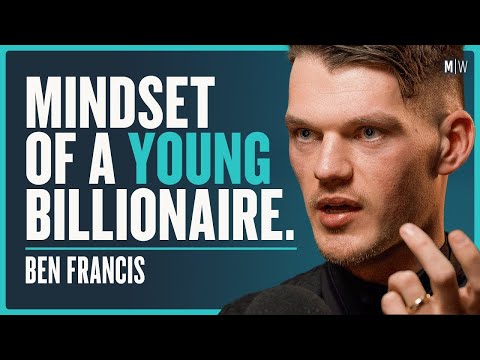
Gymshark CEO Explains His Strategy For Global Success - Ben Francis
WatchChris Williamson // 1:15:47
