The Socratic Mindset: Transforming Ancient Wisdom into Modern Resilience
The Jimmy Hendrix of Philosophy: A New Perspective on Socrates
When we look back at the history of human thought, few figures loom as large or as enigmatically as Socrates. He represents a definitive split in the timeline of intellectual history; we categorize everything before him as Presocratic and everything after as a reaction to his existence. To understand why a man who wrote nothing and died as a convicted criminal remains the most influential philosopher in the Western canon, we must look at his intensity. Donald Robertson describes him as the Jimmy Hendrix of philosophizing—a man who never took his metaphorical guitar off. While others treated philosophy as a hobby or an academic exercise, Socrates lived it every waking second, engaging with everyone from powerful politicians to prostitutes and slaves.
His commitment to the "examined life" was not a passive intellectualism. It was a rigorous, often uncomfortable practice of radical self-awareness. In today's landscape of passive consumption, the Socratic approach offers a stark alternative. It demands that we step away from memorized maxims and instead develop the cognitive skill of thinking for ourselves. This is the root of psychological resilience: the ability to question the automatic thoughts and societal scripts that often lead us toward anxiety or unfulfillment. By revisiting the Socratic problem—the mystery of who the real man was behind the accounts of Plato and Xenophon—we find a blueprint for modern cognitive health.
The Socratic Method: A Tool for Cognitive Flexibility
The Socratic Method, or dialectic, is often misunderstood as a simple technique of asking questions to annoy others. In reality, it is a sophisticated precursor to Cognitive Behavioral Therapy (CBT). Socrates didn't provide answers; he provided an "assault course for the mind." His goal was to puncture the bubble of "double ignorance"—the dangerous state of believing one knows something when they actually do not. This intellectual arrogance, similar to the Dunning-Kruger Effect, is a primary barrier to growth.
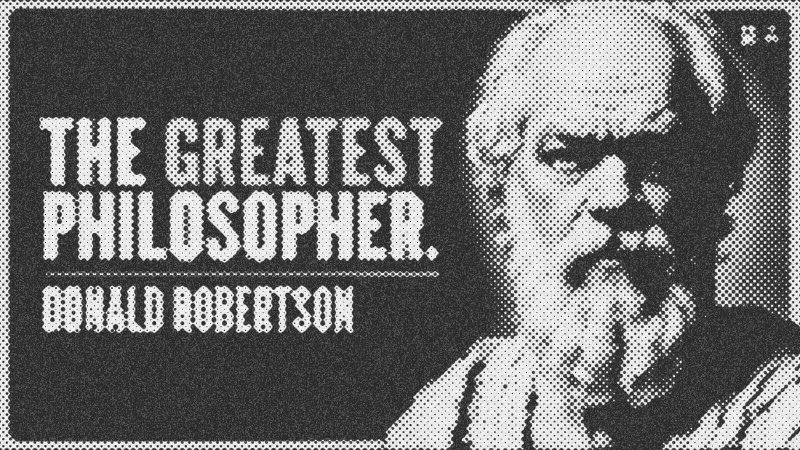
When Socrates questioned Laches and Nicias on the nature of courage, he wasn't looking for a dictionary definition. He was looking for the essence of the virtue that could survive any context. He pointed out that while standing one's ground in a phalanx is courageous, so is a tactical retreat or a cavalry charge. This teaches us cognitive flexibility. In modern psychology, we know that the most resilient individuals are those who can choose intelligently between different coping strategies rather than rigidly applying one rule to every situation. If your only tool is a hammer, every problem looks like a nail; Socrates forces us to build a full toolkit of reason.
The Mirror of the Soul
A critical component of the Socratic method is the concept of Know Thyself. Socrates used the analogy of an eye trying to see itself. Just as an eye needs a mirror, the mind needs another mind to see its own reflections and biases. This is why he insisted on dialogue. We are notoriously bad at giving ourselves advice because we are too close to our own narratives. Through the Socratic Method, the interlocutor acts as a mirror, reflecting back the contradictions in our logic. This process often leads to aporia, a state of healthy bewilderment. Feeling confused after a deep conversation isn't a sign of failure; it is the sign that the old, rigid structures of your mind are being dismantled to make room for truth.
Challenging the Values of a Consumerist Society
Socrates stood in the agora of Athens and looked at the bustling marketplace, famously remarking on how many things he did not need. He was a vocal critic of the values of his time, which eerily mirror our own: wealth, status, and reputation. He argued that these are "external goods"—they are not intrinsically good or bad. In the hands of a fool, wealth facilitates more foolishness. Only practical wisdom is intrinsically good because it dictates the proper use of everything else.
His advice to "eat to live, rather than live to eat" was a call to look beyond appearances and short-term pleasures. We often model our values on the superficial behavior of others, entering a "rat race" without ever asking why. Socrates suggests that if you want to appear like a good friend, the most efficient path is to actually become a good friend. This shifts the focus from external validation to internal character, a move that significantly reduces social anxiety and increases authentic confidence. When we focus on being as we wish to appear, we align our internal reality with our external presentation, eliminating the psychic friction of hypocrisy.
The Psychology of Anger and the Trial of the Soul
One of the most radical Socratic doctrines is the idea that Injustice harms the perpetrator more than the victim. This claim seems absurd to the modern ear, yet it is the ultimate shield against resentment and depression. Socrates argued that while his accusers, Anytus and Meletus, could take his life, they could not harm his character. If you maintain your integrity, you remain unhurt in the only way that matters.
This has massive implications for how we handle anger. Modern research confirms that anger impairs our ability to think about consequences, leading to impulsive, self-destructive behavior. It creates a "hostile attribution bias" where we view the world through a simplistic, monolithic lens of enmity. By adopting the Socratic view, we realize that the person acting unjustly is the one in the most danger—they are corrupting their own soul. This realization allows us to respond with clemency or objective detachment rather than escalating cycles of vengeance. Socrates lived this principle until the end, refusing to beg for mercy or flee his execution, as doing so would have been an act of injustice against the laws he lived by.
Conclusion: A Legacy of Integrity
The death of Socrates by hemlock was his final and most powerful lesson. By refusing to compromise his values to save his life, he became a martyr for philosophy and an eternal icon of resilience. He taught us that the "unexamined life is not worth living," but he also showed us that a life examined through reason can face even death with tranquility. His influence on Stoicism, particularly on figures like Epictetus and Marcus Aurelius, created a lineage of mental strength that we still draw upon today. As we navigate a world of shifting truths and digital noise, the Socratic demand for clarity, consistency, and character remains our most potent tool for achieving our true potential.
- Socrates
- 32%· people
- Socratic Method
- 6%· concepts
- Alcibiades
- 3%· people
- Anytus
- 3%· people
- aporia
- 3%· concepts
- Other topics
- 53%
Ancient Greek Wisdom Every Man Needs To Hear - Donald Robertson
WatchChris Williamson // 2:00:27
