Huberman defends ninety-minute caffeine delay and warns against continuous peptide use
Why delaying your morning espresso clears the chemical cobwebs of sleep
When we wake up, our brains do not instantly zero out the chemical markers of fatigue. The biological driver of sleepiness is adenosine, an organic compound that accumulates steadily in the brain and body for every hour we remain awake. It binds to specific receptors, signaling to our systems that we are tired, heavy, and starved for rest. When we undergo deep sleep, this system resets, clearing the accumulated molecule so we can face the next day with renewed clarity.
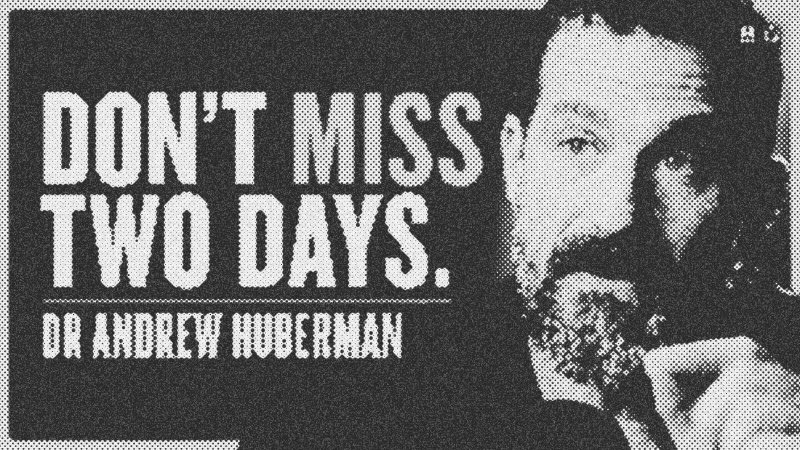
Yet many of us do not wake up naturally after a full, uninhibited sleep cycle. Instead, we rely on loud alarms, forcing ourselves out of bed before the glymphatic system and other clearance mechanisms complete their job. This leaves us with residual adenosine.
Instinctively, we reach for caffeine. It is the most popular psychoactive substance on the planet, consumed by over ninety percent of the adult population. Caffeine acts as an antagonist to adenosine; it parks inside the adenosine receptors, blocking the sleepiness signal. But this blocks the signal without actually removing the molecule.
While you feel alert, that residual adenosine continues to pool outside the blocked receptors. It even continues to accumulate. When the caffeine eventually metabolizes and detaches three to four hours later, this massive backlog of adenosine rushes to bind to the now-vacant receptors. This sudden biological flooding causes the dreaded early afternoon crash.
To counter this dip, Andrew Huberman suggests waiting sixty to ninety minutes after waking before consuming your first dose of caffeine. During this initial window, your body naturally clears the remaining adenosine, especially if you get moving. Non-sleep deep rest, or Yoga Nidra, can also accelerate this biological reset. Prominent sleep scientist Matt Walker is currently collaborating on research to determine if these conscious rest protocols can mimic the cellular clearance rates of deep sleep.
Four natural timekeepers that shift your internal biological clock
Humans are bound to circadian biology. You cannot simply hack away the twenty-four-hour fluctuations of your core temperature, energy, and cognitive focus. To align your system, you must utilize external cues known as Zeitgebers, or "timekeepers."
The power of morning light
The primary Zeitgeber is bright light, specifically from the morning sun. When photons hit the intrinsically photosensitive retinal ganglion cells in your eyes, they send a direct neural signal to the suprachiasmatic nucleus, the master clock sitting just above the roof of your mouth. This signal triggers a near fifty percent increase in your natural morning cortisol peak. This spike is not dangerous; it is a healthy, protective response that raises your core body temperature, sharpens your focus, bolsters your immune system, and shuts down melatonin production.
To optimize this response, get outside within the first hour of waking. Do not wear sunglasses. Even on cloudy days, outdoor light delivers significantly more Lux than typical indoor office lamps.
Movement, feeding, and social triggers
If you want to shift your sleep schedule earlier—a process called a phase advance—you need to stack multiple Zeitgebers:
- Physical exercise: Movement activates a direct neural highway from your brain stem to the suprachiasmatic nucleus, signaling wakefulness.
- Early feeding: Eating your first meal earlier tells your peripheral metabolic clocks that the active day has officially begun.
- Social interaction: Engaging in conversation and shared activities with others provides a biological anchor, reinforcing your circadian alignment.
For those trying to protect their sleep while living in a modern, artificial environment, late afternoon light acts as an inoculation. Viewing the sunset for just five minutes adjusts the sensitivity of your retina. This simple practice reduces the melatonin-disrupting impact of blue screens and artificial lighting later that evening by up to fifty percent.
Why human brains retain stories far longer than cold statistics
Information does not register equally in the human mind. Recent controlled experiments document a pronounced memory gap between narrative structures and cold numbers. While the persuasive impact of statistics on human belief fades by seventy-three percent over twenty-four hours, the impact of a compelling story drops by only thirty-two percent.
This structural preference exists because our nervous system organizes memories sequentially, with a distinct beginning, middle, and end. From childhood, we rely on rhythm, cadence, and sequence to map the world.
Our most vivid, permanent memories—often called flashbulb memories—are driven directly by adrenaline. When you experience a sudden shock, your adrenal glands release epinephrine into your body, while your locus coeruleus sprinkles the brain with norepinephrine. This chemical bath flags the surrounding context as vital for survival.
This is why traumatic events seal themselves so deeply into our neural circuitry. It is also why modern therapeutic practices focus so heavily on the adrenaline system. Some protocols require patients to bring themselves back to a state of high physiological arousal to rewrite the narrative. Others seek to separate the memory from the physical panic.
While clinical trials for MDMA-assisted psychotherapy showed an impressive sixty-seven percent remission rate for post-traumatic stress disorder, the Food and Drug Administration recently rejected the treatment due to concerns over control groups and standardization. The scientific search for ways to decouple somatic fear from mental memory remains ongoing.
The risky reality of self-prescribing longevity compounds and tissue-repair peptides
The pursuit of human longevity has sparked a massive market for off-label drugs and experimental peptides. But our bodies are highly complex, balanced systems, and altering one pathway often causes severe, unintended downstream consequences.
The dual nature of cellular growth pathways
Many popular longevity protocols target the mtor pathway, which regulates cell growth and protein synthesis. While blocking mtor via drugs like rapamycin or severely restricting calories can extend the lifespan of simple organisms, it presents major trade-offs for active humans. Drastic caloric restriction can lead to muscle wasting, weakened immunity, plummeting testosterone, and a loss of physical vigor.
Similarly, blood-sugar-lowering agents like metformin or its natural alternative, berberine, can trigger severe hypoglycemia, headaches, and physical fatigue in individuals who are not insulin resistant.
The hazards of experimental peptides
The use of bpc-157 for tissue recovery has exploded among fitness communities. While the compound shows remarkable ability to accelerate tendon and nerve repair in rodent models, there are virtually no clinical trials proving its safety in humans.
Because bpc-157 stimulates angiogenesis—the formation of new blood vessels—it poses a serious risk: it can vascularize and accelerate the growth of undiagnosed tumors. Additionally, some users of oral versions report a persistent, inescapable state of hopelessness known as anhedonia.
Other experimental compounds, like the European-import cerebrolysin, require heavy intramuscular injections that carry high contamination risks if not sourced through legitimate medical practitioners.
When we look at figures like Bryan Johnson, we must view them as scientific scouts. They are testing the extremes of cellular aging. But for the average person, the most effective longevity protocol remains remarkably simple: weight training three times a week, cardiovascular exercise, clean eating, and deep, restorative sleep.
Squeezing through the lonely chapter of permanent personal growth
True personal development is rarely a smooth, continuous path. It is characterized by a challenging transitional phase often called the "lonely chapter."
When you decide to change your lifestyle—whether by quitting alcohol, pursuing rigorous study, or changing your career—you begin to move at a different trajectory than those around you. During this phase, you no longer resonate with your old social circle, but you have not yet established the new network that aligns with your future self.
This period is incredibly isolating. It triggers a unique form of personal growth guilt, similar to survivor's guilt, where you feel as though you are betraying your past self and the people you left behind.
During these intense transitions, focusing on a long-term plan can actually be paralyzing. Huberman describes shifting his own life into a "caterpillar mode." Rather than obsessing over the distant butterfly phase, he focuses strictly on the immediate tasks directly in front of him, dividing his day into distinct six-hour opportunity blocks.
To survive these periods of isolation, building a close committee of trusted advisors is essential. When public pressure or personal doubt clouds your judgment, you need a core group of people who understand your heart and can help calibrate your internal compass.
Blending cold physical science with the crude intelligence of the body
We often prioritize analytical, linguistic thinking over physical intuition. Yet our nervous system runs all the way through our body, carrying an ancient, non-verbal intelligence.
To develop this somatic awareness, Martha Beck suggests a simple exercise. Sit quietly and imagine a highly stressful, terrible scenario. Pay close attention to the immediate physical contraction of your limbs and chest. Shake it off, then imagine a scenario that feels deeply satisfying and open. By observing these pre-action somatic signals, you learn to read your body's instinctive "yes" and "no" responses before your analytical brain steps in to overcomplicate the decision.
This physical feedback loop is highly sensitive, resembling the rod system in the human retina. Rods are incredibly sensitive to the tiniest changes in light, yet they lack visual sharpness. Cones, on the other hand, are less sensitive but provide color, sharp edges, and detail.
Somatic intuition is like the rod system: highly sensitive and fast, but lacking language. Intellectual cognition is like the cone system: sharp, analytical, and detailed.
Virtuosos in any field—whether it is producer Rick Rubin sensing the emotional truth of a musical track, or a master neurosurgeon making micro-adjustments in a live brain—do not rely on intellect alone. They layer years of formal, rigorous training until it becomes a subconscious shorthand. True mastery occurs when you can seamlessly combine detailed analytical thinking with the instinctive, highly sensitive signals of your physical body.
- Andrew Huberman
- 8%· people
- Bryan Johnson
- 8%· people
- Chris Williamson
- 8%· people
- David Sinclair
- 8%· people
- Jocko Willink
- 8%· people
- Other topics
- 58%
Why You’re Tired, Unmotivated, and Unfocused - Dr. Andrew Huberman (4K)
WatchChris Williamson // 3:26:45
