The Resilience Mindset: Navigating Global Fragility and Personal Agency
Introduction: Embracing Agency in an Uncertain World
Our current global climate feels like a relentless storm. Between infrastructure failures, the rapid integration of artificial intelligence, and the shifting tides of international conflict, it is easy to succumb to a sense of powerlessness. However, your greatest power lies not in avoiding these external challenges, but in recognizing your inherent strength to navigate them. Growth happens one intentional step at a time, even when the world around us seems to be tilting on its axis. Understanding the hidden mechanics of national security and technological shifts is not about fueling anxiety; it is about reclaiming agency through awareness.
Mike Baker, a former CIA officer, provides a unique lens through which we can view these complexities. His perspective reminds us that while systems may be fragile, the human spirit is remarkably adaptable. By examining the realities of our modern landscape—from the vulnerability of our power grid to the ethical dilemmas of AI—we can move from a state of reactive fear to one of proactive resilience. This article explores how we can maintain our mental well-being and personal potential while staying grounded in an increasingly chaotic world.
The Fragility of Modern Infrastructure and Mindset
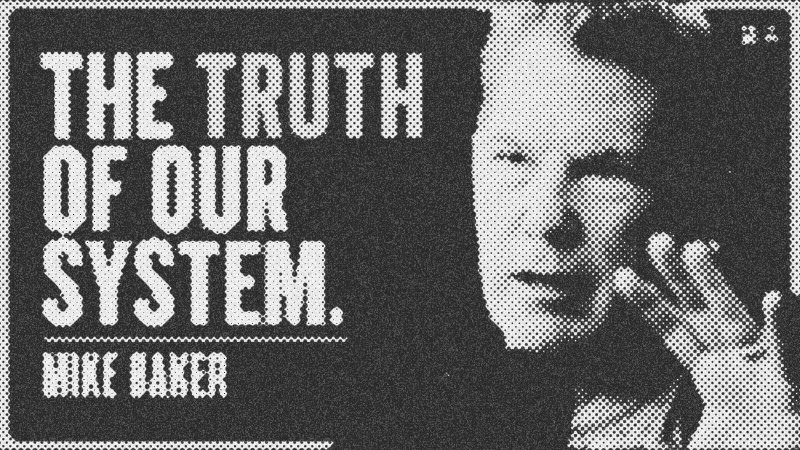
We often take our basic systems for granted. We expect the lights to turn on, the water to flow, and the cellular network to be omnipresent. When these systems fail—as seen during the AT&T Outage—the psychological impact is immediate and profound. We realize how much of our sense of security is tied to things outside our control. The reality is that much of our infrastructure, such as the power grid and water treatment facilities, was never designed to withstand the physical or cyber threats of the 21st century.
From a psychological perspective, this fragility mirrors the internal state many people experience when faced with sudden change. We build "quilt-like" mental defenses over time, patching together coping mechanisms that may work for minor stressors but crumble under significant pressure. Recognizing the vulnerability of external systems encourages us to strengthen our internal ones. Preparation, such as having a generator or basic survival supplies, is not just about physical safety; it is about reducing the cognitive load of "what-if" scenarios, allowing us to focus on our higher potential.
The Illusion of Control
Most people would find it difficult to sleep if they knew the true state of our infrastructure. This realization forces us to confront the illusion of control. We cannot personally fix the national power grid, but we can control our reaction to its failure. This shift in focus is the hallmark of emotional intelligence. By accepting the limits of our influence over macro-systems, we free up energy to invest in our micro-environments—our homes, our families, and our personal habits.
Digital Evolution: AI, History, and the Search for Truth
Technology is evolving faster than our psychological ability to process it. The rise of large language models like Google Gemini has introduced new challenges to how we perceive reality and history. When AI systems are programmed with biases—intentional or otherwise—they can distort historical facts, such as the portrayal of figures in Google image generation. This is not merely a technical glitch; it is a fundamental shift in how truth is mediated.
For those of us focused on mindset and personal growth, this digital distortion is a call to sharpen our critical thinking. If we rely on frictionless, automated sources for our understanding of the world, we risk losing our ability to discern truth. Authentic growth requires us to engage with history as it happened, not as we wish it had been. Erasing or rewriting the past, even in the name of progress, deprives us of the lessons necessary for true resilience.
The Friction of Authenticity
We are moving toward a world where 99% of content may be bot-generated. In this environment, the value of human authenticity skyrockets. Finding the truth requires effort—it requires sitting with primary sources and moving past the path of least resistance. This "friction" is actually beneficial; it trains the mind to be curious rather than passive. We must be the "antibody system" that guards against the erosion of reality, ensuring that our personal growth is rooted in what is real, not what is convenient.
Geopolitics and the Psychology of Power
The international stage is currently dominated by figures like Vladimir Putin and Xi Jinping, whose actions have ripple effects on our collective sense of security. The conflict in Ukraine and the internal dynamics of Russia, marked by the death of Alexei Navalny, highlight the brutal reality of power politics. These events often trigger a "novelty desire" in the public—a surge of support that eventually gives way to fatigue.
Maintaining long-term support for a cause requires more than just an initial emotional reaction; it requires a disciplined mindset. The "attention span" of the modern West is often cited by adversaries as a strategic weakness. If we want to be resilient individuals and a resilient society, we must learn to stay engaged with difficult truths even after the initial shock has worn off. This applies to our personal goals as much as it does to global issues. Persistence is the differentiator between those who achieve their potential and those who merely start.
Leadership and Accountability
Observing global leaders teaches us about the nature of accountability. When we see the "Dead Hand" systems of the past or the tactical precision of modern Drone Warfare, we see the high stakes of decision-making. In our own lives, leadership starts with taking ownership of our mistakes. As Mike Baker notes from his time in the CIA, the smartest thing a leader can do is empower others to admit mistakes without fear of retribution. This creates a culture of honesty and rapid improvement.
Personal Resilience in the Face of Systemic Failure
Whether it is the Fentanyl Crisis in United States or the porous nature of the Southern Border, we are surrounded by reminders of systemic failure. These issues can feel overwhelming, but they also serve as a prompt to evaluate our own "internal borders." What information are we letting in? What habits are we allowing to take root? Resilience is built by making decisions with imperfect information and moving forward anyway.
Compartmentalization and Focus
One of the most valuable skills learned in the intelligence community is the ability to compartmentalize. This is not about suppressing emotions; it is about choosing where to direct your focus at any given moment. You cannot impact the decisions of the seventh floor at Langley, but you can impact the task in front of you. By narrowing our focus to what is actionable, we prevent the paralysis of overwhelm. Life is not as difficult as we make it out to be when we decide to work a little harder and move a little faster than the average.
Conclusion: The Path Forward
The hidden secrets threatening our national security are real, but they are not an excuse for despair. Instead, they are a reason to double down on our personal development. By understanding the fragility of our systems, the biases of our technology, and the dynamics of global power, we become better equipped to navigate the future. Growth is an intentional process. It requires us to tell the truth, admit our mistakes, and maintain our agency even when the world feels unpredictable. Your strength lies in your ability to keep moving, one step at a time, toward your highest potential.
- Mike Baker
- 7%· people
- Adolf Hitler
- 4%· people
- Alexei Navalny
- 4%· people
- AT&T
- 4%· companies
- AT&T Outage
- 4%· social issues
- Other topics
- 78%
The Hidden Secrets Threatening National Security - Mike Baker (4K)
WatchChris Williamson // 2:43:35
