The Agency Shift: Transcending Antipathy and Lying for Social Desirability
Beyond the Definition: Feminism as a Psychological Frame
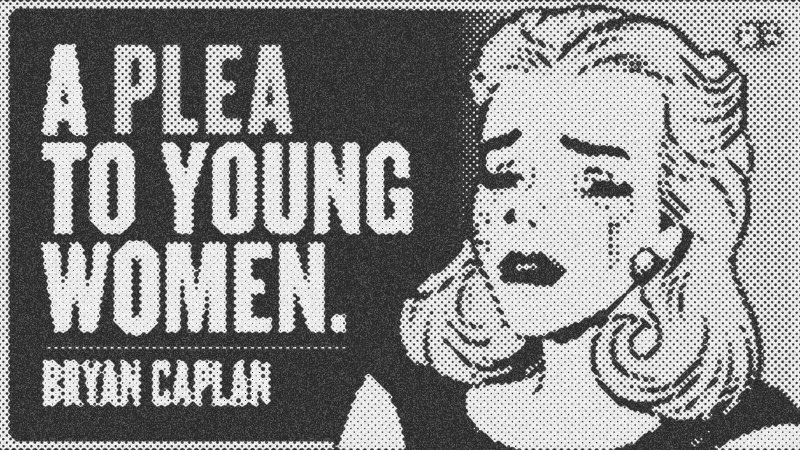
True personal growth requires us to look past argumentative labels and examine the empirical reality of how we view the world. Bryan Caplan suggests that the common definition of Feminism—as a simple belief in equality—is a form of lexical jiu-jitsu. When we poll the public, almost everyone, including those who reject the label, agrees that men and women deserve equal treatment. Therefore, the actual functional definition of the movement is the view that society generally treats men more fairly than women.
This shift in perspective is not just academic; it is deeply psychological. When we adopt a worldview predicated on the idea of systematic unfairness toward our specific group, we risk falling into the twin traps of antipathy and self-pity. These emotions are the ultimate solvents for individual agency. They tell a story where your success is limited by external forces rather than your own intentional steps. To achieve your potential, you must first ask if the data supports your grievances or if you are merely participating in a cultural meme that fosters a victim mindset.
The Psychology of Social Desirability Bias
One of the most profound obstacles to self-awareness is Social Desirability Bias. This is the human tendency to lie when the truth sounds bad or socially unacceptable. It shows up in mundane ways—claiming to vote when you didn't, or saying you "can't" attend an event when you simply don't want to. However, its most dangerous application is in our philosophical and political lives. We often blurt out what sounds virtuous without ever intending to act on it.
This gap between stated and revealed preferences creates a recursive narrative game. We see this in the disconnect between public pronouncements on Down Syndrome and the actual medical choices individuals make in private. In the context of mindset, social desirability bias often forces us to perform empathy or outrage that we don't genuinely feel, just to fit into the "gray tribe" or avoid being targeted by the "blue" or "red" tribes. This performative existence prevents us from doing the honest work of self-discovery.
The Abilene Paradox and Groupthink
Growth is often stifled by the Abilene Paradox, a phenomenon where a group collectively decides on a course of action that no individual member actually wants. This happens because each person falsely assumes that everyone else approves. It is the psychological mechanism behind the Emperor’s New Clothes. Whether it is a corporate sensitivity training session that everyone finds humiliating or a social movement that feels increasingly extreme, we often remain silent to avoid being labeled as the outlier.
Recognizing this paradox is a vital step in reclaiming your sovereignty. It allows you to realize that the "overwhelming consensus" you fear might be an illusion maintained by others who are just as afraid as you are. Breaking this cycle requires the courage to be honest about your internal state. Resilience is built when you stop pretending to agree with ideas that contradict your observations of reality.
Reclaiming Agency Through Baby Steps
When we are overwhelmed by a sense of externalized locus of control, the solution is not a radical overnight transformation. Instead, we must embrace the concept of baby steps. If you find yourself wallowing in antipathy toward the opposite sex or self-pity regarding your career, the first move is to change your surroundings. High-agency individuals do not spend their time with people who encourage them to feel like victims.
Your internal story matters. If your anger is based on a false narrative—much like the mother in The Upside of Anger who hated her husband based on a lie—the moment you realize the truth, the emotion can dissolve. By focusing on what you can change, such as who you spend time with and how you react to unfairness, you shift from a passive recipient of life to an active participant. You don't need a big lie to motivate yourself; you just need to recognize the genuine power you hold over your own small, daily choices.
The Demonization of Childrearing and Long-term Fulfillment
In the modern landscape of personal development, there has been a subtle but persistent shift toward devaluing traditional roles, particularly Motherhood. This isn't always an explicit attack; often, it is a form of apathy or the elevation of career success as the only metric of a life well-lived. Bryan Caplan points out that high education often correlates with lower fertility, not because people lack the means, but because they have been taught that other priorities are of overwhelming importance.
Personal growth should encompass all dimensions of the human experience, including the profound resilience required to raise the next generation. When we treat children as an "optional inconvenience," we ignore the historical and psychological depth of the parent-child bond. True fulfillment comes from balancing these different life goals, rather than falling into a hyper-individualist trap that views every responsibility as a threat to one's freedom.
Conclusion: The Path of the Intentional Step
The greatest threat to your potential is not a lack of opportunity, but a mindset that has been colonized by ideological dogma and social pressure. By identifying Social Desirability Bias in your own speech and recognizing the Abilene Paradox in your social circles, you can begin to peel back the layers of performative identity. Growth happens when you stop focusing on whether society is "fair" and start focusing on whether you are being honest with yourself. This is the one intentional step that changes everything.
- Abilene Paradox
- 13%· concepts
- Bryan Caplan
- 13%· people
- Social Desirability Bias
- 13%· concepts
- Chris Williamson
- 6%· people
- David Benatar
- 6%· people
- Other topics
- 50%
Why Feminism Scares Fathers - Bryan Caplan
WatchChris Williamson // 1:12:33
