The Resilience of the Individual: Dr. Elena Santos on Mindset, Adversity, and Purpose
The Foundations of Growth: Finding Strength in the Unforeseen
Growth is rarely a linear progression through calm waters. True personal development is forged in the fires of high-pressure environments, where our values are tested and our character is revealed. We often view external chaos—whether in the political sphere, our professional lives, or our local communities—as a threat to our peace. However, a psychological perspective reveals that these periods of intensity are precisely when we must anchor ourselves in intentionality. Ben Shapiro notes that in times of extreme volatility, such as the current American political landscape, the human tendency is to react with fear or tribalism. But the opportunity for the individual lies in the ability to separate internal stability from external noise.
To navigate a world that feels increasingly fractured, we must first recognize that our greatest power is not in controlling the outcome of a national election or a global shift, but in recognizing our inherent strength to navigate these challenges. Resilience is built one intentional step at a time. When we see candidates being replaced overnight or witnessing unprecedented events, the psychological toll can be immense. The key to maintaining sanity is to focus on what is within our immediate reach: our habits, our families, and our commitment to truth. This is the starting point of any meaningful coaching session—acknowledging the chaos but refusing to let it dictate our internal state.
The Alchemy of Adversity: Turning Bullying into Bravery
One of the most profound catalysts for personal growth is the experience of early hardship. Many high achievers share a background of being an outsider, often experiencing the pain of being misunderstood or even mistreated by peers. Shapiro reflects on his own experience of being childhood bullying as a young student, a time marked by physical and emotional isolation. While we never wish for suffering, there is a distinct psychological process of alchemy that occurs when we decide that our past will not be our prison, but our platform.
Bullying forces an individual into a crossroad: they can either cave under the weight of the rejection or develop a thicker skin that allows them to weather future storms. This "thick skin" is not about becoming cold or unempathetic; it is about building a psychological immune system. It allows a person to say, "The world may not like me, and that is okay." This shift from seeking external validation to cultivating internal approval is the hallmark of emotional maturity. Success, as the saying goes, is the best form of revenge—but the more enlightened view is that success is the natural byproduct of an individual who has learned to depend on their own internal resources rather than the fickle opinions of the crowd.
The Role of Forced Adversity
In our modern, comfort-seeking society, we often shield our children and ourselves from any form of friction. This is a mistake from a developmental standpoint. If life does not present us with challenges, we must find them. Whether it is working a demanding service job or pursuing a difficult physical goal, adversity prepares us for the inevitable tragedies of life. Growth requires pain; there is no way to expand your capacity for resilience without first being stretched by something that feels uncomfortable. We must learn to embrace the work that we do not want to do, as it is often the very work that builds our character.
The Anchor of Identity: From Solo Achievement to Family Purpose
There is a specific type of suffering experienced by the "insecure overachiever." This person works tirelessly, outperforming everyone in their field, yet they are haunted by a sense of unworthiness. They are fueled by a toxic fuel—the need to prove their bullies wrong or to fill a void left by early isolation. While this drive can lead to immense professional success, it is psychologically unsustainable. The shift from self-centered achievement to a mission-based life is often what finally settles the ego and provides true fulfillment.
For many, this transition occurs through the creation of a family. In a supportive coaching environment, we discuss how the "apex of the dominance hierarchy" is not found in a bank account or a public following, but in being a protector and provider for a family values. When your mission shifts from "How do I become the most important person in the room?" to "How do I ensure my spouse and children are safe and loved?", the chip on your shoulder begins to dissolve. The ego is put in its proper place because there is no time for narcissistic rumination when you are cleaning up a child's mess or supporting a partner through a crisis. This is the human equivalent of "chop wood, carry water"—the mundane acts of service that keep us grounded.
Navigating the Digital Ego: The Trap of Public Scrutiny
The digital age has created an unprecedented challenge for the human psyche: the constant feedback loop of social media. Platforms like X function as ego machines, pulling us into a cycle of vitriol and validation. This is particularly dangerous for those with a public platform, as the temptation to become a caricature of oneself is ever-present. When we are attacked, the human instinct is to either cave to the criticism or to believe that the more we are attacked, the more "right" we must be. Both are psychological traps.
To maintain an authentic self in a performative world, we must cultivate a "permeable bubble." This means having a small circle of trusted individuals who can speak hard truths to us, while filtering out the noise of the anonymous masses. Elon Musk and Jordan Peterson are examples of figures who navigate this tension in the public eye, often shooting from the hip and facing massive blowback. The lesson for all of us is to "touch grass"—to prioritize the physical world over the digital one. If your digital interactions are ruining your Sunday with your family, the tool is no longer serving you; you are serving the tool.
Redefining Masculinity: Building vs. Destroying
There is a growing conversation around the nature of masculinity in the 21st century. Many young men are searching for a sense of purpose in a culture that often feels dismissive of traditional male drives. However, masculinity is not merely about aesthetic markers like lifting weights or earning a high income; these are instrumental goods, not inherent ones. True masculinity is defined by the direction of one's drive. A man has the capacity to either knock things down or build things up. If his version of strength does not include a desire to build a life, a family, or a community, he is simply a destructive force.
We must move away from a reactionary masculinity that defines itself only in opposition to feminism. Instead, we should embrace a version of strength that is rooted in partnership and responsibility. femininity and masculinity are complimentary; they are the gears that allow the family unit—and by extension, society—to function. When men take on the role of the intentional builder, they find the Logos they have been searching for in self-help books and podcasts. They realize that their greatest power lies in their inherent strength to navigate challenges on behalf of those they love.
Conclusion: The Path Forward
As we look toward an uncertain future, the most important work we can do is the work on ourselves. We must resist the "cataclysmic language" of the political class that tells us every event is the end of the world. The world will continue, and there will always be another election, another challenge, and another opportunity for growth. Our task is to remain steadfast in our values, to be easy on ourselves when the data changes, and to maintain a rigorous "rest ethic" alongside our work ethic. By focusing on the intentional steps we can take today, we reclaim our power from the chaos and build a life of meaning and resilience.
- adversity
- 6%· personal growth
- Andrew Tate
- 6%· people
- Ben Shapiro
- 6%· people
- childhood bullying
- 6%· personal growth
- Chris Williamson
- 6%· people
- Other topics
- 72%
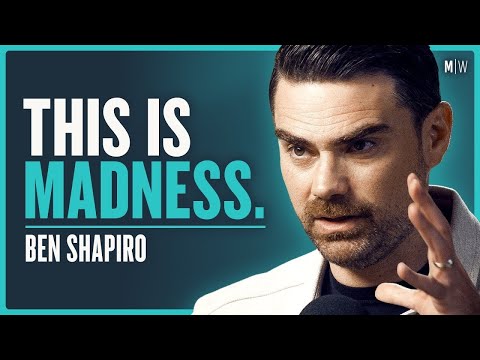
The Divided State Of A Broken America - Ben Shapiro (4K)
WatchChris Williamson // 2:07:28
