The Soul in the Machine: Navigating the Psychology of a Post-Work Utopia
The Human Predicament: Balancing Existential Risk and Radical Hope
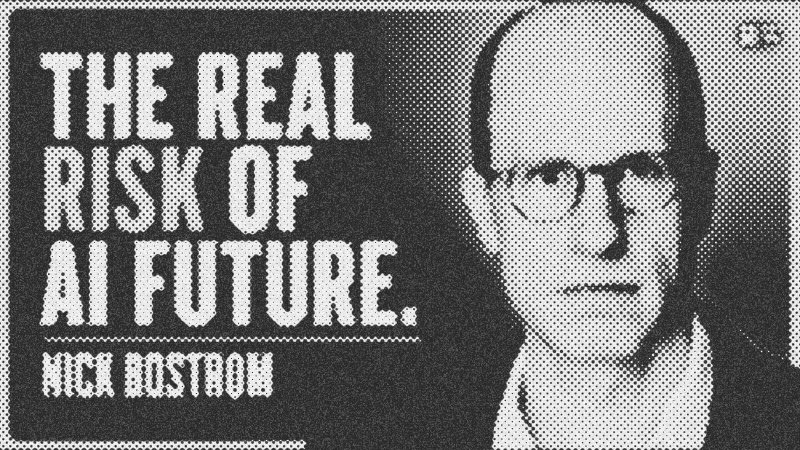
We stand at a unique juncture in the story of our species, a moment where the binary of total catastrophe and unimaginable flourishing feels equally plausible. Nick Bostrom, a philosopher who has spent decades mapping the landscape of Superintelligence, suggests that our outlook on Artificial Intelligence often reveals more about our internal psychological architecture than the actual evidence on the game board. If you are prone to anxiety, you see a "Doomer" narrative; if you are naturally optimistic, you see an "Accelerationist" future.
This isn't merely a debate about code and silicon; it is a mirror reflecting our deepest fears and highest aspirations. Growth happens when we move past these tribal identities and recognize the sheer scale of our ignorance. We are currently building systems that we do not fully understand, pushing toward a "solved world" where the traditional pillars of human meaning—labor, struggle, and scarcity—may simply dissolve. To navigate this, we must maintain a chronic awareness of the dangers while holding space for the radical hope that, if we get this right, we might finally step into an era of true human realization.
The Three Pillars of a Desirable Future
To reach a future that is not just survivable but deeply desirable, we have to solve three distinct but overlapping challenges. The first is the Alignment Problem. This is a technical hurdle: ensuring that as AI systems become more capable, they continue to execute the intentions of their creators. We cannot afford for a superintelligence to run amok or view human interests as obstacles to its own goals. While this was once a fringe topic discussed in obscure corners of the internet, it is now the focus of dedicated research teams at every major frontier AI lab.
The second is the Governance Problem. Even if we succeed in aligning AI with human intentions, we must ask: whose intentions? A perfectly aligned AI in the hands of a tyrant remains a nightmare. We have a historical track record of using technology to wage war and oppress one another. Success here requires global cooperation and a commitment to using these tools for the collective good rather than narrow, antagonistic ends.
The third, and perhaps most neglected, pillar is the Ethics of Digital Minds. We are on the verge of creating entities that may possess moral status. If a digital mind is sentient, or even if it merely possesses a persistent sense of self and long-term goals, we have a moral obligation to treat it with consideration. History is a "sad chronicle" of humanity failing to recognize the moral significance of "out-groups." We must avoid repeating this pattern with silicon-based intelligences. Extending moral consideration to something that doesn't have a face or a voice will be one of the greatest psychological shifts in human history.
The Dissolution of Scarcity and the Paradox of Leisure
Imagine a world where the "exoskeleton" of instrumental necessity is removed. For the entirety of human evolution, we have been defined by struggle. We work because we must eat; we strive because resources are scarce. In a Utopia facilitated by superintelligence, every job is automatable. This leads us into a "post-work" condition that is far more radical than simple unemployment. It is the total obsolescence of human economic labor.
This shift challenges the very foundation of our self-worth. If an AI can create better art, write better poetry, and manage better businesses, what is left for us? We might initially retreat into a "Leisure Culture," focusing on the arts, conversation, and hobbies. We would need to radically reinvent our education systems. Instead of training children to be diligent office workers who sit at desks and follow assignments, we would teach them the "art of living well." We would move from being "useful" to being "present."
However, there is a deeper layer to this onion: the condition of post-instrumentality. Much of what we do is a means to an end (X to get Y). If technology provides a shortcut to Y, the activity X becomes hollow. Even activities like shopping or child-rearing change when a robot can do them more efficiently. If you can achieve the physiological and psychological benefits of a ninety-minute gym session by taking a pill, does the struggle of the treadmill still hold meaning? This is the "shadow of pointlessness" that looms over a solved world.
Human Value in a World of Plasticity
At technological maturity, we also gain control over our own internal states—a condition of Plasticity. Through advanced neurotechnology, we could theoretically dispel boredom, anxiety, and pain at the touch of a button. We could live in a state of "permanent bliss." But this raises a profound psychological question: is a life of unearned pleasure actually a good life?
A "pleasure blob" might be subjectively happy, but most of us feel that value is found in the "texture of experience." We value understanding, aesthetic appreciation, and the contemplation of the divine. In a Utopia, we might find meaning in "Artificial Purposes"—games where we deliberately limit our means to achieve an arbitrary goal, like golf. We create constraints specifically so we can enjoy the process of overcoming them.
We might also find that "Natural Purposes" remain. Interpersonal relationships and cultural traditions provide a framework where we cannot outsource our presence. If a friend wants you to be there, a robot replacement won't suffice. The future of human meaning may lie in these "entanglements" where our unique, un-automatable presence is the only thing that satisfies the desires of those we love.
The Narrow Path and the Long View
We are currently rolling down a "balance beam," and it is difficult to predict which way the ball will fall. The idea that the current human condition will simply continue for thousands of years is "radically implausible." We are either heading toward a transformative breakthrough or a catastrophic reset.
One of the most surprising developments in the last decade is how "anthropomorphic" AI has become. We have discovered that if you give a Large Language Model a "pep talk"—telling it to "think step by step" because your job depends on it—it actually performs better. This suggests that the path to superintelligence might be more continuous and incremental than we expected, driven by the sheer scale of compute rather than a single "algorithmic hack."
This gradual pace gives us a slim window for intervention. It allows for the possibility of coordination between frontier labs and the development of global norms. We must use this time to ensure that the transition is inclusive and thoughtful. The upside is so enormous that there is plenty of room for all our values to be realized. The tragedy would be to skip the hard work of cooperation and descend into conflict before we even reach the meadow on the other side of the cliff.
- Utopia
- 11%· concepts
- 1984
- 5%· books
- Albert Einstein
- 5%· people
- Alignment Problem
- 5%· concepts
- Anthropic
- 5%· organizations
- Other topics
- 68%
Are We Headed For AI Utopia Or Disaster? - Nick Bostrom
WatchChris Williamson // 1:28:44
