The Resilience of Truth: Navigating Geopolitics and Global Mindsets with Jamie Metzl
Navigating the Complexity of Global Truth and Personal Resilience
In an era defined by rapid information flow and shifting global powers, our ability to maintain a clear-eyed perspective on truth becomes a fundamental act of psychological resilience. The ongoing discourse surrounding China and its role in the global community serves as more than just a geopolitical case study; it represents a profound challenge to how we process reality, confront institutional cover-ups, and maintain our personal agency. Jamie Metzl, a leading geopolitical expert and futurist, suggests that the greatest threat to our collective well-being isn't just a virus or a trade war, but the erosion of transparent, accountable structures that protect the common good.
Developing a growth mindset in this context requires us to look beyond surface-level narratives. When we discuss the origins of a global crisis or the disappearance of public figures like Peng Shuai, we are really discussing the integrity of the systems we inhabit. Resilience is not merely about bouncing back from personal setbacks; it involves the strength to demand transparency and the courage to acknowledge uncomfortable truths about the world's power dynamics. By understanding the strategies used by authoritarian regimes to manage perception, we can better safeguard our own mental autonomy and contribute to a more honest global dialogue.
The Psychology of the Lab Leak and Institutional Transparency
One of the most significant tests of our collective resilience has been the investigation into the origins of COVID-19. Jamie Metzl highlights a critical distinction between a natural zoonotic event and a lab-related incident involving the Wuhan Institute of Virology. While the scientific community often defaults to historical precedents of natural spillover, the circumstantial evidence regarding high-containment labs in Wuhan demands a different kind of analytical bravery. The World Health Organization and its leadership, specifically Dr. Tedros Adhanom Ghebreyesus, have faced immense pressure to balance diplomatic relations with the pursuit of scientific truth.
The Anatomy of a Cover-Up
Transparency is the bedrock of trust, yet the Chinese Communist Party has prioritized narrative control over collaborative investigation. This includes the removal of the Wuhan Institute of Virology's viral database and the silencing of domestic whistleblowers. From a psychological perspective, this creates a environment of gaslighting on a global scale. When institutions like the Lancet or the EcoHealth Alliance, led by Peter Daszak, become entangled in political maneuvering, the public's sense of security is undermined. Resilience in this space means refusing to accept simplified answers and supporting independent groups like Drastic and the Paris Group who seek to uncover hidden data.
Engineering Consent and Silencing Dissent
The case of Peng Shuai illustrates the extreme lengths to which an authoritarian system will go to maintain its internal hierarchy. When a high-profile athlete accuses a former member of the Politburo of sexual assault, it isn't just a personal legal matter; it is a perceived threat to the stability of the entire state. The subsequent "disappearance" and staged reappearance of Peng Shuai serve as a chilling reminder of how narrative control is enforced. For those of us watching from the outside, maintaining our sense of empathy and continuing to speak for those who have been silenced is a vital component of our moral resilience.
Geopolitical Strategy as Social Engineering
China's ambitions extend far beyond its borders, manifesting in the South China Sea through the creation of artificial islands and the assertion of the Nine-Dash Line. This "status quo bias" strategy—whereby a nation creates a new reality on the ground and dares the world to challenge it—is a masterclass in psychological anchoring. By building military installations on reefs, China transforms an illegal claim into a physical fact. This mirrors how individuals or organizations can sometimes bulldoze over boundaries to set new, unfavorable precedents.
The Domestic Engineering of the 'Alpha Male'
Internally, the Chinese Communist Party is attempting to engineer the very identity of its citizens. Recent restrictions on video games and the crackdown on what the state deems "effeminate" portrayals of men in media are part of a broader push to cultivate a specific brand of rugged, traditional masculinity. This is social engineering at an industrial scale, designed to ensure the population is prepared for a future of national struggle. It stands in stark contrast to the values of open societies, which generally celebrate diversity of expression and individual autonomy as sources of strength rather than weakness.
Information Warfare and Civil Discontent
Jamie Metzl notes that while Russia and China may not be the primary authors of Western civil discontent, they are certainly expert at pouring "lighter fluid" on existing fires. Using platforms like Twitter and Facebook, foreign actors amplify divisive issues like gun rights or racial tensions to weaken the internal cohesion of their adversaries. The antidote to this isn't just better algorithms; it is a reinvestment in our own "culture of civility." Building resilience in our democracies requires us to recognize when our emotions are being manipulated by outside forces and choosing to engage with our fellow citizens with empathy rather than vitriol.
Implications for Future Global Cooperation
The current trajectory suggests a world increasingly divided between open societies and authoritarian models. The United States, under various administrations from Donald Trump to Joe Biden, has struggled to articulate a unified response to these challenges. Moves such as withdrawing from the Trans-Pacific Partnership were, in Jamie Metzl's view, significant strategic errors that yielded ground to China. To move forward, we must build "foundations under our castles in the sky," creating international structures that prioritize human rights and mutual accountability.
The Path Toward One Shared World
Jamie Metzl's work with OneSharedWorld emphasizes that the most pressing problems—pandemics, climate change, and nuclear proliferation—do not respect national borders. Our survival depends on our ability to balance our narrow national interests with our broader identity as members of a single human species. This shift in mindset is the ultimate goal of personal and collective growth. It requires us to move past the zero-sum logic of the past and embrace a model of deep global interdependence. Only by recognizing our shared vulnerability can we build the resilience necessary to face the uncertainties of the 21st century.
Conclusion: Reclaiming the Narrative of Growth
The challenges posed by global power shifts are significant, but they also offer an opportunity for profound self-discovery and collective renewal. True growth happens when we choose to step out of the shadows of fear and into the light of accountability. Whether it is demanding a full investigation into the origins of a pandemic or standing up for the rights of individuals across the globe, our actions define our character. By cultivating a mindset of resilience, empathy, and uncompromising truth, we ensure that the future is shaped not by those who can shout the loudest or hide the most, but by those who have the courage to build a world that works for everyone. The journey toward global well-being begins with a single, intentional step toward transparency and shared responsibility.
- China
- 19%· companies
- Chinese%20Communist%20Party
- 4%· companies
- COVID-19
- 4%· products
- Donald%20Trump
- 4%· people
- Dr.%20Tedros%20Adhanom%20Ghebreyesus
- 4%· people
- Other topics
- 67%
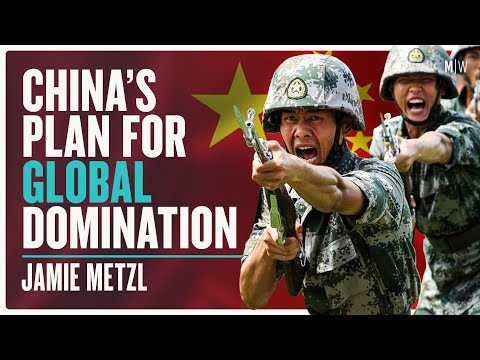
China's Plan For Global Domination - Jamie Metzl
WatchChris Williamson // 1:16:11
