Naval Ravikant reveals why pride is the most expensive human trait
Naval Ravikant, the founder of AngelList, often speaks in aphorisms that feel like software updates for the human mind. In a world characterized by hyper-connectivity and status-seeking, his philosophy suggests that the ultimate game is not winning against others, but winning the internal battle for peace and presence. The core challenge of modern existence is that we are biological creatures evolved for scarcity, now operating in an environment of infinite digital abundance. This mismatch creates a cycle of constant desire, where we sacrifice the very happiness we seek in the hope that success will eventually grant it back to us. Understanding Ravikant’s ‘harsh truths’ requires a shift from viewing life as a competitive ladder to seeing it as a series of intentional choices regarding where we place our most valuable currency: attention.
Pride blocks the path to rapid learning
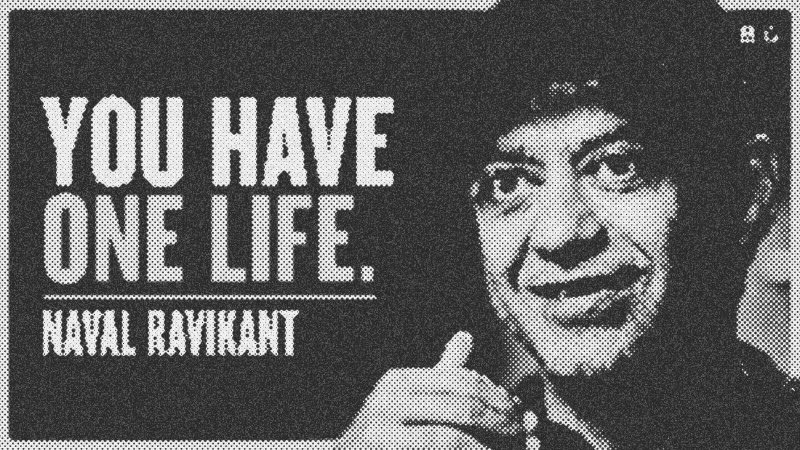
One of the most profound barriers to personal evolution is the weight of our own past proclamations. Ravikant identifies pride as the most ‘expensive’ trait because it forces us to maintain a suboptimal consistency. When we become famous for a specific opinion or successful in a particular niche, we often feel ‘hostage’ to that identity. This internal pressure prevents us from admitting we were wrong or that we have updated our beliefs. In the fast-moving landscape of technology and business, the ability to ‘go back to zero’ and start over as a fool is the ultimate competitive advantage.
Elon Musk serves as the primary archetype for this brand of anti-pride. Despite massive success with PayPal, Musk was willing to risk his entire fortune on SpaceX and Tesla, effectively returning to a state where he had to borrow money for rent. This willingness to look like a failure in the eyes of the public is what allows for ‘zero-to-one’ innovation. Most people, once they achieve a modicum of status, become too proud to fail again. They get trapped at a ‘local maximum’—a hill that is comfortable but far lower than the mountain they could climb if they were willing to descend into the valley first.
Desire is a contract for future unhappiness
We often treat happiness as a destination reached through success, but Ravikant argues that happiness is actually the state where nothing is missing. Every time we manifest a desire, we are effectively signing a contract with ourselves to be unhappy until that desire is fulfilled. This creates a ‘dopamine loop’ where the achievement of a goal provides only a fleeting moment of relief before the next desire takes its place. The antidote is not necessarily total renunciation—like the Gautama Buddha or Diogenes—but being extremely choosy about our desires.
To be successful, you must focus. You cannot be great at everything, and trying to fulfill every random desire that pops into your head fritters away your mental energy. Ravikant suggests that material success is actually easier to achieve than the total renunciation of desire. Therefore, the most practical path for most people is to play the ‘money game,’ win it, and then be free of it. However, the trap is that many people win the game and then simply keep playing at higher levels of difficulty, never actually cashing in their chips for the peace of mind they originally sought.
Status games are inherently zero sum
Humans are evolutionarily hardwired for status because, in hunter-gatherer times, status was the only way to ensure survival. Today, we have replaced that with wealth creation, yet the ‘limbic brain’ still craves the ranking ladder. The critical distinction Ravikant makes is that wealth is a positive-sum game while status is zero-sum. For you to move up a status hierarchy, someone else must move down. This makes status games inherently combative and filled with ‘invective’ against others.
In contrast, wealth creation involves producing a product or service that provides abundance for everyone. You can be wealthy, and your neighbor can be wealthy, without either of you taking from the other. Despite this, many people who achieve ‘post-money’ status find themselves drawn back into status games—donating to non-profits just for the name on the building or seeking fame for fame’s sake. Ravikant warns that seeking respect from the masses is a ‘fool’s errand.’ True self-esteem is a reputation you have with yourself, built by adhering to your own moral code even when no one is watching.
Freedom means the end of the scheduled life
Modern productivity often emphasizes optimization through rigorous scheduling, but Ravikant views a calendar as a tool of imprisonment. For him, true freedom is being able to act on inspiration the moment it strikes. Inspiration is perishable; if you have a brilliant idea for a blog post or a business solution at 10:00 AM, but your calendar says you have a ‘tedious dinner’ or a meeting, that inspiration dies.
By deleting his calendar and refusing to keep a schedule, Ravikant maximizes for serendipity. He advocates for ‘holistic selfishness,’ which involves unapologetically prioritizing your own time and energy. This is not about being rude, but about recognizing that life is roughly 4,000 weeks long. Frittering away those weeks on obligations that your ‘past self’ committed to is a waste of your ‘present self.’ When you are free to follow your natural curiosity, you enter a state of flow that actually makes you more productive than the over-scheduled individual. You begin to ‘productize yourself,’ finding work that feels like play to you but looks like work to others.
Truth exists at the level of the individual
Many philosophical paradoxes, such as the debate over free will or the meaning of life, arise because we ask the question at the human level but try to answer it at the universal level. Ravikant argues that if you ask Chris Williamson if he has free will, the answer is yes—he feels it, he acts on it, and society holds him accountable for it. It is only when we ‘pull the trick’ of answering from the viewpoint of a deterministic universe that the paradox appears.
Wisdom, therefore, is the set of truths that cannot be transmitted through words alone. You have to rediscover them for yourself through specific experiences. This is why reading philosophy often feels ‘trite’ until you have lived through the pain that makes the lesson resonate. Whether it is realizing that fame won’t fix your self-worth or that money won’t make you happy, these are ‘unteachable lessons’ that each individual must learn the hard way. The goal of life is to move from ‘seeming wise’ through rote memorization to ‘being wise’ through deep, first-principles understanding.
The next frontier of biology and drones
Looking toward the future, Ravikant predicts that historians will look back at current medicine as the ‘Stone Age.’ Our lack of deep explanatory theories in biology means we rely on ‘cutting things out’ or memorizing that ‘Drug A affects Symptom B’ without understanding why. He sees GLP-1 drugs (like Ozempic) as a fundamental breakthrough, comparable to antibiotics, because they solve the mismatch between our evolved cravings and modern caloric abundance.
Similarly, he anticipates a total transformation in warfare. The age of the aircraft carrier and the tank is over; the future belongs to ‘autonomous bullets’ and swarms of drones. This shift reflects the broader theme of his philosophy: the increasing leverage of technology allows a few individuals to exercise power that was previously the domain of entire states. In this high-leverage world, the most important skills are no longer physical strength or rote memorization, but judgment, taste, and the ability to remain present in the face of infinite distraction.
Conclusion
Navigating the game of life requires a ruthless prioritization of internal peace over external validation. By recognizing that status games are limited, that pride is a barrier to growth, and that attention is our only true currency, we can begin to live unapologetically on our own terms. The ultimate success isn’t just winning the game, but reaching a point where you no longer feel the need to play. As you move forward, ask yourself: which desires are truly yours, and which were simply ‘mimetic viruses’ picked up from the crowd? Growth happens one intentional step at a time, starting with the courage to be yourself.
- 8LE
- 5%· companies
- Air Chat
- 5%· products
- AngelList
- 5%· companies
- Brian Johnson
- 5%· people
- Chris Williamson
- 5%· people
- Other topics
- 77%
44 Harsh Truths About The Game Of Life - Naval Ravikant (4K)
WatchChris Williamson // 3:16:19
