The Psychology of Extreme Success: Rewiring Resilience and Decision-Making
The Strategic Power of Starting from Zero
Most people view a lack of resources or a difficult life as a terminal disadvantage. Dr. Alex Hormozi challenges this by flipping the script: when your life sucks, you have nothing to lose, and that makes you a dangerous competitor. In business and personal growth, every position has unique advantages. The "big guys" are heavy and slow; the newcomer is nimble. If you are starting from the bottom, you have the ultimate freedom to take risks quickly because the downside is already your current reality. By eliminating the fear of the downside, you decrease your action threshold. You can move faster, iterate more often, and pivot without the baggage of a massive reputation to protect.
Alex Hormozi points out that the fear of losing what little we have is often a psychological fabrication. People don't fear losing their "nothing"; they fear the judgment of one or two specific voices—an uncle, a parent, or a former peer. This is why shame only exists in the shadows. Once you bring that specific fear into the light and name the person whose opinion is holding you back, the power of that fear evaporates. You realize that living a life below your potential just to avoid a Thanksgiving comment from "Uncle Harry" is an irrational trade. The advantage of a "failed" business or a podcast with no listeners is that no one is watching. This is the preseason. These touchdowns don't matter yet, which means you have the perfect environment to practice and fail until you become undeniable.
Environmental Architecture and Behavioral Triggers
If you want to change your life, the easiest lever to pull is your environment. We often attribute our failures to a lack of willpower, but human behavior is largely a response to triggers and cues. Hormozi cites the fascinating case of Vietnam War veterans and heroin addiction. While 90% of addicts who stay in their same environment relapse, those who returned from Vietnam to a completely different home environment had a massive success rate in staying clean. The triggers were gone. The cues for the behavior were extinguished.
This principle applies to high performance as well. You can't rely on your phone's alarm to remind you to be productive if your physical space is cluttered with distractions. To build new habits, you must place the physical cues in your way. If you want to take a supplement, put it at your "watering holes"—the desk where you work or the table where you eat. Conversely, to stop a bad habit, you must increase the friction. If you are struggling to stay focused, you don't need more motivation; you need a different room. By segmenting your tasks—writing in one chair, answering emails in another—you condition your brain to enter specific "modes" automatically. Behavior follows the architecture of the space you inhabit.
The Trap of Easy Opportunities and Distractions
As you begin to achieve success, your greatest enemy changes. It is no longer a lack of opportunity; it is an overabundance of it. Businesses often die of indigestion, not starvation. They overeat by saying yes to every "easy" opportunity that comes their way. This is the "Woman in the Red Dress" from The Matrix. As you become more successful, the distractions become more attractive. You might be able to say no to a $10,000 distraction, but can you say no to a $100,000 one that takes you off your core path?
Real success comes from doing the obvious thing for an extraordinary period of time without convincing yourself you are smarter than you are. The moment you think you are smart enough to handle five different projects, you lose the leverage of focus. You cannot overestimate the unimportance of practically everything. The most successful people, like Warren Buffett, say no to almost everything. They understand that every "yes" to a new project is a "no" to the one thing that actually matters. High-level achievement requires a refusal to be seduced by the mediocre wins that steal your time from the massive ones.
The Anatomy of Resilience: This Is What Hard Feels Like
There is a specific point in every journey where the novelty wears off and the pain sets in. Hormozi recounts a lesson from his days as a fraternity president: every new group of pledges revolts around day fourteen. They realized reality didn't match their expectations of a perpetual party. The solution wasn't to make it easier, but to reset their expectations by saying, "This is what hard feels like."
When you are in the middle of a project and you feel like quitting, you aren't experiencing a sign that you should stop; you are experiencing the price of admission. Most people stop at this exact point, which is why the bar for success is actually very low. If you can simply endure the "shitty" feeling of hard work without labeling it as a catastrophe, you move into the top percentile. Success is built on an undeniable stack of proof. You don't get confident by shouting affirmations in a mirror; you get confident by doing the thing you said you were going to do. When you have a stack of proof that you have survived hard things, the "hard" ceases to be a threat and becomes a milestone.
Reframing Blame and Reclaiming Power
Personal power follows the blame finger. Wherever you point the finger is where the power goes. If you blame the economy, your parents, or your upbringing for your current state, you are effectively saying they have the power over your future. Even if you are completely justified in your grievances—even if you have faced genuine inequality or trauma—the only way to move forward is to say, "It's my fault."
This isn't about ignoring the past; it's about reclaiming the agency to change the future. You can be an inspiration specifically because you succeeded despite those circumstances. There is always someone who had it worse and did it better. By taking 100% responsibility, you remove the external shackles. You might have been born without a leg, but you can still choose to put on the prosthetic and run. The moment you stop waiting for an apology or a systemic change to start your life is the moment you become truly free. Your parents' dreams may have to die for yours to live, and that's a trade you must be willing to make.
Solving for the Right Problem
Highly successful people often share a specific "broken" triad: a superiority complex, massive insecurity, and incredible impulse control. They are running toward a vision while running away from a "cat" (their fear). While this makes them world-class achievers, it doesn't necessarily make them peaceful. This leads to the ultimate question: what problem are you solving for? If you want to be the richest man in the world, you will likely have to sacrifice peace, hobbies, and balance.
Alex Hormozi argues that criticizing someone for their lack of "work-life balance" is often just projecting your own preferences onto them. If someone loves the game of business as much as someone else loves knitting, why should they stop? The point of the game is to keep the game going. If you view your work as play, you will walk further than the person who is just trying to reach the destination. Success is an infinite game. There is no "winning" at fitness or marriage or business—there is only staying in the game and continuing to grow. When you align your daily actions with a game you actually enjoy playing, success becomes a byproduct rather than a chore.
Conclusion
The path to achieving your potential isn't found in a secret formula, but in the relentless execution of the obvious. It requires the courage to be "directionally correct" and the humility to start before you have the perfect answer. Whether it's moving to a new city like Austin to find your tribe or simply choosing to prepare for 20 minutes before a meeting, small intentional steps build the proof required for massive shifts. The future belongs to those who can conquer their tiny impulses today to secure their massive dreams tomorrow.
- Alex Hormozi
- 14%· people
- Austin
- 7%· places
- Chris Williamson
- 7%· people
- David Goggins
- 7%· people
- James Clear
- 7%· people
- Other topics
- 57%
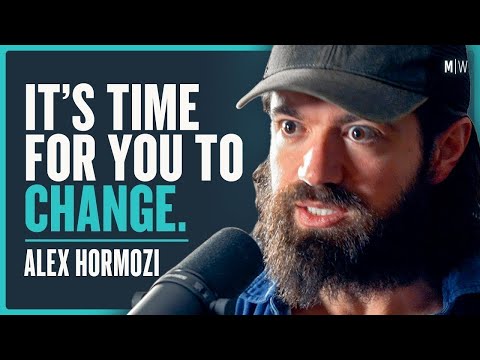
Success Is Just a Side Effect of Following These Principles - Alex Hormozi
WatchChris Williamson // 1:46:06
