The Always Day One Mindset: How Internal Culture Fuels Big Tech Dominance
The Peril of Stasis and the Day One Mandate
When Jeff Bezos addressed a stadium filled with thousands of Amazon employees, he delivered a chilling definition of what he calls Day Two. To Bezos, Day Two is not just a secondary phase of business; it is stasis, followed by irrelevance, followed by a slow, painful decline, and ultimately, death. This philosophical framework explains why every building at Amazon is named Day One. It serves as a constant, physical reminder that the moment a company stops acting like a startup—the moment it becomes precious about its past successes—it begins to die.
In the modern economy, the shelf life of a Fortune 500 company has plummeted from 67 years in the 1920s to a mere 15 years today. This acceleration means that resting on a flagship product is no longer a viable long-term strategy. The tech giants that dominate our lives stay on top not just through massive capital or questionable competitive tactics, but through a radical internal culture that prioritizes reinvention over protectionism. They have moved beyond the factory era, where workers were mere extensions of machines, into a model where human ingenuity is the primary engine of growth.
Shifting from Execution to Ideal Work
To understand why companies like Google and Facebook are lapping the rest of the economy, we must look at how they categorize labor. Most traditional organizations are trapped in an execution-heavy cycle. In these environments, employees spend the vast majority of their time on repetitive tasks: moving data between spreadsheets, processing formulaic invoices, or writing routine letters. This is execution work—necessary for keeping the lights on but useless for moving the needle toward the future.
Conversely, Alex Kantrowitz argues that the most successful companies ruthlessly automate execution work to make room for ideal work. Ideal work is the process of coming up with new concepts and bringing them to life. While a typical company might hire a creative individual only to drown them in administrative process within six months, the tech giants use technology to protect the creative capacity of their workforce. By viewing every employee as a potential inventor rather than a task-executor, these firms create a bottom-up innovation engine that their competitors simply cannot match.
Amazon’s Automation and the Six-Pager
Amazon provides perhaps the most clinical example of this transition. Through a program called Hands Off the Wheel, the company has used machine learning to take over tasks that used to require an army of vendor managers. Historically, these managers spent their days negotiating prices and stocking fulfillment centers. Now, Amazon relies on Project Yoda—an internal machine learning initiative—to handle inventory and pricing with a degree of precision humans cannot replicate.
Instead of laying off these displaced workers, Amazon reassigns them as product managers and inventors. To facilitate this, they use a unique communication tool: the six-pager. Jeff Bezos famously banned PowerPoint, replacing it with deeply researched, six-page narrative memos. These documents require the author to think through every detail of a proposal in 11-point font. Because the information is standardized and dense, a good idea can move from a low-level employee to a top lieutenant like Jeff Bezos with incredible speed. This system turned a technical advisor into the architect of Amazon Go, the cashierless store that began as a wild idea and became a reality because the culture provided a pathway for it to flourish.
Feedback Loops and Radical Transparency
While Amazon relies on written narratives, Facebook maintains its edge through a feedback culture that borders on the extreme. Within Facebook, feedback is viewed as a gift. It is not just a tool for annual reviews; it is a constant, real-time mechanism used to challenge ideas at every level. This openness allows the company to pivot rapidly. It is the reason Facebook successfully transitioned from a desktop-centric directory to a mobile-first platform and is now shifting toward private messaging and groups.
Google employs a different strategy: side-to-side collaboration through radical transparency. Most of Google's internal documents—Docs, Sheets, and Slides—are set to open by default. This means almost anyone in the company can peek into the work of other divisions. This lack of friction allowed Google to build the Google Assistant, a product that required the seamless integration of Search, Android, Gmail, and YouTube. Without this cross-pollination, the assistant would have been a disjointed failure. By making information the common property of the company, Google ensures that no project is siloed off from the collective intelligence of the organization.
The Microsoft Transformation and Apple’s Silo Risk
Perhaps the most dramatic example of a culture shift is Microsoft under Satya Nadella. For years, the company was mired in Day Two thinking under Steve Ballmer, who famously prioritized the Windows operating system above all else. Steve Ballmer even went so far as to mock the iPhone, refusing to allow it in meetings. This protectionism led to stasis. Satya Nadella broke this cycle by embracing a cloud-first strategy, even though it accelerated the decline of the Windows desktop business. He realized that for Microsoft to survive, it had to stop protecting its past and start inventing its future.
In contrast, Apple continues to operate on a model of extreme secrecy and siloing. While this culture of refinement has made the iPhone the best hardware on the market, it creates significant hurdles for products that require cross-divisional collaboration, like the HomePod or Apple's struggling self-driving car project. By keeping engineers in separate rooms, Apple risks falling behind in the race for artificial intelligence and ambient computing. Refinement is excellent for perfecting a product, but reinvention requires the kind of open, fluid communication that Apple has historically resisted.
The Future of Work and Global Implications
As automation tools like UiPath become available to the broader market, the strategies used by the tech giants will no longer be their exclusive domain. We are entering an era where technology will change our professional lives as fundamentally as it has changed our consumer lives. The goal for any modern leader should be to minimize the drudgery of paperwork and maximize the time spent on high-value problem solving.
Imagine a world where doctors spend their time with patients instead of filling out charts, or where government officials spend their time solving poverty and climate change rather than navigating bloated bureaucratic processes. This shift is possible if we adopt the Day One mentality. Growth is not a final destination; it is a continuous process of shedding the old to make way for the new. Whether you are running a multi-trillion dollar tech firm or a small local business, the lesson remains the same: the moment you stop inventing is the moment you start dying.
- Amazon
- 13%· companies
- 11%· companies
- Apple
- 9%· companies
- 9%· companies
- Jeff Bezos
- 7%· people
- Other topics
- 51%
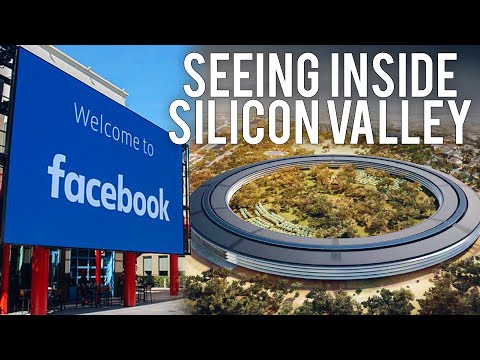
Why Are The Biggest Tech Companies So Dominant? | Alex Kantrowitz | Modern Wisdom Podcast 174
WatchChris Williamson // 57:08
