The Love Deficit: Unpacking the Paradox of the Sexual Revolution
The Promises of Autonomy and the Reality of Isolation
The 1960s arrived with a technological and social promise that seemed to offer the ultimate liberation: the decoupling of sex from reproduction. Reliable birth control pill was marketed as a tool to strengthen marriage and empower women by giving them absolute control over their fertility. Proponents believed this shift would reduce abortion rates, eliminate unplanned pregnancies, and create a world of intentional, happy families. However, decades of data reveal a starkly different trajectory. Instead of strengthening the marital bond, we witnessed a sharp rise in divorce and cohabitation. Instead of reducing abortion, rates skyrocketed. The revolution promised a grand expansion of freedom, but it delivered a profound "human subtraction" that left individuals more autonomous yet significantly more isolated.
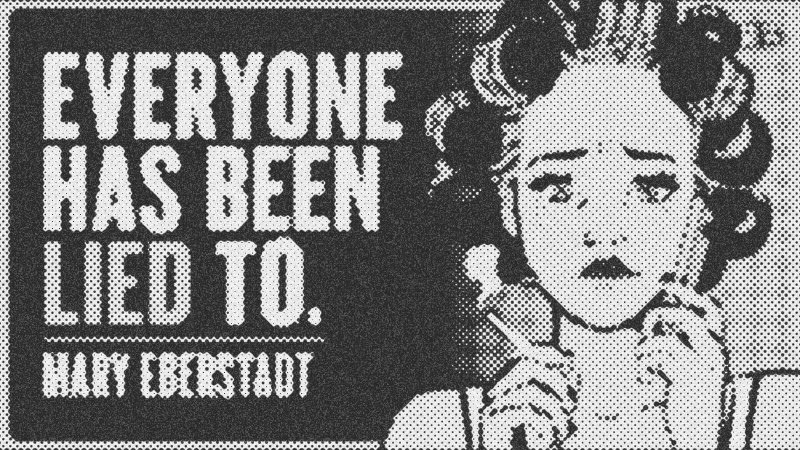
When we look at the winners and losers of this shift, the picture is unsettling. The primary beneficiaries have been predatory men who can now access sex without the traditional social or financial costs of commitment. The losers, unfortunately, are those who rely on stable social structures for protection and growth: women, children, and the very concept of romance itself. We are living in the fallout of a massive cultural experiment that prioritized immediate pleasure over long-term fulfillment, and the results are written in the rising rates of loneliness and social fragmentation.
The Shift in Intentionality and the Burden of Motherhood
One of the most significant psychological shifts following the wide adoption of the birth control pill was the change in how pregnancy is perceived. In the pre-revolutionary world, an unplanned pregnancy was viewed as a shared challenge for a man and a woman. Social norms, such as the now-antiquated "shotgun wedding," enforced a level of male accountability. The community expected the man to step up as a provider and protector.
Once birth control pill became unremarkable, the responsibility for pregnancy shifted almost entirely to the woman. If she became pregnant, it was viewed as a failure of her technology or her judgment. This isolation of the pregnant woman has paradoxically led to an increase in abortion. When pregnancy becomes "her problem" rather than "their problem," the pressure to terminate increases as the man is socially excused from his traditional role. This shift ended the social pressure for men to commit, leading to a rise in fatherless homes and a decline in the perceived value of the male role as a protector.
The Crisis of the Sidelined Male
Sociologist Lionel Tiger argued in his work, The Decline of Males, that the sexual revolution fundamentally sidelined men. When women gained sole control over reproduction, the traditional male roles of provider and protector lost their social currency. If a man is no longer needed to protect his offspring or provide for a family because the state or the woman’s autonomy has replaced his role, he often becomes listless or predatory.
We see this manifest in the "listlessness of men" that many modern women complain about today. When the standards for access to sex are lowered—moving from the requirement of marriage and community standing to merely being in a nightclub at 3:00 a.m.—men will meet the lower standard. This reduction in expectations has stripped men of the "glory" of responsibility. Millions of young men are now falling into a cycle of pornography use, which acts as a substitute for real-world romance and further degrades their ability to form healthy, protective relationships. This isn't just a moral failing; it is a response to a culture that no longer gives men something grand to strive for.
The Ghost in the Machine: Popular Culture as Evidence
The pain of this revolution is most visible in the art produced by the children who grew up in its wake. If we look at the rap and rock music of the 1990s, the themes are not primarily about liberation; they are about abandonment. Artists like Eminem and Tupac Shakur built their careers on lyrics detailing the trauma of absent fathers and dysfunctional adult environments.
In Tupac Shakur's "Papa’s Song," he describes the heartbreaking image of a boy trying to play catch by himself. These aren't just lyrics; they are the testimonies of a generation raised in fatherless homes facilitated by the collapse of sexual norms. While critics often focus on the misogyny in rap music, they frequently miss the deeper root: a profound hurt caused by the "human subtraction" of the family unit. The music reflects a world where the adults cannot be trusted and children are left to protect one another in the absence of a stable home.
The People Deficit and the Loss of Social Knowledge
The sexual revolution didn't just change how we have sex; it changed how many people we have in our lives. Through family shrinkage, divorce, and the rise of the only child, we have created a "people deficit." We are social creatures who learn how to be human by observing our kind in close quarters. In larger, multi-generational families, a young person would naturally learn how to care for a baby, how to interact with the elderly, and how to communicate with the opposite sex in low-stakes environments like a kitchen or a backyard.
Today, it is possible to reach middle age without ever holding a baby or living with an aging relative. This lack of social knowledge leads to a profound sense of insecurity and anxiety. When we lack "training wheels" for human interaction—such as having brothers, sisters, and cousins of the opposite sex—we enter the dating market with fear rather than competence. This insecurity is often masked by belligerent rhetoric online, where men adopt reflexive misogyny and women adopt a defensive, male-aping toughness. Both are symptoms of a generation that is fundamentally lonely and lacks the basic social muscles required for nurture and connection.
Identity Politics as a Substitute Family
As the family unit imploded, human beings did not lose their need for belonging. Instead, they began to attach themselves to arbitrary tribes. The rise of identity politics can be seen as a direct response to the loss of family identity. In 1977, the Combahee River Collective released a manifesto that is often cited as the birth of identity politics. It was a document born of sadness, where women declared they were giving up on men entirely and would only trust those who shared their specific victimhood.
When you can no longer define yourself as a daughter, a sister, or an aunt because your family is a fragmented mess of step-siblings and divorces, you look for a "chosen family." Whether it is based on race, gender, or sexual orientation, these groups provide the sense of protection and validation that the home used to offer. However, these political identities are often absolutist and adversarial. They don't offer the redemption or unconditional love of a healthy family; they offer a performative belonging that requires constant adherence to groupthink. We have traded the messy, loving reality of kinship for the cold, rigid abstractions of ideology.
The Loneliness at the End of the Road
The most tragic evidence of the revolution's failure is found at the end of life. Sociology is currently seeing an explosion in "loneliness studies" because the generations that bought into the promise of radical autonomy are now reaching old age alone. In some Western countries, a staggering number of people over 80 have not been called by their first name in over a month because there is no one left who knows them intimately.
We have run a radical experiment on Homo sapiens that ignores our nature as social mammals. We recognize the cruelty of separating a baby monkey from its mother or an elephant from its herd, yet we have normalized a culture that encourages humans to live like "autonomous electrons." This isn't liberation; it is a self-inflicted wound. The drop in life expectancy in the United States and the rise of the opioid epidemic are symptoms of a hole in the heart of society that can only be filled by human connection and the restoration of the family.
Moving Toward a New Normal
Recognizing these failures is not about a "retrograde" desire to return to the 1950s. It is about using our reason to evaluate the evidence of harm. Just as society eventually acknowledged that tobacco smoking was causing a public health crisis and began to re-stigmatize it, we may be at the beginning of a "renorming" regarding the sexual revolution. We are starting to see that radical autonomy is not in our best interest.
Growth begins with empathy. We must stop mocking the sensitivities and "fragility" of the younger generation and instead recognize their suffering as a legitimate response to a love deficit they did not create. There is a path back to a world of redemption, marriage, and motherhood, but it requires us to value the "glory" of being a man or a woman and to prioritize the needs of the most vulnerable—our children and our elderly—over the pursuit of immediate gratification. The party of the last sixty years is coming to an end; it is time to face the morning and begin the work of rebuilding our homes.
- birth control pill
- 16%· products
- Tupac Shakur
- 11%· people
- Adam and Eve after the pill
- 5%· books
- Combahee River Collective
- 5%· organizations
- Eminem
- 5%· people
- Other topics
- 58%
The Broken Promises Of The Sexual Revolution - Mary Eberstadt
WatchChris Williamson // 1:07:48
