The Great Disconnect: Navigating the Psychology of Modern Political Polarization
The Meta-Story: When Personalities Subsume Policy
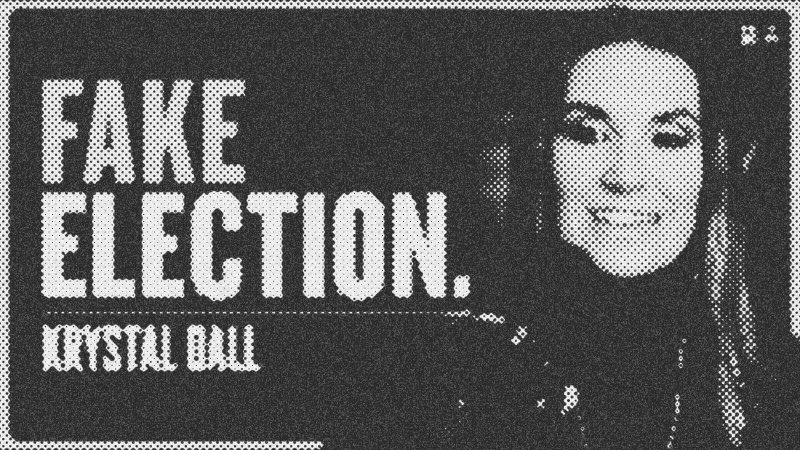
Modern political engagement has shifted from a competition of ideas to a high-stakes psychological drama centered on individual personalities. This phenomenon creates a meta-story that effectively blocks out substantive policy discussion. When the central divide in a national conversation becomes how one feels about a single individual like Donald Trump, the nuances of healthcare, economic reform, or foreign policy disappear. This is not merely a political shift; it is a psychological one. We are seeing a form of cognitive narrowing where complex societal problems are boiled down to a binary choice: for or against a specific character.
This atmosphere creates a "pantomime" effect where major events—even life-threatening ones—fail to move the needle in polling. When voters are already locked into a meta-narrative, new information is filtered through a pre-existing lens of identity. If a story doesn't fit the established character arc of their chosen protagonist or antagonist, it is dismissed or ignored. This leads to a sense of political stasis, where billions of dollars and endless media cycles target a shrinking sliver of undecided voters in a handful of counties, while the rest of the population remains entrenched in their emotional silos.
The Rise of the Podcast Election and the Illusion of Intimacy
We have entered the era of the podcast election, where candidates like Kamala Harris and Donald Trump bypass traditional media to appear on shows like Call Her Daddy or sit with cultural figures like Theo Von. On the surface, this appears to be a democratization of information. However, from a psychological perspective, these long-form, often non-adversarial settings create an "infomercial" effect. They provide the illusion of intimacy without the friction of accountability.
Krystal Ball notes that while traditional media faces valid criticism for its biases, it at least maintains a norm of adversarial questioning. In the Independent Media landscape, the incentives are often inverted. Creators are subject to "audience capture," where they are rewarded for confirming their listeners' biases rather than challenging them. This lack of a "check" means that candidates can vibe their way through a campaign, prioritizing tone and tenor over a skeletal structure of actual plans. This shift away from rigorous vetting processes to "good vibes" and memetic marketing may feel more engaging, but it leaves voters without a clear understanding of the actual governance they are selecting.
The Psychology of Mistrust and the Conspiracy Vacuum
One of the most concerning developments in the current political climate is the profound erosion of trust in mainstream institutions. This mistrust is not evenly distributed, but it is pervasive. When people no longer believe the FBI, the New York Times, or government agencies, they don't stop looking for explanations—they simply look for them in darker corners. This creates a vacuum that is rapidly filled by conspiratorial thinking.
Elon Musk and his stewardship of Twitter (now X) represent a significant turning point in this evolution. By siloing the platform and reducing content moderation, he has created an environment where theories—ranging from the fabricated to the truly bizarre—can flourish without rebuttal. Psychologically, humans are wired to find patterns and seek explanations for their precarity. When the official story is viewed as a lie, any alternative that offers a sense of "insider knowledge" becomes attractive. This leads to a state of collective derangement where groups of people are effectively living in different realities, unable to agree on even basic facts about the weather or election results.
The Forgotten Man: Class, Identity, and the Provision Gap
At the heart of much modern political resentment lies a sense of economic precarity that transcends simple partisan lines. For decades, the trappings of middle-class stability—home ownership, affordable education, and healthcare—have become increasingly out of reach. This has created a particular psychological crisis for men, who have traditionally derived their identity from being "providers." When society makes that role impossible to fulfill, the resulting unhappiness often manifests as a search for alternative identities or more radical political movements.
Krystal Ball argues that the Democratic Party has struggled with a "contempt gap." By focusing heavily on "slicing and dicing" the electorate into identity-based groups, they have often ignored universal, class-based solutions that would benefit everyone. This approach can make certain groups, particularly men, feel demonized or excluded. When political messaging feels like a "humiliation ritual" or a "struggle session" rather than an aspirational vision, voters will naturally gravitate toward spaces where they feel welcomed and seen, even if those spaces are increasingly right-leaning or radicalized. Rebuilding this connection requires moving beyond identity politics to address the fundamental material needs that keep citizens in a state of constant anxiety.
Moral Failures and the Need for Authentic Leadership
The current political landscape often prioritizes tactical success over moral clarity. We see this in the way Kamala Harris has been positioned as both an incumbent and a change candidate, a circle that is difficult to square without a high degree of obfuscation. Authenticity is the rarest and most valuable currency in modern politics, yet our system is designed to punish it. Candidates are incentivized to say as little as possible to avoid giving the opposition "clip-worthy" mistakes, leading to a sterile and uninspiring political discourse.
True resilience in a democracy requires a return to transparent, adversarial processes. This includes mandatory debates and a willingness to subject leaders to trial by fire. Without these checks, we are left with a system where billions are spent on a pantomime, and the actual needs of the people are treated as secondary to the maintenance of the meta-story. To move forward, we must recognize that growth—both personal and political—requires intentional steps toward self-awareness and a rejection of the comfort of the echo chamber.
- Donald Trump
- 10%· people
- Kamala Harris
- 10%· people
- Krystal Ball
- 10%· people
- Alex Cooper
- 5%· people
- Bernie Sanders
- 5%· people
- Other topics
- 62%
Why Does The 2024 Election Feel So Fake? - Krystal Ball
WatchChris Williamson // 1:16:16
