The Architecture of Human Nature: Decoding Our Evolutionary Source Code
The Alien Scientist and the Human Enigma
Imagine an extraterrestrial scientist arriving on Earth. This being has no sexes, no family structures, and no concept of genetic inheritance as we understand it. To such a creature, Homo sapiens would appear profoundly bizarre. The alien would see a species divided into two distinct types that fall into deep emotional trances with one another, experience visceral distress when a partner interacts with a third party, and expend massive amounts of energy on non-survival activities like music, art, and storytelling. This thought experiment, favored by evolutionary psychologist Steve Stewart-Williams, serves as a mirror. It forces us to look at the 'obvious' parts of our lives—our love, our jealousy, and our cultural quirks—as biological puzzles waiting to be solved.
At the core of this investigation is the realization that we are not just random collections of traits. We are the result of millions of years of selective pressures. Every impulse we feel, from the desire to protect our children to the sting of social rejection, exists because it helped our ancestors survive long enough to produce descendants. Understanding this 'source code' is not about reducing humans to mere animals; it is about gaining the self-awareness needed to navigate a modern world that often clashes with our ancient wiring.
The Dual Engines of Genes and Culture
To understand the human condition, we must look at two separate but intertwined evolutionary tracks: genetic evolution and cultural evolution. Most species are governed almost entirely by their genes. Humans, however, have developed a capacity for culture that has essentially 'come off the leash.' This creates a complex internal tension. While biological evolution is driven by the replication of genes, cultural evolution is driven by the replication of Memes—units of information, ideas, or behaviors that jump from mind to mind.
Sometimes, these two engines pull in the same direction. For example, the cultural norm of caring for kin aligns perfectly with the genetic drive for inclusive fitness. However, they can also collide. A cultural meme that encourages celibacy or extreme risk-taking might spread rapidly because it is psychologically compelling, even if it is a genetic dead end. We are 'Gene Machines,' designed to maximize our representation in future generations, but we are also cultural sponges. This duality is what makes human behavior so much more varied and unpredictable than that of a chimpanzee or a gorilla.
The Reality of Sex Differences
In modern discourse, the topic of sex differences is often treated as a binary choice: either they are entirely socially constructed, or they are fixed and immutable. Steve Stewart-Williams argues that both extremes are wrong. While socialization undeniably shapes us, there are innate psychological 'pushes' that differ between men and women due to divergent reproductive pressures.
The single largest psychological sex difference is not aggression or risk-taking, but sexual orientation—the fact that the vast majority of men are attracted to women and vice versa. This seems obvious, yet it is a profound testament to how natural selection hardwires our desires. Beyond this, we see significant differences in 'Sexual Variety' and 'Casual Sex' preferences. These stem from the biological reality of 'Reproductive Variance.' Historically, a male could potentially father hundreds of children, while a female was limited by the long, energy-intensive process of pregnancy and nursing. This asymmetry favored different strategies: for males, a higher drive for multiple partners; for females, a higher level of choosiness to ensure a partner would provide resources and protection.
The Nuance of Jealousy
Jealousy provides a window into these ancestral stakes. Both sexes experience jealousy to protect the pair bond, but the 'flavor' of that distress often differs. Men tend to be more sensitive to sexual infidelity because of 'Paternity Uncertainty'—ancestrally, a man who invested resources in a child that wasn't his was suffering a total genetic loss. Women, conversely, are often more distressed by emotional infidelity. From an evolutionary standpoint, if a male partner falls in love with another woman, he is more likely to divert his resources and protection away from his current partner and her offspring, which was historically a life-threatening prospect.
The Gender Equality Paradox
one of the most counterintuitive findings in modern psychology is the Gender Equality Paradox. Traditional social role theory suggests that as societies become more egalitarian and gender-neutral, sex differences should shrink. However, data from over 80 nations shows the opposite: in countries with the highest levels of gender equality (such as those in Scandinavia), sex differences in personality traits and occupational choices actually expand.
Why does this happen? When people are freed from the economic necessity of choosing a career based on survival or social pressure, they are more likely to follow their innate interests. If men have a slightly higher innate tilt toward 'objects' and women toward 'people,' a free society allows those small tilts to manifest as large differences in occupational segregation. In less equal societies, a woman might go into engineering because it is the only path to financial security; in a wealthy, equal society, she may feel more 'free' to choose a career in healthcare or education that aligns with her personal inclinations. This paradox suggests that equality of opportunity does not lead to equality of outcome, but rather to the flourishing of inherent differences.
Ancestral Mating and the Mutual Choice Model
How did our ancestors actually live? While pop-culture often depicts 'Alpha' males with harems or, conversely, a perfectly monogamous past, the reality is more complex. Humans are primarily 'Serial Monogamists.' Most first marriages in hunter-gatherer societies do not last for life, but pair-bonding remains the primary setting for child-rearing. Unlike most primates, where the mother raises the offspring alone, human children require so much investment (due to our large, slow-developing brains) that 'Allomaternal Care'—help from fathers, grandmothers, and siblings—became a biological necessity.
This led to the Mutual Mate Choice model. In many species, the male is the colorful 'Peacock' competing for a choosy female. In humans, both sexes are choosy and both sexes compete. Because men invest significantly in their offspring, they have a genetic incentive to be picky about their long-term partners, looking for health, fertility, and character. Similarly, women compete with each other for high-investing, high-status males. We are the only ape where both sexes use 'ornamentation'—through fashion, status markers, or humor—to attract the opposite sex.
Living with Our Biology
Learning about evolutionary psychology can feel cold or even fatalistic. It can be uncomfortable to realize that our deepest feelings of love or envy are 'tricks' played by our genes to ensure their survival. However, there is a path to empowerment here. By understanding the source code, we can stop being its blind puppets.
If you know that your craving for high-calorie sugar was an adaptation for an environment of scarcity, you can more easily ignore that craving in an environment of abundance. If you recognize that status-seeking and 'strutting' are animalistic tendencies we share with chickens, those impulses lose some of their power over you. We may not have designed our source code, but we are the only species capable of reading it and, occasionally, choosing to overwrite it. True agency comes from knowing exactly what you are up against. Growth is the intentional step away from our defaults and toward the values we choose for ourselves.
- Steve Stewart-Williams
- 12%· people
- Andrew Thomas
- 6%· people
- Bonobos
- 6%· species
- Chimpanzees
- 6%· species
- Chris Williamson
- 6%· people
- Other topics
- 65%
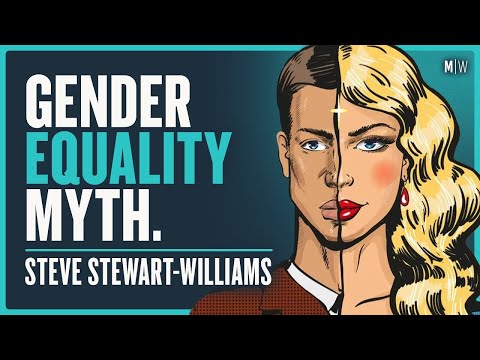
The Biggest Sex Differences Between Men & Women - Steve Stewart-Williams
WatchChris Williamson // 1:30:55
