The High Achiever’s Dilemma: Finding Happiness Through the Gain Mentality
The Psychological Trap of Permanent Dissatisfaction
High achievers often inhabit a mental space where the next milestone serves as the only prerequisite for joy. They believe that once they hit a specific revenue target, publish a bestseller, or reach a certain status, they will finally grant themselves permission to be happy. This is a mirage. Dr. Benjamin Hardy explains that this behavior stems from measuring oneself against an "ideal"—a moving target that functions like the horizon in a desert. No matter how many steps you take toward it, the horizon moves with you. This is the core of The Gap, a psychological state where you devalue your current reality because it fails to match a projected future perfection.
When you live in the Gap, success becomes a burden rather than a reward. You are constantly measuring your current position against where you wish you were, which inevitably leads to a sense of being "behind the eight ball." This mentality is often exacerbated by obsessive passion, where the goal effectively owns the person. Instead of the goal serving as a tool for growth, it becomes a master that drives the ship, leaving the individual feeling empty despite significant external accomplishments. To find true fulfillment, high achievers must shift their internal referencing system.
Understanding the Gap vs. the Gain
The antidote to this cycle is a concept developed by Dan Sullivan known as The Gap and The Gain. While the Gap measures your progress forward against an ideal that doesn't exist in reality, The Gain involves measuring yourself backward against your former self. It is the practice of looking at where you were a week, a month, or a year ago and acknowledging the specific progress you have made. This isn't just a feel-good exercise; it is a fundamental shift in how the brain processes information and builds confidence.
Confidence is not something you can have in future performance because the future is unproven. Instead, confidence is the byproduct of past performance. By consciously tracking your gains, you provide your brain with the evidence it needs to feel capable and motivated. In the Gain, you play a one-player game. You are no longer competing with others or an unreachable ideal. You are simply referencing your own evolution. This shift allows for harmonious passion—the ability to pursue big goals because you want to, not because you need them to fill a hole in your identity.
The Power of Prospection and Future Self
While the Gain focuses on the past, our current behavior is largely determined by our view of the future. This is what psychologists call prospection. We are teleological beings; every action we take is driven by an intended end. Whether it is a scheduled podcast recording or the long-term goal of building a legacy, your Future Self is the primary driver of your present decisions. The problem for most people is that they are driven by a very short-term, reactive future—paying the next bill or putting out the latest fire.
To achieve higher levels of success and happiness, you must lift your gaze. Research by Hal Hirschfield suggests that human beings aren't naturally evolved to think 20 or 30 years ahead, yet those who develop a strong connection to their long-term future self make significantly better decisions in the present. When you have a clear, compelling vision for who you want to be in a decade, your daily choices become investments rather than just movements. Every action becomes a vote for that future version of you. However, to keep this from becoming a Gap-trap, the daily steps must remain small and doable while the long-term vision remains expansive and inspiring.
Transforming Trauma Through Deliberate Rumination
One of the most profound applications of the Gain mentality is the transformation of past trauma. Many people carry heavy burdens from their past—toxic upbringings, business failures, or personal losses—that they view through the lens of the Gap. They wonder why it happened and believe they are worse off because of it. This keeps the experience categorized as a trauma. Dr. Hardy argues that an experience remains traumatic until you frame it as a Gain.
This transformation requires deliberate rumination. Unlike obtrusive rumination, where negative thoughts trigger you unexpectedly, deliberate rumination is an intentional practice of revisiting an experience to extract value. By asking what the experience taught you, how it clarified what you want in life, or how it made you more resilient, you effectively happen to the experience rather than letting the experience happen to you. Applying proactive gratitude to difficult past events allows you to reclaim your narrative. You aren't changing the facts of what happened, but you are changing the meaning, turning a liability into a developmental asset.
Defining Your Success Criteria
Society often puts success on a pedestal, encouraging individuals to achieve at any cost. We see examples like Eddie Hall, who achieved the title of World's Strongest Man but faced extreme personal costs to his health and family life. When we look at success through a narrow lens of competence, we miss the holistic reality of a person’s life. To avoid this, you must define your own success criteria based on an internal value system.
Success isn't reaching a specific status; it's being true to what you value. If a world-renowned entrepreneur’s true dream was to be a painter, as Derek Sivers once mused regarding figures like Richard Branson, then all the external wealth in the world wouldn't make them a success. By setting clear, personal success criteria and measuring them through the Gain, you protect yourself from the empty pursuit of status. You begin to seek growth for its own sake. This doesn't blunt your competitive edge; rather, it frees you from the anxiety of external validation, allowing you to go 10x further because you are fueled by joy and intrinsic motivation rather than a desperate need for wholeness.
- Atomic Habits
- 6%· books
- Benjamin Hardy
- 6%· people
- Chris Williamson
- 6%· people
- Dan Sullivan
- 6%· people
- Derek Sivers
- 6%· people
- Other topics
- 69%
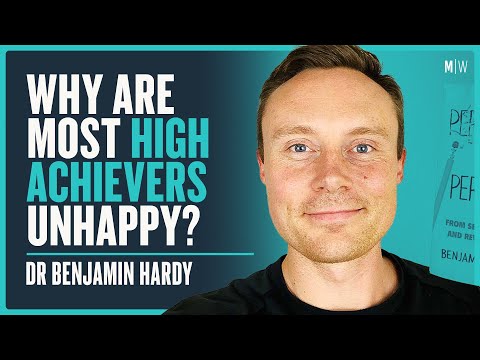
A High Achievers' Guide To Happiness - Dr Benjamin Hardy | Modern Wisdom Podcast 397
WatchChris Williamson // 1:01:29
