Beyond the Cage: Reclaiming Agency and Overcoming the Victimhood Mindset
The Architecture of Victimhood
Recognizing your inherent strength to navigate challenges begins with a hard truth: sooner or later, you must give up all hope for a better past. This profound insight from psychotherapist Irvin Yalom serves as the cornerstone for understanding how we often become prisoners of our own histories. Ruminating on what could have been does not change what was; it only anchors you to a timeline that no longer exists. Dr. Scott Barry Kaufman emphasizes that while acknowledging pain is necessary, viewing oneself exclusively through the lens of trauma creates a psychological bottleneck that prevents future growth.
A victimhood mindset is defined by a tendency to blame external circumstances for all personal problems. It involves a belief that one lacks responsibility for their actions because of past wounds. This mindset often includes a fixation on revenge rather than solutions and a persistent feeling that the world is "out to get you." While everyone experiences moments of feeling wronged, the danger lies in when this perspective becomes a fixed identity. When potential takes a backseat to pain, you lose the ability to see the rooms in your own house that you haven't explored yet. Growth requires moving from a state of being "marionetted" by the past to a future-oriented, agentic perspective.
The Evolutionary Seduction of Learned Helplessness
To understand why we fall into these traps, we must look at our biological defaults. For decades, psychology focused on the concept of Learned Helplessness, famously studied by Martin Seligman. The original theory suggested that after repeated unavoidable stress, we "learn" to be helpless. However, recent neuroscientific evidence has flipped this on its head: helplessness is actually the default mammalian state. It is our primal response to stress. What we actually have to learn is hope.
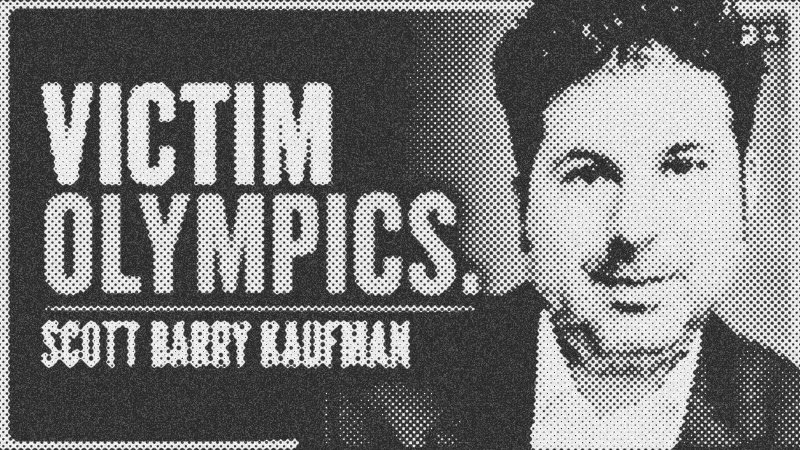
Hope is an intentional, cognitive process. From an evolutionary standpoint, signaling victimhood has historically been a successful strategy for securing resources and tribal support. Because humans are a pro-social species, we are wired to respond to those in distress. This creates a "Victimhood Olympics" where individuals or groups compete for the status of the most oppressed to secure social capital. In the modern Attention Economy, this is amplified by social media platforms like TikTok, which often reward performative vulnerability. This incentivization makes it increasingly difficult to choose the harder path of agency and personal responsibility.
The Orchid and the Dandelion: Understanding High Sensitivity
Not everyone processes the world with the same emotional frequency. The Highly Sensitive Person (HSP) framework, pioneered by Elaine Aron, describes individuals who score high in both neuroticism (anxiety) and openness to experience. These individuals are like sponges, soaking up environmental stimuli and non-verbal cues that others might miss. While this can lead to being easily overwhelmed, it is also the bedrock of profound creativity and social intuition.
Dr. Scott Barry Kaufman discusses his research with Jordan Peterson regarding "reduced latent inhibition." This is a state where the brain's filter is lowered, allowing more information into conscious awareness. For a sensitive person, this means they don't just see a tree; they see the nuances of light, the history of the bark, and the connection to the surrounding ecosystem. The challenge for the HSP is to avoid making their sensitivity the core of a victim identity. Expecting the world to tiptoe around your triggers is a form of self-sabotage. Instead, you must learn to lead with your sensitivity as a tool for integration and insight rather than a shield against the world.
Epigenetics and the Narrative of Trauma
One of the most controversial areas of modern psychology involves how we inherit the stories of our ancestors. While The Body Keeps the Score by Bessel van der Kolk has popularized the idea that trauma is physically stored in our tissues, many scientists argue that trauma is actually a cognitive narrative stored in the brain. Epigenetics shows that stress can change gene expression within an individual’s life, but the evidence for "intergenerational trauma" extending beyond two generations is scientifically slim.
Identifying too strongly with ancestral wounds can be disempowering. If you believe you are "genetically broken" because of what happened to your great-grandmother, you relinquish your current agency. You must distinguish between your biological hardware and the software of the stories you tell yourself. While you might have a genetic proclivity toward neuroticism, your environment and choices determine how those genes are expressed. You have deep reservoirs of resiliency that are often left untapped because you are too busy validating your limitations rather than testing your strengths.
Psychological Flexibility and the Path Forward
The antidote to the victimhood mindset is Acceptance and Commitment Therapy (ACT). Developed by Steven C. Hayes, this approach focuses on psychological flexibility—the ability to stay in the present moment and act in accordance with your values, even when experiencing difficult emotions. It teaches you that you do not have to be a victim of your feelings. An emotion is a signpost, not a command.
Building an "Empowerment Mindset" involves a "Yes, And" approach to life. Yes, you may have experienced genuine victimization or hardship, and you still possess the capacity to create a meaningful future. Validation is important, but it is insufficient for a life well-lived. You must move beyond the need for others to acknowledge your pain and begin to believe in your own ability to rise above it. This isn't about denying the past; it's about refusing to let it hold the pen while you write the next chapter of your life.
- Scott Barry Kaufman
- 10%· people
- Bessel van der Kolk
- 5%· people
- Chris Williamson
- 5%· people
- Coddling of the American Mind
- 5%· books
- Elaine Aron
- 5%· people
- Other topics
- 71%
How To Not Let Your Past Define You - Scott Barry Kaufman
WatchChris Williamson // 1:14:43
