The Invisible Architecture of Modern Mindsets: Deciphering Memes, Leverage, and Reflexivity
Introduction: The Battle for the Modern Mind
In the current era, the most significant conflicts are not fought over territory or physical resources; they are fought within the landscape of the human psyche. We live in a world where perception often dictates reality, and the tools we use to understand our surroundings—our mental models—are frequently outdated or hijacked by digital noise. George Mack and Chris Williamson explore a series of psychological phenomena and societal trends that define the modern human experience. From the recursive nature of social games to the crushing efficiency of technological leverage, the challenges we face require a radical shift in how we process information and interact with our peers. To thrive, we must become the architects of our own internal systems, recognizing the invisible forces of memes and social paradoxes that shape our every move.
The Keynesian Beauty Contest and the Game of Reflexivity
One of the most profound concepts for understanding social systems is the Keynesian Beauty Contest. This model, originally described by John Maynard Keynes, suggests that most social interactions occur at multiple levels of depth. Level one is simple: it is what you personally believe or find attractive. Level two involves predicting what others will believe. Level three, where the real complexity begins, involves factoring in that everyone else is also playing the game of predicting others. This explains why societal trends often diverge from individual truth. We see this in politics and markets—people don’t vote for who they like; they vote for who they think everyone else will vote for.
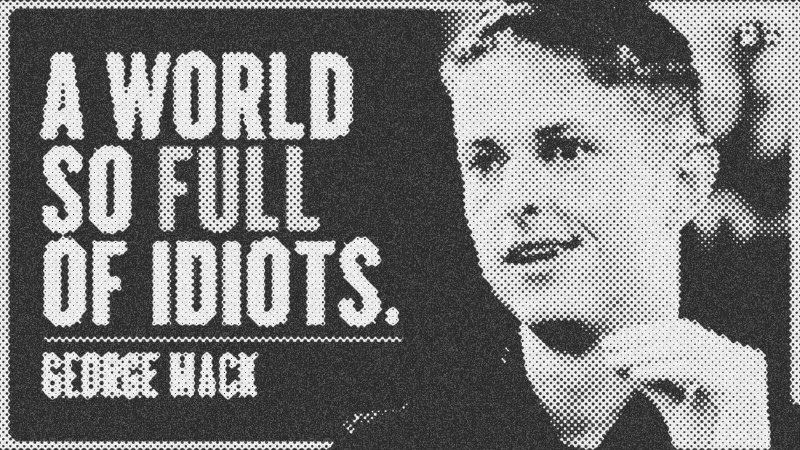
This leads directly into George Soros' concept of reflexivity. Unlike natural phenomena like the weather, which remains unaffected by our opinions, human systems are reflexive. When we make a statement about a social reality, that statement itself changes the reality. If enough people believe a meme stock will rise, their belief drives the price up, making the belief true. We are trapped in feedback loops where perception shapes reality and reality further shapes perception. Understanding this allows you to step back and see the "matrix" of social behavior, recognizing that most of what we call "truth" is actually a collective hallucination maintained by mutual expectation.
The Abilene Paradox and the Architecture of Social Folly
Growth often stalls not because of a lack of skill, but because of the Abilene Paradox. This occurs when a group collectively decides on a course of action that no individual member actually desires, simply because every member assumes everyone else wants it. It is the psychological root of the "Emperor's New Clothes" phenomenon. Whether it is a family staying at a boring dinner party because nobody wants to be the first to leave, or a corporate board approving a disastrous marketing campaign because they fear being labeled as out of touch, the result is the same: accurate individuals becoming collective idiots.
Breaking this cycle requires what we might call "High Agency." It takes a specific kind of courage to be the person who speaks the obvious truth or makes the first move to exit a failing social script. This paradox highlights a deeper truth about resilience: your ability to grow is tied to your willingness to be the outlier. When you realize that most people are just as nervous and uncertain as you are—simply waiting for someone else to lead—you find the power to reshape the social environment rather than being a victim of it.
The Meme Industrial Complex: Emotion as Currency
We must redefine our understanding of the word "meme." It is not just a funny image on Reddit; it is a spreadable idea that acts as a cognitive virus. A successful meme is a simple algorithm where the emotion it carries outweighs the friction of spreading it. Terms like "OK Boomer," "Karen," or "Make America Great Again" are highly effective because they compress massive amounts of complex societal frustration into a few syllables. They are the shorthand of the modern mind.
In the 21st century, we are seeing the rise of a "Meme Industrial Complex." In the past, mainstream media held the keys to the narrative. Today, that power has been decentralized. The most successful modern businesses and political movements are those that employ a "Chief Meme Officer" mentality—whether officially or unofficially. They understand that policies and product features matter less than the stickiness of the idea. In a world of infinite information, attention is the only scarce resource. If your idea cannot be compressed into a meme, it is effectively invisible. This is the new survival of the fittest: the survival of the most contagious idea.
The Leverage Revolution: Output Over Hours
Our educational systems have conditioned us to value hard work—the sheer number of hours spent at a task. However, in a world of Amazon and Artificial Intelligence, hard work is a poor metric for success. The story of Jeff Bezos versus the "world's hardest working man" illustrates this perfectly. While a manual laborer might work 24 hours straight, Bezos can achieve hundreds of millions of hours of output while sitting on a yacht because he has mastered leverage.
Leverage comes in four main forms: capital, labor, code, and media. Code and media are the "permissionless" forms of leverage that allow a single individual to reach millions. The reason many struggle to grasp this is that the human brain is not built to understand exponentials; we think in additive terms (1+1) rather than multiplicative terms (1x10). To achieve your potential, you must stop asking "How hard can I work?" and start asking "What lever am I pulling?" Moving from an input-based mindset to an output-based mindset is the ultimate cognitive shift for the modern entrepreneur.
Trojan Horses and the Forgetting Paradox
Not all personal development is beneficial. We must be wary of "Trojan Content"—information that feels like it’s helping but is actually inducing anxiety or "shiny object syndrome." Watching business podcasts can sometimes be a form of productive procrastination that prevents you from doing the actual work. Similarly, we suffer from the "Forgetting Paradox." We forget how much we forget because, by definition, the information is gone. We have tens of thousands of thoughts a day, yet we remember almost none of them. This creates a false sense of continuity and wisdom.
To combat this, we must force our thoughts into concrete forms—writing, recording, or creating art. This "concretizes" the wispy smoke of our thoughts into solid structures we can analyze. It also allows us to audit our information diet. If you look back at your YouTube history and realize that 70% of what you watched left you feeling worse, you are being hijacked by an algorithm designed for engagement, not well-being. High agency in the digital age means manually overriding the algorithm and choosing content that serves your growth, rather than your impulses.
Conclusion: The Path to Cognitive Peace
Ultimately, the goal of navigating these complex systems is to find a state of calmness and peace. In the "Olympics of Emotions," calmness is the most useful state because it allows for the highest level of performance under pressure and the deepest appreciation of positive moments. Growth happens one intentional step at a time, often by simplifying rather than adding. By understanding the Keynesian Beauty Contest of our social lives, the leverage of our work, and the memes that fill our heads, we can reclaim our agency. The future belongs to those who can see through the digital illusions and maintain a steady, insightful, and motivating internal compass amidst the noise.
- Abilene Paradox
- 5%· concepts
- Amazon
- 5%· companies
- Artificial Intelligence
- 5%· concepts
- Chris Williamson
- 5%· people
- Cognitive Behavioral Therapy
- 5%· concepts
- Other topics
- 76%
The Tragic Decline Of Rationality In Society - George Mack (4K)
WatchChris Williamson // 1:38:26
