The Big Cycle: Navigating Personal and Global Change with Ray Dalio
The Architecture of Inevitability
History is not a random sequence of events but a repeating series of cause-and-effect relationships. When we look at the world today, the chaos feels unprecedented. However, if we zoom out and observe the last 500 years, a clear pattern emerges. This perspective allows us to move from a state of reactive fear to one of proactive preparation. Ray Dalio, the founder of Bridgewater Associates, suggests that we are currently witnessing the late-stage symptoms of a "Big Cycle" that has governed the rise and fall of empires for centuries.
This cycle is driven by three primary forces that haven't coincided since the 1930-1945 period. First, the creation of enormous debt and the subsequent printing of money to service that debt, which devalues currency. Second, internal conflict arising from the largest wealth and values gaps in nearly a century, leading to the rise of populism on both the left and right. Third, the rise of a great power—China—challenging the existing dominant power, the United States. Understanding that these shifts are part of a mechanical process helps us detach from the histrionics of the daily news cycle and focus on what truly matters for our growth and resilience.
The Mechanics of Economic Decline
The United States Dollar has long been the world’s reserve currency, but its status is inextricably linked to the strength of the empire behind it. When a country spends more than it earns, it must sell debt. For decades, the world has been eager to hold dollar-denominated debt because of American stability and productivity. However, we are reaching a tipping point. When the supply of debt exceeds the demand from buyers, central banks are forced to print money to fill the gap. This isn't just an abstract financial maneuver; it is a hidden tax on every individual holding that currency.
As the real return on holding dollars turns negative—meaning the interest rate is lower than the inflation rate—creditors begin to look elsewhere. This shift is accelerated by geopolitical tensions and the use of financial sanctions, which incentivize other nations to transact in different currencies. We are moving toward a multipolar world where the dollar's dominance is no longer guaranteed. For the individual, this means that "cash is trash" in the long term. If your savings are not outperforming the rate of monetary debasement, you are effectively losing your purchasing power every single day.
The Psychology of Populism and Leadership
Economic stress invariably leads to social fragmentation. When the pie is no longer growing, or when its distribution becomes obscenely lopsided, people turn on each other. This environment gives birth to populism. Populists are leaders who promise to fight for their side at all costs, often at the expense of established rules and democratic norms. We see this dynamic playing out today as political compromise becomes a sign of weakness rather than a tool for progress.
There is a deep evolutionary reason for this. In times of peace and prosperity, societies prefer "prestigious" leaders who are skilled at maintaining order and facilitating cooperation. But in times of perceived threat or "warfare"—whether economic or literal—the collective psyche shifts toward "dominant" leaders. We want someone who will stand firm against the "other." This tribalism provides a temporary sense of belonging but often leads to a consolidation of power that can become tyrannical. Recognizing this psychological shift allows us to remain grounded in our own values rather than being swept up in the collective fervor of shared hatred.
Navigating the Life Cycle and Personal Mission
While the macro cycles of debt and war are beyond our direct control, our personal life cycles are within our domain of influence. Each of us moves through phases: from dependency and learning to independence and productivity, and finally to a stage of passing on wisdom. Success in these stages requires more than just financial acumen; it requires a deep understanding of one’s own nature. Tools like the PrinciplesYou assessment can help individuals identify their inherent strengths and blind spots.
Growth is often the result of a simple but profound equation: Pain + Reflection = Progress. The challenges we face in a turbulent economy are not just obstacles; they are the raw material for our development. By reflecting on our failures and the external shocks we experience, we build the resilience necessary to navigate the next phase of the cycle. Being "strong, smart, and adaptable" is the only true security in a world where systems are destined to change.
Redefining Success in a Volatile World
As the external world becomes more chaotic, the temptation is to obsess over financial security. However, true well-being has a low correlation with extreme wealth once basic needs are met. Beyond a certain threshold, the marginal utility of an extra dollar vanishes, yet the stress of maintaining and protecting that wealth often increases. Many are trapped in a cycle of status-seeking that serves as a "sanity-sapping" distraction from what truly fuels human flourishing.
Longevity and happiness are most closely tied to the quality of our communities and relationships, not our net worth. In a depression, most people remain employed; in a war, most people survive. By focusing on "goodness, harmony, and beauty"—whether through meditation, nature, or deep connection with family—we find a form of solace that no economic collapse can take away. The goal is to be prepared for the worst while continuing to enjoy the simple, inexpensive gifts that life offers. Financial diversification is a tool for safety, but emotional intelligence and community are the tools for a life well-lived.
Conclusion: The Path Forward
The next several years will likely be riskier and more volatile as the business cycle reaches its contraction phase and geopolitical tensions with China and Russia push toward their limits. We may face a "stagflationary" environment where growth stalls while prices remain high due to supply chain disruptions. This is not a reason for despair, but a call for intentionality. By building a balanced, diversified portfolio—including assets like Gold and inflation-indexed bonds—we can protect our purchasing power. More importantly, by investing in our self-awareness and our social bonds, we ensure that we remain whole, regardless of which way the global dominoes fall. The machine will continue to turn, but we have the power to decide how we ride the gears.
- China
- 13%· places
- Bitcoin
- 6%· products
- Bridgewater Associates
- 6%· companies
- Chris Williamson
- 6%· people
- Gold
- 6%· products
- Other topics
- 63%
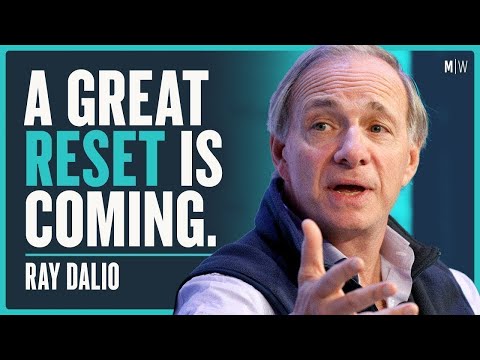
The Economic Collapse No One Wants To Talk About - Ray Dalio
WatchChris Williamson // 1:00:44
