The Weight of Truth: Navigating the Psychology of the Madeleine McCann Case
The Pursuit of Truth in a Storm of Speculation
When a child vanishes, the world stops. In the case of Madeleine McCann, the silence that followed her disappearance from Praia da Luz in 2007 was quickly replaced by a deafening roar of global scrutiny. For Robbyn Swan and Anthony Summers, investigative journalists who have spent decades dissecting historical tragedies from 9/11 to the JFK assassination, this case represents a unique collision of human error, media frenzy, and psychological resilience. Their work, particularly in the Netflix series and their book Looking for Madeleine, serves as a masterclass in separating the signal of fact from the noise of conspiracy.
Navigating such an emotionally charged landscape requires a mindset of relentless objectivity. It is easy to succumb to the "ping-pong" of intellectual debate when two experts collaborate, but the real challenge lies in maintaining empathy for the victims while clinical precision is applied to the evidence. The McCann case is not just a police file; it is a narrative of a family’s life-altering trauma, compounded by a global audience that often treats their tragedy as a puzzle to be solved rather than a human experience to be respected.
The Golden Hour and the Architecture of Error
Psychology teaches us that the first hour of a crisis—the "golden hour"—is critical for setting the trajectory of success. In the Madeleine McCann investigation, this window was fractured. When Kate McCann discovered her daughter missing, the natural human response was panic, leading to a chaotic scene where friends and eventually Polícia Judiciária officers trampled through apartment 5A. This initial failure in crime scene preservation created a vacuum of physical evidence that would later be filled by wild theories.
Robbyn Swan highlights that the local police, while acting with intent, were often out of their depth regarding high-stakes forensic preservation. This was further complicated by the arrival of the British police, creating a culture clash of methodology and ego. The Portuguese authorities felt patronized by their UK counterparts, while the British investigators viewed the local systems as antiquated. This friction shifted the focus from finding a child to managing professional reputations, proving that even in the most urgent of circumstances, human ego can become a barrier to progress.
Media Feedback Loops and the Anatomy of Villification
One of the most harrowing aspects of this case is the role of the press. What began as a strategic move by Gerry McCann and Kate McCann to keep their daughter’s face on every "digital milk carton" eventually morphed into a monster they could no longer control. The press did not just report the facts; they created a feedback loop where leaks from frustrated Portuguese investigators were picked up by British tabloids, translated, exaggerated, and then sold back to the Portuguese public as "new" evidence.
This cycle created a narrative where the victims were recast as suspects. When highly trained police dogs were brought in months later, their alerts were treated as definitive proof of a crime rather than investigative leads. The subsequent DNA analysis—which Robbyn Swan notes yielded effectively nothing—was ignored by a media hungry for a sensationalist ending. This illustrates a profound psychological phenomenon: once a narrative of guilt is established in the public mind, the absence of evidence is often viewed as a sophisticated cover-up rather than a sign of innocence.
Witnesses, Intrusion, and the Third Possibility
While the media focused on the parents, a chilling pattern of behavior was emerging in the shadows of Praia da Luz. Anthony Summers details the "third possibility": a planned abduction. Between 2004 and 2010, there were 28 documented cases of an intruder entering holiday apartments occupied by British families within a 40-mile radius. These were not random burglaries; they involved a man, often described as having a foreign accent and sometimes wearing a medical mask, watching or interacting with children.
Witnesses reported men loitering near apartment 5A, testing gates for noise, and posing as charity collectors to gain entry into homes. One particularly haunting account describes a man found standing in a living room with a three-year-old child, only to flee when the mother appeared. These data points suggest a predator who was systematic, patient, and prepared—someone who would have known exactly how to move through a resort without leaving a trace. The failure to link these incidents early in the investigation represents a tragic oversight in recognizing a predatory pattern.
The Resilience of Hope Against the Trolls
For Gerry McCann and his wife, the battle is two-fold: the search for their daughter and the endurance of relentless character assassination. The internet age has removed the distance between "brain and fingertips," allowing trolls to vent their vitriol directly at the grieving couple. These individuals often attack the McCanns for their lack of public emotion, a critique that fails to account for the psychological burden of being productive in the face of despair. To be "overdramatic" is to be dismissed; to be "stoic" is to be suspected. It is a no-win scenario that requires immense internal strength to navigate.
Despite the years, hope remains a vital psychological anchor. Statistics from the United States show that a significant percentage of missing children are found alive even decades later. This fact fuels the McCanns' refusal to stop looking. As the Metropolitan Police continues to request funding for specific lines of inquiry, the case remains an open wound, reminding us that while the facts are elusive, the human spirit's capacity for persistence is boundless.
Conclusion: The Path Forward
Understanding the Madeleine McCann case requires us to look beyond the headlines and into the complexities of human behavior, systemic failure, and the ethics of journalism. Robbyn Swan and Anthony Summers remind us that we are not entitled to our own facts, only our opinions. As we look to the future of this investigation, we must move with compassion, recognizing that at the heart of this global mystery is a family waiting for an answer. Growth, both as individuals and as a society, comes from our ability to hold space for the truth—no matter how uncomfortable or incomplete it may be.
- Robbyn Swan
- 17%· people
- Anthony Summers
- 13%· people
- Madeleine McCann
- 13%· people
- Gerry McCann
- 8%· people
- Kate McCann
- 8%· people
- Other topics
- 42%
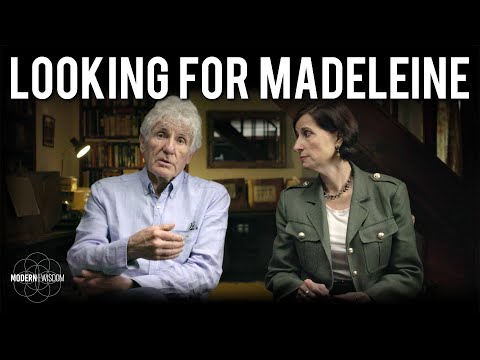
The Disappearance Of Madeleine McCann | Robbyn Swan & Anthony Summers
WatchChris Williamson // 1:10:16
