Guidara reveals how a $2 hot dog made his restaurant #1
The Psychological Shift from Service to Connection
Most business leaders operate under the delusion that service and hospitality are synonyms. They are not. Service is a technical proficiency—a black-and-white landscape of efficiency, accuracy, and speed. In the restaurant world, service is getting the right plate to the right person at the right time. In a tech firm, it is the uptime of a server. While essential, service is a commodity that can be automated, outsourced, or eventually bested by a competitor. Will Guidara, the visionary behind Eleven Madison Park, argues that the true competitive advantage lies in what he calls "color": the emotional connection of hospitality.
Hospitality is the feeling of being seen, known, and cared for. It is an intentional investment in the human element that defies easy ROI calculation. This distinction is vital for personal growth because it shifts our focus from what we do to how we make others feel. Will Guidara cites Maya Angelou, reminding us that while people forget actions and words, they never forget the emotional imprint of an interaction. This philosophy demands that we stop treating interactions as transactions and start treating them as opportunities for genuine connection.
Why Unreasonable Hospitality Outperforms Logic
The move from the 50th best restaurant in the world to the top spot did not happen through a better recipe for duck; it happened through a hot dog. Will Guidara recounts overhearing a table of European foodies lamenting that they had missed out on a classic New York street dog. Most fine-dining professionals would have dismissed the comment as outside their brand's "prestige." Will Guidara did the opposite: he ran to a street vendor, bought a two-dollar hot dog, and convinced his chef to serve it on a silver platter.
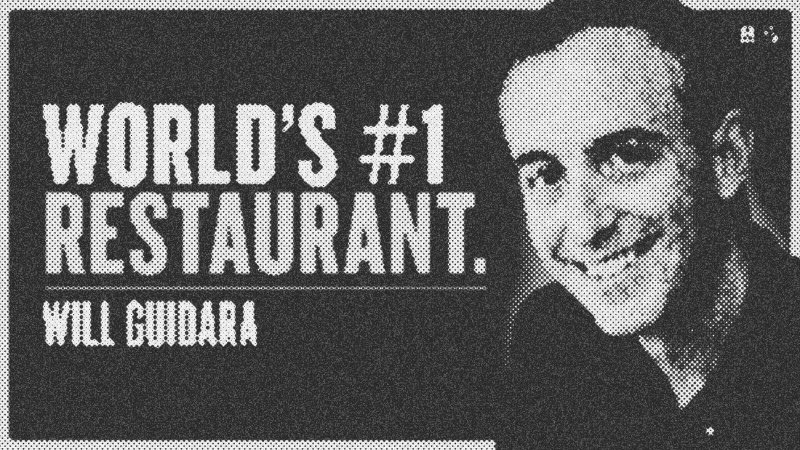
This act of "unreasonable hospitality" broke the fourth wall of fine dining. It showed the guests that the staff was not just performing a script but was actively listening. This level of presence requires taking your work with extreme seriousness while refusing to take yourself seriously at all. When we become too precious about our personal or professional "brand," we build barriers that prevent joy. True resilience and growth come from the flexibility to be "off-brand" if it means meeting someone's human needs more effectively.
Scaling the Unscalable through Systems
One of the most profound insights Will Guidara offers is that magic can be operationalized. While the hot dog story was a flash of intuition, he realized that a business cannot rely solely on luck. He implemented a role called the "Dreamweaver," whose entire job was to listen for cues and help the team execute bespoke gestures.
For those of us looking to improve our personal relationships or professional environments, the lesson is to identify "recurring moments." Whether it is how a flight pilot handles a tarmac delay or how a restaurant celebrates an engagement with Tiffany & Co. glasses, these are not random acts of kindness. They are premeditated strikes of generosity. By preparing the assets and responses for common life events in advance, we create the capacity for grace without the exhaustion of reinventing the wheel every time.
The Financial Strategy of the 95/5 Rule
Many organizations fail to innovate because they are slaves to the bottom line of the current quarter. Will Guidara introduces the "Rule of 95/5" as a framework for both business and life. You must manage 95% of your resources—your time, energy, and money—with the precision of a maniac. You pour over every expense and eliminate waste ruthlessly.
However, you do this specifically so you earn the right to spend the remaining 5% "foolishly." This 5% is where the legend is born. It is the cost of the sleds for the Spanish family seeing snow for the first time, or the space-themed elevator for Jimmy Fallon. If you spend your last 5% on more efficiency, you are being financially reckless because you are failing to build the loyalty that protects you during lean times. In personal growth, this means being disciplined with your habits so you can be extravagantly present for the moments that actually define a life.
Separating the Fuel from the Wound
Achieving the number one spot in the world brings a peculiar kind of pain. Will Guidara and host Chris Williamson explore the "tightrope" of ambition. For many high achievers, the engine of their success is a sense of inadequacy—a belief that they are not enough unless they are the best. This is "using the wound as fuel."
Chris Williamson posits that while greatness provides resources and leverage, it is not a cure for internal suffering. It simply makes the pain more expensive. The goal for anyone on an upward trajectory should be to separate their drive from their self-rejection. You should climb because you want to see the view, not because you hate the person standing at the bottom. Will Guidara maintains that while winning a "finite game" (like becoming #1) provides a necessary dopamine hit for team morale, it must be nested within an "infinite game"—the endless pursuit of deeper human connection.
The 14-Year-Old Version of Success
In a world obsessed with external metrics and social media validation, Will Guidara suggests a more grounded barometer for success: the opinion of your 14-year-old self. This younger version of you is unburdened by the cynicism of adulthood and the need for professional prestige. They care about wonder, authenticity, and whether you stayed true to the core of what you loved before the world told you what to love.
Will Guidara advocates for "acting like an adult" only when necessary, while remaining a child at heart. This is not about being immature; it is about maintaining the capacity for wonder. When we lose our sense of play, we lose our ability to innovate and connect. Growth is not about "growing up" in the sense of becoming rigid; it is about expanding your foundation so that your 14-year-old self can still recognize the dreamer inside the professional.
Cultivating Presence as a Superpower
Ultimately, the philosophy of unreasonable hospitality is a call to presence. We live in an era of distraction where everyone is looking past the person in front of them toward the next meeting or the next notification. Will Guidara argues that the most valuable thing you can give anyone is your focused attention.
Whether you are running a world-class restaurant like Eleven Madison Park or simply trying to be a better partner, the "tricks" of the trade always come back to listening. The hot dog worked because Will Guidara was in the room, not just in his head. This level of awareness is a muscle that must be trained. When we stop obsessing over our own performance and start obsessing over the experience of those around us, we find that our own potential is achieved as a natural byproduct of our generosity.
- Will Guidara
- 46%· people
- Chris Williamson
- 8%· people
- Eleven Madison Park
- 8%· companies
- Danny Meyer
- 4%· people
- Jimmy Fallon
- 4%· people
- Other topics
- 31%
How to Become the Best at What You Do - World’s #1 Restaurant Owner
WatchChris Williamson // 1:04:38
