The Resilience of Self-Love: A Blueprint for Rebuilding the Inner Self
The Hidden Weight of the Personal Curse
When we find ourselves in the depths of a personal storm, the most isolating thought is the belief that our pain is a unique pathogen. It feels like a virus specifically engineered for our DNA, a "personal curse" that no one else could possibly understand. This illusion of uniqueness is a primary barrier to healing. In my practice, I often see how this belief prevents individuals from reaching out for the tools that could save them. We assume that because our circumstances are specific—a failed startup, a shattered relationship, or a physical trauma—the remedy must also be some undiscovered, exotic cure.
However, the human condition is the great equalizer. Whether you are a high-stakes investor or a student, the architecture of the mind remains the same. The struggles of worthiness, fear, and self-loathing are universal. Recognizing that your pain is not a solitary confinement but a shared human experience is the first step toward the light. True growth starts when you stop defending your right to be uniquely miserable and start accepting that the fundamentals of emotional well-being apply to you just as much as anyone else.
The Gravity of Commitment: Why Intensity Matters
Most people approach self-improvement with a tentative curiosity. They try a meditation app for three days or read a few pages of a book before returning to old patterns. But real transformation requires a level of intensity that many are afraid to embrace. The concept of Love Yourself Like Your Life Depends On It is not a suggestion; it is a directive to treat your inner state with the same urgency as a physical emergency.
If you were hanging off a cliff by your fingernails, your commitment to pulling yourself up wouldn't be casual. You would give every ounce of strength to survive. Why, then, do we treat our mental and emotional survival with such passivity? Kamal Ravikant argues that the commitment itself is a sacred act. When you make a vow to yourself, you are rebuilding the most important relationship in your life. Every time you keep a promise to yourself—no matter how small—you are greasing the grooves of self-trust. Conversely, every broken promise to the self is a vote against your own worth. To shift your life, you must move beyond the "try" and move into the "vow."
The Three Stages of Living: To, For, and Through
Our perspective on life usually falls into one of three developmental stages. The first, and most common, is Life Happens to Me. This is the victim mindset. In this stage, you are at the mercy of the weather, the economy, and your partner's moods. You are a leaf in the wind, and the world is a series of obstacles designed to thwart you. Many people spend their entire lives in this stage, never realizing they have the power to change the channel.
As you begin to cultivate self-awareness and self-love, you transition into Life Happens For Me. In this phase, even the hardships are viewed as fuel. A breakup becomes a lesson in boundaries; a business failure becomes an education in resilience. You start to see the universe as a collaborative partner rather than an adversary. Finally, there is the highest level: Life Happens Through Me. This is the state of flow. Here, the boundary between your inner intent and your outer reality begins to blur. You aren't forcing your will upon the world; you are an expression of a deeper vitality. Reaching this stage isn't a matter of intellectual grasping; it is the natural result of consistent internal work.
The Mechanics of Rebuilding: A Practical Manual
Insight without action is just a hobby. To truly transform, you need a system that overrides your default neural loops. The mind is like a wild horse; if you don't take the reins, it will run back to the familiar, even if the familiar is a burning building. A structured practice is necessary to carve new pathways in the brain.
- Self-Forgiveness: You cannot step into a better future while carrying the heavy baggage of the past. Forgiveness is the act of releasing the weight. It is an acknowledgment that you were doing the best you could with the tools you had at the time.
- The Vow: This is the moment of all-in commitment. It is a conscious declaration that you will no longer be your own worst enemy.
- The Breath: Simple, repetitive practices are the most effective. Using the breath to anchor positive thoughts—literally breathing in the concept of light or love—trains the nervous system to associate peace with your physical presence.
- Consistent Recommitment: We all coast. We all get lazy. The goal isn't perfection; it's the speed of the return. When you find yourself falling into old patterns, you don't need a lecture on your failings; you need a gentle but firm recommitment to the process.
The Illusion of the Arrival
One of the most dangerous myths in personal development is the idea that once you "conquer" a problem, it will never return. We believe that if we work hard enough, we will reach a plateau of permanent happiness where we are immune to insecurity or pain. This is a false promise. Even those who have written the books on self-love fall apart. Kamal Ravikant shares his own experience of falling into shame when he found himself struggling again after his initial success.
True resilience is not the absence of falling; it is the recognition that falling is part of the rhythm of life. The embarrassment we feel when we backslide is just another form of self-loathing. If you can learn to love yourself even when you are "pathetic," even when you have texted the ex you shouldn't have, or stayed in bed all day eating biscuits, you have found the real secret. Self-love is most powerful when you deserve it the least. It is the anchor that stays firm while the storm of your emotions rages around you.
Purpose as the Antidote to Pain
There is a profound psychological principle that purpose is bigger than pain. When we focus entirely on our own suffering, the pain expands to fill our entire field of vision. However, when we have a responsibility to something larger than ourselves—a book to finish, a child to raise, a community to serve—the pain becomes a secondary factor. It doesn't disappear, but it loses its power to paralyze us.
In the aftermath of a traumatic medical emergency, Kamal Ravikant chose to go off narcotics because his brain was too "slippery" to work on his book. He had a duty to his readers and to the truth of his work that was more important than his physical comfort. This is the ultimate mindset shift: moving from "How do I stop this pain?" to "What is my duty today?" When you have a kite pulling you forward, you find the strength to navigate through the darkest valleys. You don't need to be fearless; you just need to be committed to something that matters more than your fear.
- Kamal Ravikant
- 21%· people
- Alain de Botton
- 7%· people
- Atomic Habits
- 7%· books
- Aubrey Marcus
- 7%· people
- Ben Shapiro
- 7%· people
- Other topics
- 50%
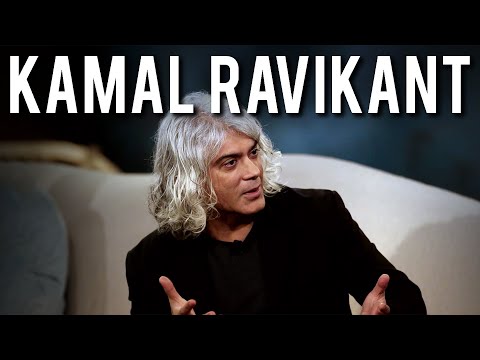
KAMAL RAVIKANT | How Loving Yourself Can Save Your Life | Modern Wisdom Podcast 135
WatchChris Williamson // 1:20:33
