The Psychology of Silencing: Beyond the Surface of Cancel Culture
The Digital Panopticon: Why We Are Walking on Eggshells
We have reached a curious moment in human history. Despite having more safety, better healthcare, and longer lives than any of our ancestors, our perceived sense of vulnerability is skyrocketing. This psychological paradox sits at the heart of what we now call cancel culture. It is not merely a collection of isolated incidents on social media; it is a fundamental shift in how we relate to one another and the ideas we hold dear. Growth requires friction, but today, that friction is being treated as an existential threat. When we view every dissenting opinion as an act of violence, we effectively shut down the primary engine of personal and societal development: the open exchange of difficult ideas.
Modern technology has created a digital panopticon. In this environment, the mere possibility of being watched—and subsequently judged for an adolescent blunder or a misunderstood comment—forces a state of permanent self-censorship. This is not the natural evolution of accountability. It is a calculated social mechanism that uses fear to enforce ideological purity. When individuals feel they are walking on eggshells, they stop taking risks. They stop being curious. They stop growing. As a psychologist, I see the toll this takes on the human spirit: a rising tide of anxiety and a hollowed-out sense of self that prioritizes social safety over intellectual honesty.
The Great Abdication: Resilience vs. Protectionism
There has been a generational creep away from the foundational values that once defined a resilient society. Rikki Schlott highlights a stark contrast between the upbringing of previous generations and that of Gen Z. Older cohorts were raised on the idioms of "sticks and stones" and "to each his own." These were not just catchy phrases; they were psychological frameworks for building anti-fragility. They taught us that while words can be unpleasant, they do not have the power to break us unless we let them. This mindset encouraged a robust engagement with the world.
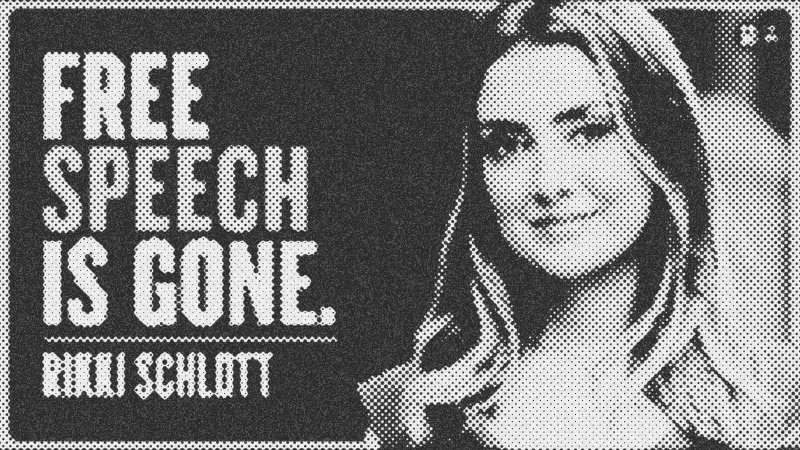
Today, that framework has been flipped on its head. The prevailing narrative suggests that "words can wound" and that individuals, particularly those from marginalized groups, are inherently feeble and in constant need of protection from "harmful" speech. This move toward extreme protectionism—often facilitated by well-meaning but overreaching parents and institutions—has stripped young people of the tools they need to navigate conflict. When we protect people from every possible offense, we are not making them safer; we are making them more fragile. We are teaching them that the world is a minefield and they are too weak to cross it. This mindset is the antithesis of potential and the primary driver of the current cancellation epidemic.
The Mechanics of Social Exclusion: From Academia to the Office
Cancellation is rarely about finding the truth. It is about the exercise of power and the performance of moral high ground. On college campuses like New York University or Harvard University, this manifests as an institutionalized "snitch culture." When students are provided with "bias response hotlines" on the back of their ID cards, the message is clear: your peers are not collaborators in learning; they are potential targets for reporting. This environment does not foster empathy; it fosters a cold, calculated surveillance. It turns the classroom into a theatre where students hiss at unpopular opinions, not because they are genuinely hurt, but because it signals their own ideological purity.
This behavior isn't restricted to the quad. It has bled into the corporate world, where executives are increasingly terrified of their youngest hires. We see "soft mechanisms" of cancellation—what might be called the Carol Hooven effect. Hooven, a respected Harvard professor, wasn't fired outright for acknowledging biological sex; she was squeezed out. Her teaching assistants refused to work with her, and the social environment became so hostile that her position became untenable. This is the new face of censorship: it is not a gavel coming down from above, but a slow, cold-shouldering from below that makes intellectual life impossible. It is a way of winning arguments without actually engaging with the ideas, by simply making the dissenter disappear.
The Echo Chamber Paradox: Why Bans Don't Work
One of the most dangerous myths of the digital age is that banning "bad" ideas makes them go away. Data from the National Contagion Research Institute proves the opposite. When platforms like Twitter (now X) perform mass purges of controversial groups—from white supremacists to fringe political activists—those individuals don't stop holding those views. They simply migrate to more obscure crevices of the internet like Gab. In these isolated corners, there are no dissenting voices, no "quote-tweeting" for public shaming, and no moderation. The result is a positive feedback loop that radicalizes individuals far more effectively than any open forum ever could.
Censorship creates echo chambers that are impervious to reason. By removing these voices from the public square, we lose the ability to challenge them, to expose their flaws, and to provide better alternatives. We are trading the messy, chaotic reality of a free society for a false sense of order that hides a deeper, more dangerous instability. As John Stuart Mill famously argued, he who knows only his side of the argument knows little of that. When we refuse to hear the "other side," we weaken our own understanding and undermine the very truth we claim to defend.
Reclaiming our Agency: A Path Toward Restorative Discourse
The solution to cancel culture is not more cancellation. It is not an apocalyptic waiting game where we hope things get so bad that they eventually reset. The path forward requires intentional, daily acts of courage. We must shift back toward institutional neutrality—the idea that universities and corporations are platforms for expression, not arbiters of truth. Leaders like Brian Armstrong of Coinbase and the executives at Netflix have shown that it is possible to set boundaries, telling employees that they must be able to work alongside viewpoints they find offensive or find another place to work.
On a personal level, we must build a social pact of mutual protection. If a friend or colleague is targeted by a mob for a perceived ideological misstep, we must have the spine to stand up for them. This doesn't mean agreeing with everything they say; it means defending their right to say it and their humanity as a person. We must decouple opinions from personhood. Growth happens when we are willing to be wrong, to make mistakes, and to extend grace to others who do the same. The future of our democracy depends on our ability to choose curiosity over condemnation and resilience over fragility. It is time to stop walking on eggshells and start walking together toward a more honest, robust, and ultimately more human way of being.
- anti-fragility
- 5%· concepts
- Brian Armstrong
- 5%· people
- cancel culture
- 5%· concepts
- Carol Hooven
- 5%· people
- Coinbase
- 5%· organizations
- Other topics
- 76%
What They Don't Want You To Know About Cancel Culture - Rikki Schlott
WatchChris Williamson // 1:00:32
