The Psychology of Resilience and Independent Thought: Navigating Environmental Narratives
The Internal Shift from Environmental Advocacy to Independent Inquiry
True growth often requires the courage to stand apart from the groups that once defined us. Patrick Moore, a co-founder of Greenpeace, provides a masterclass in this psychological transition. His journey from the basement of a unitarian church, planning protests against hydrogen bombs, to becoming one of the most vocal critics of modern environmentalism highlights a critical aspect of personal development: the evolution of self-awareness. When we anchor our identity too tightly to a movement, we risk losing our ability to process new data objectively. Moore's departure from the organization he helped build was not a rejection of nature, but a rejection of a shifting ideology that he felt moved away from science and toward a narrative of human-as-enemy.
Developing a resilient mindset involves questioning the "original sin" narratives that often permeate social movements. In his early days, the focus remained on peace and environmental protection—a humanitarian orientation. However, as organizations grow, they often undergo a psychological shift toward power and control. For Moore, the breaking point came when the movement began to label essential elements like chlorine and carbon dioxide as inherently toxic. This transition from specific problem-solving to broad, ideological condemnation is a trap many of us face in our personal lives. We must learn to distinguish between genuine challenges and the manufactured guilt that keeps us from reaching our potential.
Deconstructing the Climate of Fear and Guilt
Fear and guilt are the most potent tools for behavioral control, yet they are the greatest obstacles to emotional intelligence and resilience. When we are told that the "end is near," whether through ancient doomsday prophecies or modern climate emergency rhetoric, our brains shift into a survival mode that shuts down high-level reasoning. This "climate of fear" creates a self-loathing state where individuals view their own existence as a scourge on the planet. This psychological condition is deeply destructive, preventing the intentional steps required for genuine growth. If we believe we are fundamentally evil, we lose the motivation to be better.
Recognizing that doomsday predictions have a "baton zero" success rate is the first step in reclaiming your mental agency. Throughout history, figures have stood on street corners or global stages predicting an imminent apocalypse. These narratives often reflect a projection of the individual's own fear of death onto the universe. To build a growth-oriented mindset, one must focus on what can be controlled. Worrying about global cycles that span millions of years, such as the Milankovitch cycles, leads to paralysis. Instead, resilience is found in understanding that while the world changes—sometimes getting warmer, sometimes colder—humanity has an incredible capacity for adaptation. Choosing to see ourselves as capable problem-solvers rather than doomed victims is a fundamental mindset shift.
Science, Subjectivity, and the Power of Critical Thinking
In our pursuit of potential, we must become savvy consumers of information. The modern landscape is cluttered with what Moore describes as "fake invisible catastrophes." From the Great Pacific Garbage Patch to the supposed extinction of Polar Bears, many stories are framed to trigger an emotional response rather than provide a scientific education. For instance, the claim that birds are dying because they cannot distinguish plastic from food ignores the biological reality of the Gizzard. Birds naturally seek out hard objects—stones, pumice, or bits of wood—to grind their food. When we understand the underlying science, the narrative of "sinful" human activity causing accidental poisoning begins to look more like a story of animal adaptation.
Resilience involves looking for the things that are omitted from a story. When activists show a walrus falling from a cliff, they may omit the presence of Polar Bears driving them over the edge, instead blaming a lack of ice. This manipulation is designed to make you feel uncomfortable and compliant. To achieve your potential, you must cultivate the emotional intelligence to see through these tactics. Growth happens when we stop being the "torturers" of our own minds by imbibing narratives of guilt. We should instead look at historical data, such as the Roman Warm Period or the Medieval Warm Period, which show that a warmer earth has often been a more productive one for life.
Actionable Resilience: Solutions Over Stagnation
True personal growth is not about avoiding challenges but about finding efficacious solutions. In the environmental discussion, the rejection of Nuclear Energy is a prime example of ideology trumping logic. If the goal is to reduce fossil fuel consumption while maintaining the energy needed for civilization to flourish, nuclear power stands as a primary solution. Yet, a collective psychological block—fueled by a lack of understanding of radiation and toxicology—prevents its adoption. Resilience in this context means being the "key master" of your own choices, advocating for what works rather than what feels emotionally satisfying to a group.
We must also protect the principle of informed consent in all areas of life, from medical treatments to ideological alignment. Allowing ourselves to be forced into decisions through the threat of losing our livelihoods is a surrender of our inherent strength. Whether discussing vaccines or environmental policy, the ability to say "no" based on your own inquiry is a hallmark of a mature, self-aware individual. The future belongs to those who can navigate these complex, often manipulative narratives with a clear head and an empathetic heart, focusing on the intentional steps that lead to actual well-being rather than the hollow comfort of conformity.
Conclusion: Navigating the Future with Insight
The greatest power you possess is the ability to recognize your strength in the face of uncertainty. The world is not ending; it is evolving, and you are part of that process. By moving away from the "human-as-scourge" mindset and toward one of resilience and scientific curiosity, you open the door to your true potential. Growth is a series of intentional steps away from fear and toward a deeper understanding of the interrelationships that sustain life. Stay motivated, stay insightful, and remember that you are not a victim of the earth's cycles—you are an active participant in its history.
- Al Gore
- 8%· people
- BBC
- 8%· companies
- Donald Trump
- 8%· people
- Extinction Rebellion
- 8%· companies
- Greenpeace
- 8%· companies
- Other topics
- 58%
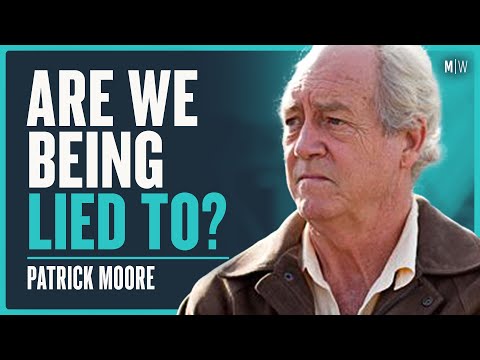
Greenpeace's Ex-President - Is Climate Change Fake? - Patrick Moore | Modern Wisdom Podcast 373
WatchChris Williamson // 1:36:19
