The Architecture of Aversion: Kinship Cues, Incest Avoidance, and the Evolution of Human Tears
The Biological Engineering of Kinship
Nature rarely leaves the survival of a species to chance. While we often view our family bonds through the lens of affection, cultural tradition, or moral obligation, the machinery driving these relationships is far more primal. Evolution has engineered a sophisticated psychological system within humans and animals alike to solve two specific problems: avoiding the deleterious effects of inbreeding and directing altruism toward those who share our genetic lineage. This system operates beneath the level of conscious thought, using environmental cues to calculate a "kinship estimate" for every person we encounter.
When we ask why we lack sexual attraction toward siblings, we are really asking about the success of a biological firewall. Inbreeding poses a massive risk to offspring health, often surfacing recessive mutations that would otherwise remain hidden. To prevent this, our brains have developed an automatic aversion mechanism. Interestingly, this same mechanism that keeps our genitals far from our relatives is the very one that brings our hearts closer. By identifying kin, the brain allows for the expression of inclusive fitness, where we are naturally inclined to be "nice" to those who carry our genes. It is an elegant, economical piece of mental software that uses one set of inputs to drive two very different behavioral outputs.
Decoding the Triggers: How We Detect Kin
Animals do not have the luxury of language to label a relative as "brother" or "sister." Instead, they rely on reliable environmental correlates. In humans, despite our capacity for complex speech, the underlying system remains largely dependent on these same ancient cues. We do not use the word "mother" to decide who our mother is; rather, the system maps onto the female who primarily breastfed us during infancy. For mothers, the cue is even more direct—the unmistakable physical experience of giving birth.
Sibling detection, however, is more nuanced. Younger siblings have the advantage of Maternal Perinatal Association. This occurs when a child observes their mother investing heavily in a newborn—breastfeeding, caring for, and carrying a new baby. This visual and social cue is an almost foolproof signal of genetic relatedness. But older siblings face a challenge; they weren't around to see their mother care for them as newborns. To bridge this gap, the brain utilizes the Edward Westermarck. This principle suggests that the duration of co-residence during early childhood serves as a proxy for relatedness. The longer you live under the same roof as another child during your dependent years, the more certain your brain becomes that they are kin, ratcheting up a permanent sexual aversion.
The Failure of Language and the Power of Proximity
Because this system is built on cues rather than facts, it can be "tricked" by modern social arrangements. In cases of minor marriage in Taiwan, unrelated children raised together from birth often find themselves unable to consummate their unions as adults due to the Westermarck effect. Conversely, genetic relatives who meet for the first time in adulthood often lack this built-in disgust. This can lead to a phenomenon sometimes called Genetic Sexual Attraction. Without the childhood co-residence window to trigger the aversion, the striking similarities in temperament, preferences, and physical appearance—all driven by shared genes—can feel like the "perfect match" rather than a biological warning sign.
Moral Dumbfounding and the Disgust Response
Human morality is often less about logic and more about protecting ourselves from social condemnation. When presented with the "Mark and Julie" scenario—consenting adult siblings using multiple forms of birth control for a one-time encounter—most people immediately label the act as "wrong." However, when pressed for a logical reason why, they often find themselves in a state of moral dumbfounding. They reach for arguments about birth defects or social harm, and when those are debunked by the scenario's premises, they simply fall back on a gut feeling: "I don't know, it's just wrong."
This visceral reaction is the manifestation of the disgust system. Research indicates that women generally have a much higher disgust ceiling regarding incest than men. This tracks with the heavy cost of reproduction; a female invests years of gestation and lactation into a single offspring. A poor genetic choice is a catastrophic waste of time and energy. For men, while the aversion is still strong, the variance is wider because the biological "cost" of a mistake is lower. This suggests that our moral codes are not merely arbitrary social constructs but are the high-level echoes of ancient reproductive strategies.
The Paradox of Incest in Media
If the disgust response is so universal, why does incest remain a prominent category in adult entertainment and mainstream storytelling? The answer lies in the imperfection of kin detection. Watching a fictional narrative like Game of Thrones does not trigger our internal sensors because we did not grow up in the same household as the characters. To our brains, they are simply two attractive strangers.
Furthermore, for individuals without siblings, the language of this particular disgust may be entirely absent. Just as an only child might not have the "gut level recoil" when hearing about sibling incest, they also may not feel the same aversion when consuming media that features it. The fantasy often relies on the thrill of contravening social norms rather than a genuine desire for kinship. It is the breaking of the rule that provides the charge, but the biological "firewall" only activates when our specific cues—breastfeeding and long-term co-residence—are present in our own lives.
Crying: The Tool of the Lower Leveraged
Moving from disgust to vulnerability, the act of crying offers another window into our evolutionary past. Why would leaking water from the face ever be an adaptive trait? Biologically, tears exist to lubricate the eye, but evolution has repurposed them as a high-fidelity social signal. Crying is a tool primarily utilized by those in a "lower leveraged" position—those who are less physically formidable, less status-rich, or more dependent on the welfare of others.
When we cry, we communicate two primary things: that we are in a state of high need, and that we value the relationship we are in. Tears act as a signal to the other person to stop imposing costs or to begin delivering benefits. It is a negotiation tactic for the powerless. This is why we see children cry more than adults and women cry more than men; it is a way to signal vulnerability and solicit care in environments where one cannot simply use force or dominance to get their way.
The Authenticity of the Tear
Tears are what biologists call a "costly signal." Because crying temporarily incapacitates our vision and makes us look vulnerable, it is difficult to fake convincingly. This makes it a reliable indicator of genuine emotional state. Of course, there are exceptions, such as "crocodile tears" used by Dark Triad personalities for manipulation. These individuals often ensure their tears are on display, treating them as a billboard to influence others, whereas genuine criers often feel a sense of shame or a desire to hide, reflecting the tension between needing help and not wanting to appear exploitable.
Grief, Empathy, and the Internal Mirror
The most puzzling form of crying is that which happens when we are alone. If crying is a social signal, why do we weep over a movie or in the privacy of our grief? This likely stems from our brain's inability to fully distinguish between a simulation and reality. We evolved in small groups where privacy was nonexistent and every story was told in person. Our minds simulate social dramas constantly to prepare us for real-world interactions. When we see a soldier reunite with a dog on a screen, our empathy systems fire as if it were happening in our immediate social circle.
In grief, crying serves as a data dump for social value. When we lose someone we highly valued, our internal systems must recalibrate to the new reality that this person's "investment" in us is gone. The physical act of crying may be part of a chemical mediation process, helping us flush out the old attachments and reset our internal expectations. Whether we are signaling to others or recalibrating our own minds, tears remain one of our most potent connections to our shared biological heritage.
The Path Forward: Science as a Paywall-Free Human Right
Understanding these complex psychological systems is not just an academic exercise; it is a pathway to greater self-awareness and emotional intelligence. However, much of this life-changing research remains locked behind academic paywalls, accessible only to those within university systems. As we move into an era of greater connectivity, the goal is to make this data available to everyone. We are built to understand ourselves, but we need the keys to the library to do so. By studying everything from the disgust of incest to the purpose of a tear, we learn that we are not just victims of our emotions, but the beneficiaries of a beautifully complex, survival-oriented design.
- Arthur Wolf
- 10%· people
- Dark Triad
- 10%· psychology
- Debra Lieberman
- 10%· people
- Edward Westermarck
- 10%· people
- Game of Thrones
- 10%· tv shows
- Other topics
- 50%
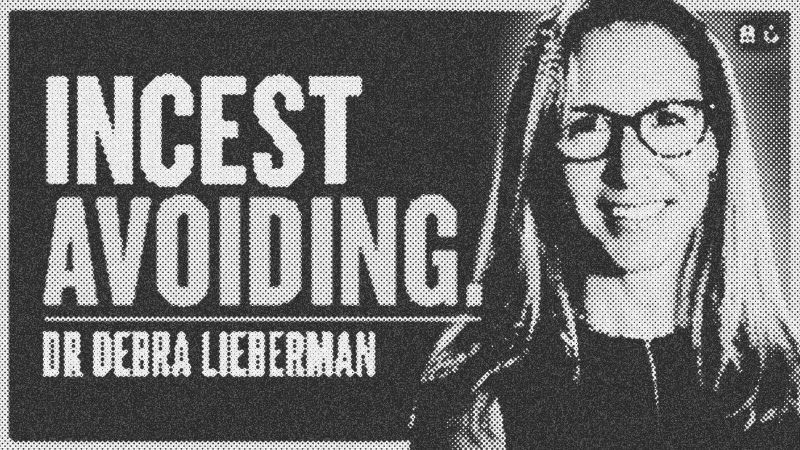
Why Don’t You Have Sex With Your Sister? - Dr Debra Lieberman
WatchChris Williamson // 1:08:30
