The Biological Bribery: Dr. Anna Machin on the Evolutionary Logic of Love
The Architecture of Affection: Why Evolution Invented Love
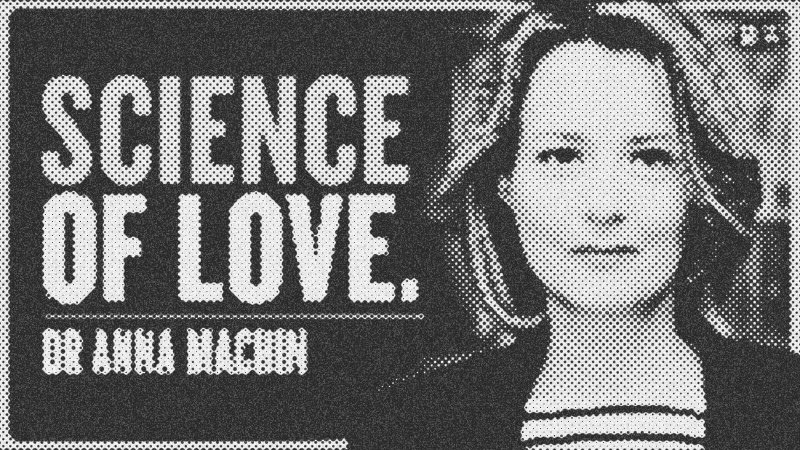
Love is not a Hallmark card invention. It is a sophisticated survival mechanism. To understand the human heart, we must first look at the cold, hard requirements of our evolutionary past. Humans are arguably the most cooperative species on the planet, but that cooperation is biologically expensive. Living in groups, managing hierarchies, and navigating social conflict creates immense stress. Left to our own devices, we might choose a solitary existence to avoid the mental toll of constant negotiation. However, our survival—and more importantly, the survival of our offspring—depends on deep, enduring bonds.
Anna Machin describes love as a form of biological bribery. Evolution uses a potent cocktail of neurochemicals to reward us for doing the difficult work of maintaining "survival critical relationships." These aren't just romantic flings; they include the bond between a father and child, a mother and infant, and the tight-knit friendships that form the safety net of our social tribes. Without this neurochemical payoff, the sheer exhaustion of caring for a helpless human infant for nearly two decades would be insurmountable. Love is the lubricant that keeps the machinery of human cooperation from seizing up under the weight of its own complexity.
The Neurochemical Soup: Dopamine, Oxytocin, and Beta-Endorphin
When we talk about the feeling of love, we are actually describing the interaction of four primary neurochemicals, each with a distinct role in the maintenance of human bonds. Most people are familiar with Oxytocin, often mislabeled as the "cuddle hormone." While it is vital for orienting us toward social beings and calming the fear-processing amygdala, it is only a small part of the story. Its effects are fleeting, lasting barely thirty minutes, and the human brain quickly develops a tolerance to it. For a relationship to last forty years, evolution needed something more robust.
This is where Beta-Endorphin enters the frame. It is the body’s natural opiate, released during social touch, laughter, singing, and even eating spicy food. Unlike oxytocin, we do not grow tolerant to beta-endorphins; they provide the long-term addictive quality of love that keeps us coming back to the same person for decades. Complementing this is Dopamine, the hormone of motivation and reward, which provides the motor energy to cross a room and speak to a stranger. Finally, Serotonin drives the obsessive phase of early attraction, keeping our thoughts looped on the object of our affection. This "soup" ensures that we are not just attracted to others, but physically and mentally compelled to remain in their orbit.
The Genetic Sniff Test: The Science of Attraction
Attraction is far less conscious than we like to admit. Long before we have evaluated a potential partner's personality or career prospects, our brains have processed a mountain of sensory data. One of the most fascinating aspects of human mating is the role of the Major Histocompatibility Complex (MHC). This set of genes determines the diversity of our immune response. Evolutionarily, it is advantageous for a child to have a diverse immune system, which requires parents with vastly different MHC profiles.
Research indicates that women, in particular, possess a specialized ability to "smell" genetic compatibility. If a man’s MHC genes are too similar to her own—suggesting a risk of inbreeding—she will likely find his natural scent unappealing, even if he is objectively attractive and kind. This is why women often describe an inexplicable lack of "spark" with a seemingly perfect partner. Men, conversely, appear to have lost this specific olfactory sensitivity over time, likely because the biological cost of a reproductive mistake (nine months of pregnancy and the risks of childbirth) is significantly higher for women, necessitating more stringent biological gatekeeping.
The Gender Myth: Emotional Intelligence and the Brain
One of the most persistent myths in personal development is the idea that men and women have fundamentally different brains when it comes to love. Anna Machin clarifies that if you were to look at a brain scan of an individual in love without knowing their sex, it would be impossible to tell if the brain belonged to a man or a woman. The neural activations and neurochemical pathways are identical. The differences we observe in the real world are almost entirely cultural and gendered, not biological.
From a young age, we tell different stories to boys and girls. By age eleven, boys often begin to internalize the role of the "protector" or the "rock," leading to a suppression of emotional vulnerability. This cultural layering suggests that crying over love or expressing deep passion is a feminine trait. However, in cultures where these stories don't exist—such as certain Arab societies where men openly hold hands and kiss as a sign of platonic affection—men are far more emotionally expressive. Recognizing that emotional capacity is a human trait rather than a gendered one is a vital step in developing deeper self-awareness and healthier relationships.
The Dark Side: Love as a Tool of Manipulation
Because love is so vital to our well-being and is underpinned by addictive chemicals like beta-endorphins, it can be weaponized. Humans are the only species that use love to manipulate others. This can range from the mundane—"If you loved me, you'd make me tea"—to the catastrophic. In abusive relationships, the abuser often leverages the victim’s physiological addiction to the bond to maintain control.
Research into the Dark Triad personality types—narcissism, psychopathy, and Machiavellianism—shows that these individuals use "costly mate retention behaviors," including coercion and violence, to keep partners from leaving. For the victim, the phenomenon of "blind love" is a literal neurological reality; when we are deeply attached, the mentalizing areas of the brain that judge others' character and intentions can actually shut down. This makes it difficult for those inside the relationship to see the danger that is obvious to outsiders. Understanding this darker dimension is crucial for developing resilience and protecting one's emotional well-being.
Modern Mating: The Digital Handicap
Dating apps have revolutionized how we meet, but they have done nothing to change how we love. In many ways, they act as a handicap to our natural biological systems. Our brains evolved to assess mate value through a multi-sensory, face-to-face experience. We need the scent, the tone of voice, the micro-expressions, and the physical presence to trigger the unconscious algorithms that determine attraction. A static photo on a screen provides almost none of this necessary data.
This leads to a mismatch in efficiency. While Tinder or Hinge might be efficient at "introducing" people, they are remarkably inefficient at building lasting bonds. The low-cost nature of digital interaction—swiping from the comfort of your sofa—lowers the risk of rejection but also removes the "effortfulness" that signals value to the brain. To navigate the modern dating landscape effectively, we must recalibrate our expectations and move from the screen to the real world as quickly as possible to let our biological hardware do the work it was designed for.
Conclusion: The Ultimate Human Strategy
Love is the cornerstone of the human experience because it is our ultimate survival strategy. It is the force that allows us to bridge the gap between our selfish needs and the needs of the collective. Whether it is the platonic devotion of a best friendship, the mystical connection of religious love, or the fiery intensity of a romantic partnership, these bonds provide the physiological and psychological foundation for a healthy life. By understanding the evolutionary and neurochemical roots of these feelings, we don't lose the magic; we gain the self-awareness to nurture these connections more intentionally. Growth happens when we recognize that love is not just something that happens to us, but a complex, beautiful system we have the power to navigate.
- Anna Machin
- 13%· people
- Beta-Endorphin
- 7%· products
- Chris Williamson
- 7%· people
- Dark Triad
- 7%· products
- Dating apps
- 7%· products
- Other topics
- 60%
How Love Actually Works - Dr Anna Machin
WatchChris Williamson // 1:35:20
