The Alchemy of Ambition: What WeWork’s Collapse Teaches Us About Growth and Gaps in Reality
Introduction: The Mirage of Unlimited Expansion
Your greatest power lies not in avoiding challenges, but in recognizing your inherent strength to navigate them. Growth happens one intentional step at a time, yet we often find ourselves seduced by stories of overnight empires and leaders who claim to have found a shortcut to success. The story of WeWork serves as a modern-day myth about the consequences of ignoring the steady, intentional path in favor of a reckless sprint toward a phantom finish line.
At its peak, WeWork wasn't just a company; it was a cultural phenomenon that promised to "elevate the world’s consciousness." It transformed mundane office leasing into a spiritual mission, led by a charismatic founder who convinced the most sophisticated investors on the planet that he had reinvented the way humans coexist. When the veil was finally pulled back during its failed 2019 IPO, the world discovered that beneath the "energy of we" lay a standard real estate business hemorrhaging billions of dollars. Understanding the rise and fall of this organization offers more than a business lesson; it provides a psychological blueprint of how charm can bypass critical thinking and how a disconnect from reality can eventually shatter even the most gilded dreams.
Key Concepts: Decacorns and the Silicon Valley Mythos
To grasp the magnitude of the WeWork saga, one must understand the ecosystem that allowed it to thrive. In the world of high-growth startups, a unicorn is a private company valued at over one billion dollars. These are intended to be rare, magical entities. However, WeWork ascended even higher into the stratosphere, becoming a decacorn—a company with a private valuation exceeding ten billion dollars.
This nomenclature matters because it reinforces a specific mindset: the idea that certain companies exist outside the traditional laws of the market. They are treated as creatures of myth rather than entities of commerce. For a decade following the 2008 recession, Silicon Valley operated on a philosophy of "blitzscaling," where growth was prioritized above all else, including profitability or sustainability. This environment created a feedback loop where hype became more valuable than revenue. If you could project a vision of the future with enough conviction, the capital would follow, often without the clinical dissection required for long-term health.
The Architecture of a Charismatic Leader
At the center of this storm stood Adam Neumann. Every great movement—and every catastrophic failure—often traces back to the temperament of its leader. Adam Neumann possessed a rare combination of physical presence and unshakable self-belief. Standing at 6'5" and radiating an infectious optimism, he was an expert at what psychologists call the "reality distortion field." He didn't just sell desks; he sold a sense of belonging.
The Power and Peril of Charisma
Adam Neumann was an inspirational leader who could convince employees and investors alike that they were part of something historic. This level of charisma is a double-edged sword. While it can mobilize thousands toward a common goal, it can also silence dissent. When a leader’s personality becomes the primary product, the actual business model often escapes scrutiny. In Adam Neumann’s case, his high risk tolerance was seen as a visionary asset rather than a liability. His high school driving instructor famously predicted he would either be a millionaire or go to jail, highlighting a lifelong pattern of "going big" without a middle ground for steady progress.
The Cult of Personality as a Business Strategy
As WeWork expanded, the line between Adam Neumann’s personal whims and the company’s mission blurred. The organization began investing in wave pool companies and elementary schools, projects that aligned with Adam Neumann’s lifestyle but had no logical connection to office leasing. This is a classic symptom of autocratic leadership: when the leader’s personal journey replaces the company’s strategic goals. True growth requires a balance of vision and self-awareness, but in the WeWork ecosystem, the vision was allowed to run wild without the stabilizing weight of accountability.
Detailed Analysis: The Fundamental Flaw
Stripped of the neon signs and free-flowing beer, WeWork’s core business was a simple rent arbitrage. They signed long-term leases with landlords for large buildings, subdivided those spaces, and rented them out on short-term contracts to "members." This model is inherently fragile. It relies on a permanent state of high occupancy and a growing economy.
The Arbitrage Trap
The disconnect lay in how the company was marketed. WeWork insisted it was a tech company, which allowed it to command a much higher valuation than a traditional real estate firm. However, a tech company scales with software—adding a million new users costs very little. A real estate company scales with physical space—adding a new location costs millions in construction and rent. By claiming the identity of a tech startup, WeWork avoided the clinical financial metrics applied to its actual industry peers, like Regus.
The Poison Chalice of Capital
The arrival of Masayoshi Son and the Vision Fund acted as an accelerant to this instability. Masayoshi Son, the head of SoftBank, was known for making gut-level investment decisions. After a meeting that reportedly lasted less than thirty minutes, he committed billions to WeWork. While this capital allowed for the fastest physical expansion in corporate history, it also removed any incentive for the company to become profitable. This is the "poison chalice" of overfunding: it creates a facade of success that hides deep structural rot. When you have four billion dollars in the bank, you don't worry about whether your business model actually works; you only worry about spending the money fast enough to justify the next investment.
Implications: The Psychological Comeuppance
The fall of WeWork wasn't just a financial event; it was a moment of collective vindication for those who felt the "hustle culture" of the last decade had become disconnected from human values. There is a deep psychological satisfaction in watching a "train wreck" like WeWork or the Fyre Festival because it suggests that, eventually, reality wins.
We have entered an era where the ability to build a personal brand via social media allows individuals to scale their influence far beyond their actual competence. This creates a landscape filled with "all talk and no trousers," where bombast is mistaken for brilliance. The WeWork saga forces us to re-evaluate our susceptibility to charisma. We must develop a more sophisticated "internal radar" to distinguish between a leader who is genuinely building something of value and a charlatan who is merely performing a role. Genuine resilience is built on the truth, not on polished marketing and psychedelic mission statements.
Conclusion: Navigating the New Cycle
As we look toward the future, the lessons of WeWork remain strikingly relevant. The company tried to survive its IPO by appealing to the "energy of we," but the public market demanded data, not energy. The failure of the IPO and the subsequent ousting of Adam Neumann signaled the end of an era of unchecked optimism.
However, out of the wreckage, a more grounded approach to growth is emerging. We are entering a cycle where numbers matter again, and where "adults in the room" are valued more than gurus in the boardroom. The challenge for each of us in our personal and professional lives is to remain visionary without losing our grip on the foundational facts of our situation. Growth is a beautiful process, but it must be rooted in honesty. If we build our dreams on a foundation of hype, they will eventually crumble under the weight of their own expectations. If we build them with intention and integrity, they will stand the test of time.
- WeWork
- 32%· companies
- Adam Neumann
- 16%· people
- Masayoshi Son
- 5%· people
- Airbnb
- 2%· companies
- Billy McFarland
- 2%· people
- Other topics
- 43%
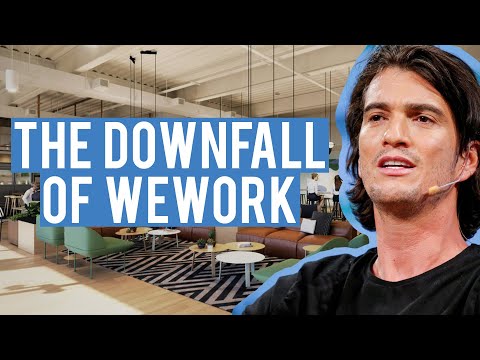
The Catastrophic Story Of WeWork | Reeves Wiedeman | Modern Wisdom Podcast 238
WatchChris Williamson // 1:02:02
