The Psychology of Potential: Navigating Success, Wealth, and the Modern Mid-Life Crisis
The Hidden Burden of the Over-Achiever
Many of us walk through life with a nagging sensation that we are falling short of an invisible bar. We measure ourselves against a hypothetical version of our best selves, leading to a constant state of psychological friction. This friction often manifests as the fear that we aren't reaching our full potential. However, as Noah Kagan and Chris Williamson explore, the obsession with potential can often be a prison of our own making. When you are constantly asking if you are realizing your potential, you are effectively living in a state of lack.
The drive that fuels early success—often rooted in anger, bitterness, or a desire to prove others wrong—is a potent but toxic propellant. It gets the engine started, but it cannot sustain a long-term journey toward contentment. True growth requires a transition from external validation to internal pride. This shift is difficult because the tools that got us to a certain level of success—obsessive attention to detail, relentless follow-up, and a chip on the shoulder—are often the very things that prevent us from enjoying the arrival once we get there.
The Billionaire's Perspective on Regret and Wealth
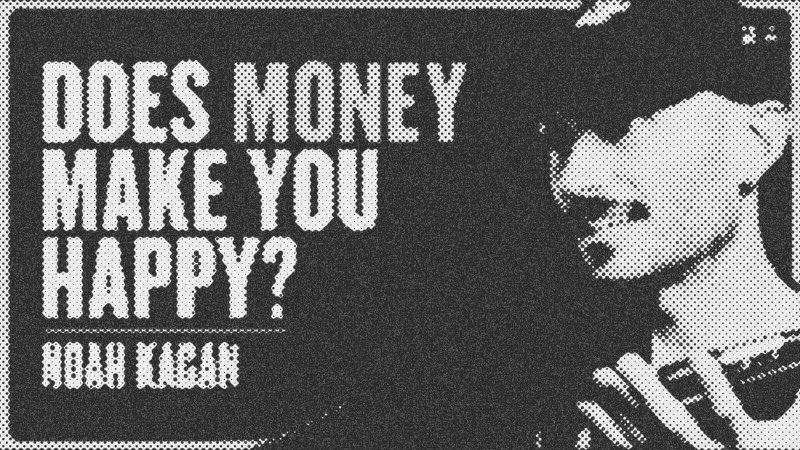
There is a common societal assumption that reaching the pinnacle of financial success solves the internal malaise of the human condition. Yet, those who have spent significant time with the world's wealthiest individuals, like Mark Zuckerberg or the founders of AppSumo, observe a different reality. The most common regret among billionaires isn't related to business failures or missed market opportunities; it is almost exclusively centered on the family. Many of the most 'successful' people on the planet spent thirty-four years in a state of constant stress, only to realize at the end that they traded the texture of their daily lives for a numerical value in a bank account.
Noah Kagan highlights that billionaires often get rich by doing one thing for an extraordinary amount of time. They don't diversify early; they go narrow and deep. John Paul DeJoria, the founder of Patron Tequila, is a rare example of a billionaire who maintained a sense of contentment. His philosophy was simple: find one thing you believe in and focus on the 'reorder' business. If the product is good enough that people want it again, the wealth follows naturally. The lesson here is that wealth is an amplifier; if you are unhappy and stressed without money, you will likely be unhappy and stressed with it—just with a nicer view.
The Anatomy of Starting: Overcoming the Fear of Rejection
One of the greatest barriers to personal growth is the paralysis caused by the 'Paradox of Choice' and the fear of visible failure. Starting a business is often viewed as a high-risk endeavor, but remaining in a soul-crushing day job is actually the greater risk to one's psychological well-being. The magic we are looking for is almost always in the work we are avoiding. For many, that work involves the simple act of asking.
Noah Kagan advocates for 'Rejection Therapy' as a means of desensitizing the ego to the sting of 'no.' Whether it is asking for a ten percent discount at a coffee shop or reaching out to a high-status individual like Tim Ferriss, the goal is to realize that rejection is not a reflection of your worth. It is merely data. By practicing rejection in small, controlled ways, we build the 'bravery muscle' necessary to take larger risks in our careers and relationships. The selection criteria for success isn't intelligence or talent alone; it is the willingness to endure discomfort while others retreat to safety.
The Role of Coaching and Intentional Growth
Investing in oneself is often discussed in abstract terms, but Noah Kagan quantifies it through his extensive use of coaching. Having spent over a million dollars on various coaches—ranging from CFO advisors like Jenny to CEO coaches and even health coaches—he argues that you are essentially paying for someone else's 10,000 hours of experience. This allows you to skip the 'long-cut' of learning through trial and error.
Coaching serves as a mirror, reflecting our own behaviors and biases back to us. It forces a pause between a trigger and a response, allowing for intentionality rather than reactivity. A significant part of modern business is a projection of the founder's personal psychology. If the founder is frantic, the organization will be frantic. If the founder is obsessed with detail, the product will reflect that. Therefore, the most effective way to scale a business or a personal project is to work on the internal architecture of the person leading it.
Narrative Shifting and the Power of Positive Self-Talk
As we age, our internal narratives often become fixed, yet they are entirely malleable. We tell ourselves stories about why we failed or why we aren't 'the type of person' to succeed. Breaking these patterns requires a conscious effort to introduce positive counter-narratives. Noah Kagan suggests a simple but effective technique: every time you criticize yourself, immediately follow it with a positive affirmation.
This isn't about ignoring reality; it's about shifting the baseline of your contentment. We often use observable metrics—like money or followers—to compensate for hidden metrics like peace of mind and quality of sleep. However, arriving at a destination doesn't automatically grant you the peace you seek. You must protect your passion and motivation through the journey. If you don't enjoy the walk, you'll hate the view from the top. The goal is to reach a state where you no longer wonder if you are reaching your potential because you are too engaged in the process of living to care.
Conclusion: The Path Forward
The trajectory of personal growth is rarely a straight line. It is a series of intentional steps, often taken in the face of fear. By looking at the regrets of those who have reached the 'top,' we can see that the true metric of a life well-lived is not found in the accolades we collect, but in the presence we bring to our daily existence. Whether you are starting a podcast like Modern Wisdom or launching a new business venture, the key is to start now, stick with it, and be kind to yourself along the way. The future belongs to those who are willing to face the 'messy kitchen' of their lives and keep cooking anyway.
- Noah Kagan
- 21%· people
- AppSumo
- 4%· companies
- Aubrey Marcus
- 4%· people
- Chris Williamson
- 4%· people
- 4%· companies
- Other topics
- 63%
This Is What Billionaires Regret Before Dying - Noah Kagan
WatchChris Williamson // 1:46:25
