The Path Beyond Neo-Racism: Rescuing the Colorblind Ideal
The Resurgence of Racial Obsession
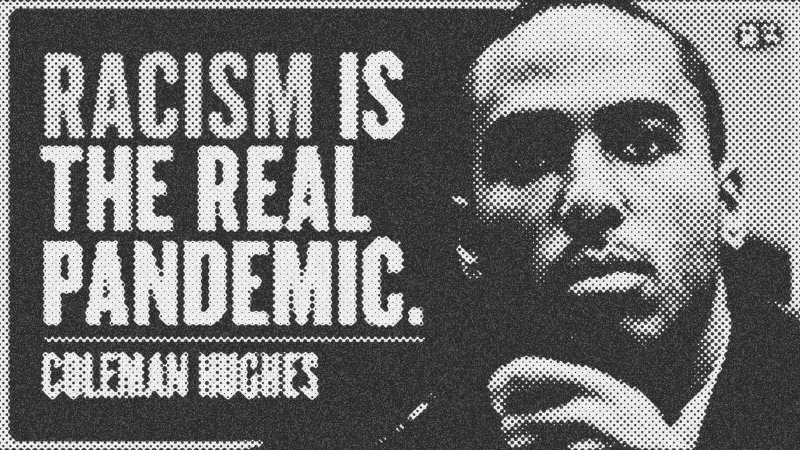
For decades, the trajectory of American race relations appeared to follow a clear, if sometimes slow, path toward integration and mutual understanding. However, around 2013, a profound shift occurred. Data indicates that the majority of Americans across all racial backgrounds believed race relations were in a healthy state until that specific inflection point. Since then, the national conversation has devolved into what Coleman Hughes identifies as an obsession with racial identity that often mirrors the very prejudices it claims to combat. This shift represents a move away from the classical liberal ideal of colorblindness—treating individuals without regard to their race—and toward a philosophy that demands race be centered in every interaction, policy, and historical narrative.
This trend is not merely a social quirk; it is a fundamental restructuring of how we perceive our neighbors and ourselves. When we prioritize the group over the individual, we lose the ability to see the unique character and humanity of the person standing in front of us. This psychological shift creates a landscape of paranoia and self-censorship, where the fear of saying the wrong thing outweighs the desire for genuine connection. To understand how we arrived here, we must examine the intersection of technology, media incentives, and the abandonment of class-based advocacy in favor of a new, more divisive framework.
The Technology of Division and the Information Highway
Coleman Hughes argues that the primary catalyst for the decline in race relations was not a sudden surge in actual racism, but the arrival of camera-enabled smartphones and social media algorithms. This "information highway" fundamentally changed the speed and nature of how stories are consumed. Before 2013, a localized police incident would be reported with journalistic context, incorporating perspectives from multiple parties. In the modern era, raw, out-of-context footage of police interactions spreads like wildfire, tapping into deep-seated historical guilt and outrage before any fact-checking can occur.
This creates a distorted reality where the perceived frequency of horrific events far outstrips the statistical truth. A striking study from 2019 revealed that very liberal Americans, who are most active on social media, believed on average that 1,000 unarmed black men were killed by police in a single year, when the actual number was 12. This gap between perception and reality is a direct result of an ecosystem that rewards emotional resonance over analytical accuracy. When our psychological state is constantly bombarded with "Us vs. Them" narratives, our brains naturally shift into a defensive, tribalistic mode, making the objective of a colorblind society feel increasingly out of reach.
From Anti-Racism to Neo-Racism
In recent years, the term "anti-racism" has been popularized by figures like Ibram X. Kendi and Robin DiAngelo. While the name suggests a virtuous opposition to prejudice, the underlying philosophy often advocates for the opposite. This new framework, which Hughes labels Neo-racism, suggests that race must be at the forefront of every thought and that different races should adhere to different sets of social rules. For example, Robin DiAngelo explicitly argues that white individuals should defer to black individuals in conversations about race, effectively removing the possibility of a two-way, adult dialogue.
The Erosion of Merit and Individualism
This philosophy has permeated elite institutions, leading to the rise of Diversity, Equity, and Inclusion (DEI) mandates that often prioritize racial quotas over individual merit. While an older, healthier version of DEI focused on ensuring no one was excluded due to unconscious bias—such as a manager making an effort to have lunch with all employees regardless of shared hobbies—the modern version often involves the manufacturing of diversity through top-down pressure. This approach can be patronizing and counterproductive, as it assumes that the primary value an individual brings to a space is their racial category rather than their unique skills or character.
The Impact on Policy and Safety
The most damaging effects of this racialized thinking are seen in public policy. The "defund the police" movement, born out of the 2020 protests following the death of George Floyd, is a prime example of how elite-driven narratives can harm the very communities they claim to protect. Despite the vocal demands of activists, Gallup polling showed that 80% of black Americans wanted the same or more police presence in their neighborhoods. The subsequent de-policing in many cities led to the single greatest year-to-year increase in homicides in a century, with the victims being disproportionately black and poor. This highlights the danger of "luxury beliefs"—ideas that confer status upon the elite while imposing heavy costs on the marginalized.
The Revision of History and Cultural Narratives
The push for racial obsession extends into our understanding of the past. There is a growing trend in Hollywood and academia to revise history into a binary of the "evil white oppressor" and the "noble person of color." For instance, the film The Woman King portrays the Dahomey Kingdom tribe's female warriors as having a moral conflict with slavery, when the historical reality shows they were a primary aggressor in capturing and selling other Africans to Europeans. Similarly, the movie Hidden Figures portrays a protagonist facing intense segregation at NASA that the real-life individual, Katherine Johnson, stated she did not experience.
These revisions are not just harmless artistic licenses; they reinforce a worldview that makes racial reconciliation impossible. If history is presented as a static story of group-based guilt and victimhood, there is no path forward for individual agency. A truly honest look at history reveals that slavery and oppression have been human universals, practiced by every race on every continent. Acknowledging this doesn't excuse past sins, but it does contextualize them as part of the broader, messy human condition rather than a unique pathology of one racial group.
Moving Forward: The Recommitment to Colorblindness
The solution to these divisions is not more racial engineering, but a courageous return to the colorblind principle. This is not the naive claim that "I don't see race," but the intentional choice to treat people without regard to race. It is the philosophy championed by Martin Luther King Jr. during the Civil Rights Movement, where he advocated for a Bill of Rights for the Disadvantaged based on class and socioeconomics rather than skin color.
To move forward, we must individually and collectively insist on the humanity of the person over the identity of the group. We must demand that the state stops using racial discrimination in public policy and instead focuses on uplifting all people who are struggling, regardless of their background. Growth as a society happens when we recognize our inherent strength to navigate challenges together, one intentional, colorblind step at a time. The end of race politics begins with the quiet, persistent refusal to judge each other by the one thing none of us can control.
- Coleman Hughes
- 12%· people
- Robin DiAngelo
- 12%· people
- Abigail Shrier
- 6%· people
- Chris Williamson
- 6%· people
- Colorblindness
- 6%· concepts
- Other topics
- 59%
Bringing An End To Race Politics - Coleman Hughes
WatchChris Williamson // 1:16:04
