The Ghost in the Machine: Understanding Limerence as a Survival Mechanism
The Architecture of an Obsession
Most of us recognize the flutter of a new crush or the warm glow of infatuation. However, there is a darker, more intrusive experience that masquerades as love while operating like a chemical dependency. Dorothy Tennov coined the term Limerence in the 1970s to describe a state of involuntary obsession with another person. It is not merely a strong attraction; it is a cognitive loop where the "limerent object" (the person of interest) becomes the sole arbiter of your emotional stability. When they text, you are in heaven. When they are silent, you are in agony.
This phenomenon often targets people who are unavailable, uninterested, or entirely unaware of your existence. While early stages of healthy romantic love involve some level of this "spell," normal love eventually settles into a reality of toothpaste caps and bills. Limerence, however, thrives on the gap between fantasy and reality. It is a high-octane addiction to hope, and for many, it functions as a sophisticated escape from a life that feels bleak or unfulfilling. If you find yourself checking social media for hidden codes in a stranger's captions or stalling your career goals to stay near someone who barely knows your name, you aren't just "in love"—you are caught in a neurological trap.
The Roots of Romantic Reckoning
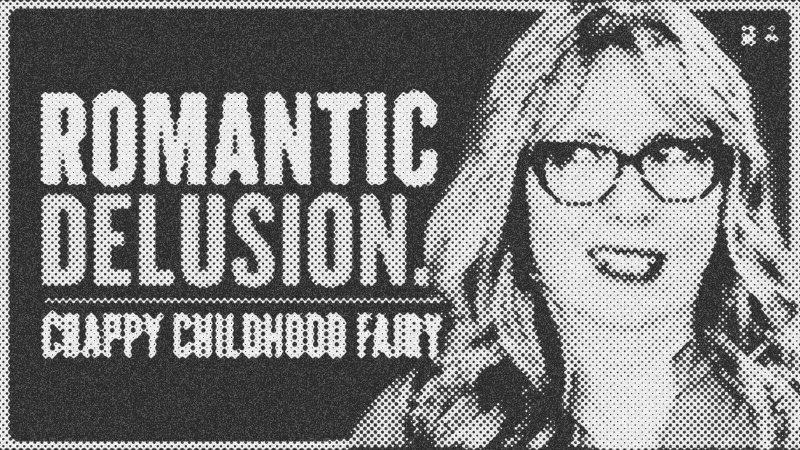
Why do some people walk through life relatively immune to this obsession while others fall into it repeatedly? The answer rarely lies in the person you are chasing; it lies in the silence of your childhood. Anna Runkle, known to her audience as the Crappy Childhood Fairy, identifies a striking correlation between limerence and childhood neglect. When a child is not seen, validated, or protected by their primary caregivers—often due to parental alcoholism or emotional absence—they learn to find love where none exists.
This is a survival skill. A child cannot accept that their parents don't care; that realization is too heavy to bear. Instead, they idealize the parent, creating a narrative of a "special bond" that just needs more effort to activate. As adults, this blueprint remains. Limerence becomes the adult version of that childhood fantasy. You aren't seeking a partner; you are seeking a savior. You are drawn to the aloof and the distant because that is the frequency of love you were programmed to recognize. Pete Walker, a therapist specializing in Complex PTSD, calls this the "abandonment melange"—a toxic cocktail of grief and frantic anxiety that triggers an emotional flashback. You feel like you will die if this person leaves, not because they are special, but because your nervous system is re-living the terror of a forgotten childhood abandonment.
The Erotization of Abandonment
One of the most profound and painful aspects of this condition is what can be termed the erotization of abandonment. For many survivors of trauma, mistreatment or distance functions as an arousal response. The "bad boy" or the "cool girl" who ignores your calls isn't just a challenge; they are a familiar home. Your brain mistakes the adrenaline of being ignored for the spark of chemistry.
This creates a cycle where you "crap-fit" yourself into intolerable situations. You minimize your needs, tolerate disrespect, and stay long after any rational person would have left. You aren't dating a human being; you are dating a projection. Because you were never taught to advocate for yourself or to recognize what healthy attachment looks like, you treat love like a drug. You want the hit of the "high"—the moment they finally look at you—to mask the chronic pain of your underlying loneliness.
The Avoidance Paradox
There is a deep irony in the limerent heart. While you feel like you are the most "loving" person—willing to wait forever and sacrifice everything—you are actually engaging in a form of covert avoidance. By obsessing over someone you cannot have, you successfully avoid the vulnerability of a real relationship with someone you could have. Real relationships are messy. They require honesty, conflict, and the risk of being seen for who you truly are. Limerence is safe because it happens in your head.
This is the relational equivalent of "death by cop." You choose a partner you know is unavailable so that you never have to face the true terror of genuine attachment. You can perceive yourself as the martyr, the one who loves "too much," while the locus of control remains safely in the hands of the other person. It is a way to stay stuck while appearing to move. To break this, you must stop looking at the other person as the solution and start looking at the emptiness you are trying to fill. Without genuine connection, we get weirder; we get isolated, salty, and lose the ability to read the social room. Limerence is the "plastic fruit" that looks delicious but offers zero nutrition while you starve for real intimacy.
Breaking the Spell
Overcoming this addiction requires a level of stoicism that many find uncomfortable. If you are a serial limerent, you cannot simply "be friends" with your object of obsession. You must treat the person like heroin. This means total sobriety: no contact, no social media stalking, and—most importantly—no talking about them. Constantly analyzing their behavior with friends is just another way to get your fix. It keeps the neural pathways of obsession firing.
Recovery happens when you return to reality. This involves re-regulating your nervous system through practices like Daily Practice (writing and meditation) to move intrusive thoughts out of your mind and onto paper. You must also challenge the "myth of the one." David Buss, an evolutionary psychologist, suggests that the best relationships are built on mutual fortune, not unilateral obsession. You have to build a life that is so full of meaning—through friendships, hobbies, and purpose—that the presence or absence of a single person cannot destroy your world. Reality is the only place where you can actually be loved. The dream is a beautiful cage, but it is still a cage. Your growth happens the moment you decide to step out of the fantasy and deal with the person looking back at you in the mirror.
- Anna%20Runkle
- 9%· people
- Chris%20Williamson
- 9%· people
- Complex%20PTSD
- 9%· psychology
- Crappy%20Childhood%20Fairy
- 9%· companies
- Daily%20Practice
- 9%· habit
- Other topics
- 55%
Limerence Explained: Why Do We Get Addicted To People? - Crappy Childhood Fairy
WatchChris Williamson // 1:23:20
