Fisher reveals how courtroom calm defuses real-world conflict
The Evolutionary Trap of the Modern Tongue
Human beings inherited a nervous system calibrated for physical survival, yet we use it to manage group chats and romantic partnerships. This structural mismatch creates a persistent state of communicative crisis. When an interlocutor challenges our autonomy, questions our authority, or sends a curt text message, our biology responds as though a physical predator has stepped out from the brush. The pupils dilate, the jaw tightens, and the fists clench. Our bodies cannot distinguish between a social threat and a mortal threat.
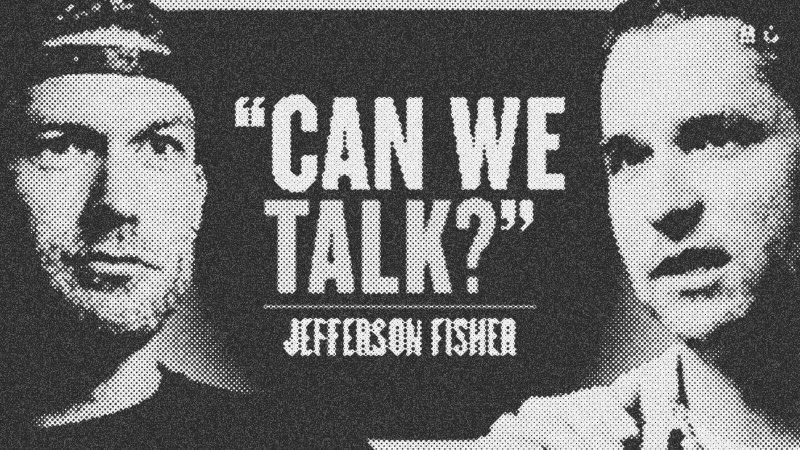
Jefferson Fisher, a seasoned trial lawyer who has spent decades operating within highly adversarial environments, points out that the fundamental errors in modern communication stem from this biological hijack. We lose control of our conversations because reacting takes zero effort. The neural pathway of defensive aggression is a well-worn groove, requiring no intellectual or emotional processing. When someone disagrees with us, our immediate instinct is to strike back, to raise our voice, to establish dominance.
We must look at this through the lens of evolutionary history. Before the advent of institutional law enforcement, an animated, aggressive response served a vital signaling purpose. If a rival crossed a tribal boundary, a loud, formidable display warned both the aggressor and the watching tribe that boundaries carried high costs. Today, however, that primitive response is counterproductive. Pushing harder only causes the other person to harden their stance. Telling someone they are wrong simply convinces them that they are right. Real communication requires interrupting this ancient physical reflex in real time. We must learn to slow down the process and build a gap between the trigger and the response.
The Physiology of Conversational Rupture
To understand why we fail under pressure, we have to look at what happens inside the body. During an intense disagreement, a person's heart rate can easily spike past 100 beats per minute. Once the heart rate crosses this threshold, the prefrontal cortex—the seat of logic, reason, and long-term planning—effectively goes offline. The brain redirects oxygenated blood to the large muscle groups, preparing the body to fight or flee.
Consider the physiological reality of a difficult talk. When your heart is hammering at 150 beats per minute, you are no longer participating in a rational dialogue. You are surviving an attack. Any words uttered in this state are merely weapons or shields, designed to wound or protect, rather than to connect or clarify. The moment the physical system is compromised, the intellectual system collapses.
The Trial Lawyer’s Guide to the Quiet Room
In a courtroom, communication is highly engineered. Every gesture, pause, and objection carries strategic weight. This structured arena offers profound lessons for everyday life. In court, all eyes are on the attorneys, even when they are not speaking. If a witness delivers devastating testimony and the opposing lawyer winces, sighs, or shuffles papers, the jury instantly receives a silent signal of defeat.
This is why elite practitioners cultivate an unnatural level of physical stillness. When bad news hits, they remain calm and controlled, signaling to the room that the development was entirely expected. They refuse to let the opposing side dictate the timing or the temperature of the interaction.
This deliberate control is what experts call vagal authority—a concept introduced to the communication space by executive coach Joe Hudson. In any human encounter, the person with the most regulated nervous system ultimately dictates the emotional direction of the room. This individual acts as a thermostat rather than a thermometer. Instead of merely reflecting the heat of the conflict, they set the temperature of the entire exchange. Vagal authority does not require a booming voice or aggressive posturing. It manifests as a deep, resonant calm that invites others to step down from their defensive peaks.
The Power of the Selective Pause
One of the most underutilized tools in modern rhetoric is silence. Most people treat dialogue like tennis, believing they must hit the ball back over the net the instant it lands. But a conversation is not a sport. You do not receive points for a rapid comeback. In fact, a quick retort often reveals that you were not listening; you were simply waiting for your turn to speak.
Taking a slow, deep breath before speaking changes the entire dynamic. It signals to the other person that their words have weight, that you are processing what they said, and that you are in absolute control of your own timing. By choosing when to respond, you prevent the other person from imposing their frantic pace on you. Your breath becomes the first word of your response.
Deconstructing the Passive-Aggressive Script
Passive aggression is one of the most frustrating obstacles to healthy human connection. To understand its origin, we must look to childhood. A passive-aggressive adult was often a child who learned that voicing direct needs was unsafe. Perhaps their parents met direct assertions with anger, rejection, or neglect. To cope, the child discovered that indirect communication allowed them to seek connection or voice complaints without exposing themselves to the danger of direct conflict. They learned to use the back exit rather than the front door.
In adulthood, this coping mechanism hardens into a toxic communication pattern. The passive-aggressive person expects others to read their mind, dropping subtle hints, sighs, or sarcastic remarks rather than stating their desires directly. When confronted, they quickly retreat to defensive postures, claiming that they were "just joking" or that "everything is fine."
To defuse this behavior, we must bring the underlying truth to light without matching their hostility. Instead of asking "what is wrong with you?"—which instantly triggers defensiveness—we can ask, "What is coming up for you right now?" This phrasing signals that we notice a shift in their emotional state and are inviting them to explore it in a safe environment. We are offering to help them bring their hidden feelings into the light.
The Illusion of the Sarcastic Retreat
When someone delivers a biting insult and immediately retreats to "I was just joking," they are attempting to avoid the social consequences of their cruelty. They want the dopamine hit of hurting you, but they do not want the discomfort of an actual confrontation.
If you allow these remarks to slide, you teach the other person that they can walk over your boundaries with impunity. However, reacting with anger only validates their behavior, allowing them to cast you as overly sensitive or dramatic. The solution is to shine a cold, objective spotlight on their words, stripping away the social cover of the joke.
The Anatomy of a Clean Defusal
When faced with direct verbal aggression or an outright insult, our immediate instinct is to strike back with equal force. This reaction is a trap. When you match someone's aggression, you prove their point, validating their hostility and escalating the conflict. True strength lies in refusing to take the bait. You do not have to catch every ball that is thrown at you.
When someone says something ugly, the most powerful response is five to seven seconds of absolute silence. Let their words hang in the air. Let them fall onto the table between you and sit there, cold and unacknowledged. This silence forces the aggressor to look at the ugliness they have just produced. It deprives them of the rapid, emotional reaction they were craving to fuel their anger.
Aggressor: "That was an incredibly stupid decision."

[Silence: 5-7 Seconds]

Receiver (Calmly): "Did you mean for that to sound as insulting as it did?"

Aggressor (Stuttering): "Well, I just meant..."
After the silence, you can use a clarifying question that targets their intent. Asking "Did you mean for that to sound as insulting as it did?" or "Did you intend to embarrass me in front of the team?" forces them to declare their motives. It places the burden of proof back on them, moving the interaction from an emotional brawl to a rational analysis.
Reframing the Conflict with Curiosity
Another highly effective strategy when encountering resistance is to adopt a posture of deep curiosity. Instead of entering an argument with the goal of proving your point, enter it with the goal of learning how the other person arrived at their perspective. This approach disarms the other person because it removes the threat of intellectual defeat. They no longer need their shield because you are no longer wielding a sword.
When we say "I see things differently," we are not attacking their perspective; we are simply stating that our own view diverges. This subtle shift in language allows both viewpoints to exist in the space simultaneously, transforming a zero-sum battle into an exploration of different paths.
The Failure of Metrics and the Art of True Repair
In the modern world, we are obsessed with things we can measure. We track our sleep cycles, our heart rate variability, our daily steps, and our business revenue. But this focus can lead us into what historians call the McNamara Fallacy, named after US Secretary of Defense Robert McNamara. During the Vietnam War, McNamara attempted to measure the progress of the conflict using quantifiable metrics like body counts, while ignoring unquantifiable elements like public sentiment and political will. The result was a catastrophic failure of strategy.
We commit this same error in our personal lives. We often trade hidden, unquantifiable metrics—like peace of mind, relational depth, and emotional safety—for highly visible, quantifiable metrics like income, house size, or professional status. We might take a higher-paying job that requires a grueling commute, rationalizing that the extra money is good for our family, while ignoring the invisible toll that our absence and stress take on our children and spouse.
This same obsession with external validation manifests in our need to "win" arguments. We want the observable victory of forcing our partner to admit they were wrong. But this victory is a mirage. You can win the argument and lose the relationship. The moment your partner retreats in defeat, you have damaged the team. Real success in a relationship is not measured by the absence of conflict, but by the speed and quality of your repair.
The Gold Standard of Reconciliation
True repair requires three distinct steps. First, you must take absolute ownership of your part of the rupture. You cannot hedge your apology with excuses or blame. Saying "I'm sorry I yelled, but you triggered me" is not an apology; it is an accusation wrapped in a concession.
Second, you must offer validation and acknowledgement. You have to step into their perspective and voice the pain you caused. Finally, you must reaffirm the team. You must remind the other person that despite the rupture, the bond remains intact, and you are committed to working through the friction together.
The Long Road to Communicative Sovereignty
Profound insights bloom where different fields converge, sparked by insatiable curiosity. By combining the high-stakes lessons of the courtroom with the physiological realities of the human nervous system and the psychological insights of childhood development, we arrive at a deeper understanding of human connection.
Great communication is not about having a library of clever comebacks or being the loudest voice in the room. It is about emotional sovereignty. It is about having a nervous system spacious enough to hold your own feelings and the feelings of others without collapsing into defensiveness. It is about choosing connection over the cheap high of being right.
When we commit to this work, we stop playing the ancient, reactive scripts of our childhood and our biology. We become the authors of our conversations, stepping into our relationships with clarity, composure, and a profound respect for the person on the other side of the table.
- Chris Voss
- 9%· people
- Chris Williamson
- 9%· people
- Connor Beaton
- 9%· people
- Donald Trump
- 9%· people
- Jefferson Fisher
- 9%· people
- Other topics
- 55%
The Quiet Art of Leading Any Conversation - Jefferson Fisher
WatchChris Williamson // 2:10:40
