Joe Hudson reveals why closing your heart is actually your greatest pain
The Core Problem of Self-Protection
Most high achievers run on a silent, exhausting operating system. They believe they must shield themselves from the world to survive it. We build complex psychological armor. We tell ourselves that closing our hearts protects us from getting hurt, taken advantage of, or exposed. Yet, this protective mechanism is the very source of our chronic dissatisfaction.
When we look closely at this dynamic, we discover that closing our hearts does not prevent suffering. It guarantees it. The moment you close down to avoid pain, you also close down your capacity for joy, connection, and deep insight. It is an intellectual tragedy. We trade our vibrant curiosity and capacity for growth for a fragile, controlled safety.
We must reframe this fundamental relationship with our inner lives. The challenge is not to build thicker walls, but to cultivate the capacity to meet whatever arises with an open, inquiring mind. Our defense mechanisms are actually sophisticated patterns designed to avoid feeling specific, uncomfortable emotions. If you wish to understand your own mind and expand your intellectual horizon, you must look directly at the patterns you use to shield yourself from reality.
Three Signals That You Are Avoiding Your Inner Reality
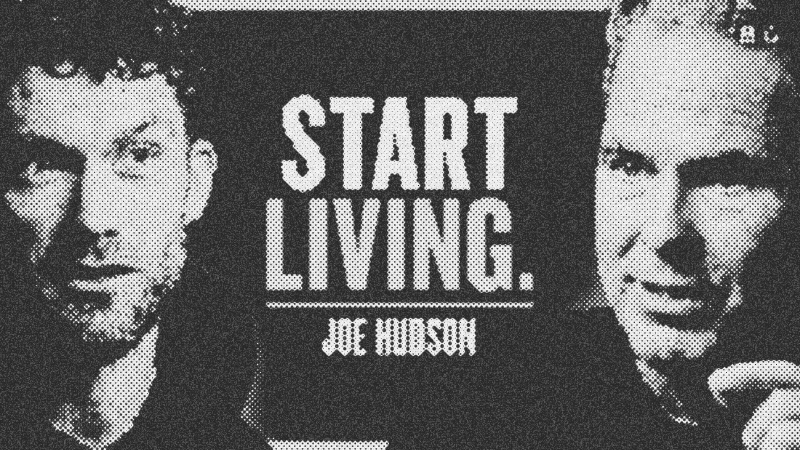
How do we know when we are operating from a place of self-defense rather than genuine inquiry? The mind leaves distinct clues. Renowned performance coach Joe Hudson points to three unmistakable "smoke signals" that indicate we are actively avoiding an underlying emotion.
First, we experience looping thoughts and endless overthinking. When you find yourself trapped in a mental spiral, analyzing the same problem from fifty different angles, you are not actually problem-solving. Your brain is running a diversion tactic. It is generating intellectual noise to keep you from dropping down into the raw physical sensation of fear, sadness, or shame that sits in your body. It is a brilliant, desperate trick of the ego.
Second, we fall into binary decisions. We feel stuck between two stark, opposing options: Buy the company or sell it. Leave the relationship or stay forever. This black-and-white thinking is a direct consequence of unexpressed fear. When we are scared, our perspective narrows. We lose the capacity to see the infinite gray areas and creative alternatives that exist in any scenario. We become desperate for a quick resolution to escape the discomfort of uncertainty.
Third, we experience harsh judgments of others. Every critique we level at another person is a mirror. If you find yourself intensely irritated by someone else's behavior, it is almost always because they are expressing a part of the human experience that you do not allow in yourself. If you judge someone for seeking attention, you likely harbor deep shame about your own desire to be seen. The judgment is a shield, protecting you from facing your own disowned wants.
The Anatomy of Genuine Boundaries
To live with an open heart in a complex world, we must completely redefine our understanding of boundaries. Popular culture has corrupted the term "boundary," turning it into a tool for control and power struggles. True boundaries are not about managing other people's behavior. They are about clarifying your own actions.
When you tell someone else what they must do, you are not setting a boundary. You are engaging in a power struggle. A real boundary focuses entirely on what you will do. For example, telling a partner, "You need to stop raising your voice at me," is an attempt to control. Saying, "If you raise your voice, I am going to leave the room and return in twenty minutes when we can speak calmly," is a boundary. You are claiming your own agency without trying to dominate the other person.
More profoundly, a healthy boundary is designed to open your heart, not close it. When you know you have the absolute capacity to care for yourself and make your own choices, you no longer see other people as oppressors. You do not need to protect yourself from them because they cannot diminish you. This realization dissolves resentment, leaving you free to love people exactly as they are, even while asserting your own truth.
Transmuting Anger and Reclaiming Intuition
Many of our chronic psychological struggles stem from a failure to let emotions move fluidly through our systems. We judge our feelings, compartmentalize them, or translate them into safer, more socially acceptable formats. Consider how we handle anger. In many households, anger is treated as a dangerous, antisocial force.
To avoid conflict, we often transmute our anger into sadness. Sadness is pro-social; it signals to others that we need care and comfort, drawing them in. Anger, by contrast, is pushing people away. We learn to get sad instead of mad. But this comes at a terrible cost. By repressing our anger, we block the very energy required to set boundaries and take decisive action. Unexpressed anger rots on the inside, eventually manifesting as depression and chronic fatigue.
To move beyond this pattern, we must learn to distinguish between irrational instinct and cultivated intuition. Irrational instinct is reactive; it is the urge to scream, run, or repeat an old defensive loop. Cultivated intuition is quiet, steady, and often carries a slight edge of fear. Why fear? Because intuition asks you to step outside of your familiar, defensive patterns. If an impulse feels incredibly comfortable and reactive, it is likely your old programming. If it feels slightly scary but deeply true, it is your intuition pointing the way to freedom.
The Illusion of Efficiency and the Reality of Chaos
Our modern culture is obsessed with optimization. We want to speed-run our personal growth, automate our careers, and eliminate all friction from our lives. But efficiency without self-awareness is merely a faster path to burnout. We use constant activity—sending endless emails, crossing off tasks, chasing metrics—to outrun our internal unease.
True intellectual and personal development requires us to make peace with chaos. High-performing leaders often fail because they try to control every minor detail of their environment to avoid feeling the discomfort of disorder. The most successful individuals, however, develop the capacity to let chaos reign in ninety-five percent of their lives so they can focus entirely on the two or three things that actually matter. They do not run away from the discomfort of an untidy world; they lean into it.
We must stop motivating ourselves with the dirty fuel of "shoulds" and reconnect with our genuine wants. When you tell yourself you should do something, you introduce self-rejection into the equation. You are stating that who you currently are is not good enough. Genuine, lasting change only occurs when we tap into our authentic desires. When we let go of the tyrannical demands of the ego and allow ourselves to want what we want without shame, our energy aligns naturally with our actions.
A New Way of Being
If you are tired of abandoning yourself to maintain a facade of control, understand that the path forward does not require you to become more rigid. It requires you to become more spacious. The fears you carry—of being seen, of being judged, of losing connection—are paper tigers. When you stop resisting them and allow yourself to feel them fully, they dissolve, leaving clarity and peace in their wake.
Begin by noticing your smoke signals. The next time you find yourself overthinking, trapped in a binary choice, or judging someone harshly, pause. Ask yourself: If I could not feel this judgment or run this loop, what would I have to feel right now? Let that feeling land. Breathe into it. Discover that you are large enough to contain it. By doing so, you step out of the reactive loop and reclaim your role as an active, curious explorer of your own life.
- Alex Hormozi
- 8%· people
- Charlie Hooper
- 8%· people
- Chris Williamson
- 8%· people
- Father Figure
- 8%· songs
- James Clear
- 8%· people
- Other topics
- 58%
Why You Feel Helpless… and How to Break the Loop - Joe Hudson (4K)
WatchChris Williamson // 1:52:58
