The War for Your Mind: Reclaiming Sovereignty in the Age of Distraction
The Collapse of Attention as a Modern Crisis
We live in a world that feels increasingly frenetic, where the ability to finish a single paragraph or hold a deep conversation feels like a Herculean feat. The traditional narrative suggests this is a personal failure—a lack of willpower or a character flaw. However, the evidence points toward a much more systemic and predatory reality. When the average office worker focuses on a single task for only three minutes and college students manage a mere 65 seconds, we are no longer looking at individual weakness. We are witnessing a collective collapse of the human cognitive infrastructure. This isn't just about being annoyed by notifications; it is about the fundamental ability to achieve goals, whether that is being a present parent, starting a business, or solving the existential crises of our time. Without attention, we lose the agency to author our own lives.
Johann Hari, through his extensive research for Stolen Habits, argues that we have moved past the point of simple distraction. We are currently living in an "attentional pathogenic environment." This means the world around us is literally designed to make focus impossible. From the way we work to the way we eat and the way we utilize technology, we are surrounded by factors that degrade our cognitive capacity. The first step toward healing is recognizing that your struggle to focus is not your fault, but it is your responsibility to navigate a landscape that has been weaponized against you.
The Four Layers of the Attentional System
To understand how to fix our focus, we must first define what it actually is. Most people think of attention as a single thing, but Dr. James Williams suggests a much more sophisticated typology. The first layer is the Spotlight. This is your immediate ability to filter out the noise and attend to a short-term task, like reading an email or following a recipe. When the spotlight is fractured, you experience the frustration of constant interruption.
The second layer is Starlight. This represents your medium-to-long-term goals—the stars you use to navigate when you feel lost. It is the ambition to write a book or build a career. If your spotlight is constantly being jerked around by 65-second pellets of information, you never make progress toward your starlight, and eventually, you lose sight of where you are going entirely.
The third layer is Daylight. This is the meta-level of attention that allows you to see clearly enough to even know what your goals should be. It is the space for contemplation and self-reflection. Without daylight, you cannot identify your values or your identity; you simply react to the loudest stimulus in the room. Finally, the Stadium Lights represent our collective attention as a society. If we cannot focus together, we cannot solve problems like climate change or political polarization. The crisis we face is happening at all four levels simultaneously, creating a sense of profound disorientation and helplessness.
The Myth of Multitasking and the Switch Cost Effect
One of the most damaging delusions of the modern era is the belief that we can multitask. The human brain has not changed significantly in 40,000 years, and its hardware is strictly designed to think about one thing at a time. When we believe we are multitasking—checking Twitter while on a conference call—we are actually engaging in what neuroscientists like Professor Earl Miller call "task-switching."
This process comes with a heavy physiological tax known as the Switch Cost Effect. Every time you switch your focus, your brain has to reconfigure itself, resulting in a temporary drop in IQ and a massive loss in productivity. A study by Hewlett Packard found that being chronically interrupted by emails and phone calls had twice as bad an effect on IQ as being stoned on cannabis. We are effectively operating in a state of self-induced cognitive impairment. Furthermore, it takes an average of 23 minutes to return to a state of deep focus after a single interruption. Given that most workers are interrupted every three minutes, the reality is that many people spend their entire professional lives in a state of "cognitive degradation," never once reaching their full mental potential.
Flow States: The Antidote to Anxiety
If the crisis is distraction, the antidote is Flow. Coined by Mihaly Csikszentmihalyi, flow is that effortless state of deep immersion where time and ego disappear. It is the highest form of human attention and a primary driver of well-being. People who experience frequent flow states are significantly happier, more resilient, and more fulfilled. However, flow requires a level of uninterrupted time that the modern world has largely eliminated.
To access flow, you need three ingredients: a single clear goal, a task that is meaningful to you, and a challenge that sits at the edge of your abilities. If the task is too easy, you get bored; if it is too hard, you get anxious. Flow exists in the sweet spot of optimal challenge. The problem is that we have replaced these deep, meaningful experiences with "shallow" rewards like likes and retweets. These provide a quick dopamine rush but leave the ego feeling fragile and empty. To reclaim our well-being, we must intentionally design "flow sanctuaries"—periods of time where the machinery of the attention economy cannot reach us.
The Physiological Foundations: Sleep and Pollution
We cannot ignore the biological reality of focus. Attention is a physical process that requires a healthy brain. Two of the most significant factors in the focus crisis have nothing to do with apps: sleep deprivation and environmental toxins. Dr. Charles Czeisler at Harvard Medical School has demonstrated that being awake for 19 hours impairs your focus as much as being legally drunk.
During sleep, your brain performs an active cleaning process, flushing out metabolic waste. When we cut sleep to five or six hours, we are forcing our brains to operate in a state of emergency. This triggers a "local sleep" phenomenon where parts of your brain literally shut down while you are still awake. Parallel to this is the chilling impact of air pollution. Pollutants like iron particles can enter the brain directly, causing chronic inflammation. Studies in cities like Mexico City show that children living in highly polluted areas have brain plaques similar to early-stage dementia. We are poisoning the very organ we rely on for attention, and no amount of willpower can overcome a brain that is physically inflamed or exhausted.
Surveillance Capitalism and the Business of Distraction
The most controversial cause of our stolen focus is the business model of Silicon Valley. Tech giants like Facebook are not neutral tools; they are designed by thousands of engineers to maximize "engagement"—a polite word for the time you spend staring at a screen. As Tristan Harris points out, the goal of these companies is to keep you scrolling because your attention is the product they sell to advertisers.
The algorithms have discovered that negativity, outrage, and conspiracy theories are more "engaging" than nuance or truth. This "negativity bias" means the platforms are incentivized to keep us angry and divided. This isn't just a personal problem; it’s an institutional one. Like the lead industry in the 1970s, these companies are pouring "cognitive lead" into our environment. The solution isn't just for individuals to delete their apps; it's to ban the business model of surveillance capitalism and demand technology that is designed to heal our attention rather than hack it.
Moving from Cruel Optimism to Authentic Action
There is a danger in what is called Cruel Optimism—offering small, individual solutions to massive, systemic problems. Telling someone to simply "meditate more" while they are being bombarded by an economy designed to distract them is like telling someone to wear a mask in a house fire. It sounds optimistic, but it’s cruel because it sets the individual up for failure and self-blame.
Authentic optimism requires us to fight on two fronts. Individually, we must take radical responsibility for our environments. This includes using tools like the k-Safe to lock away phones, practicing intermittent fasting from technology, and prioritizing sleep. Collectively, we must act as citizens to regulate the forces that profit from our distraction. We must demand the "right to disconnect" from work, ban brain-inflaming pollutants, and protect the childhood of the next generation by restoring free play. We are the free citizens of democracies, not the serfs of Mark Zuckerberg. It is time to reclaim the sovereignty of our minds.
- Dr. Charles Czeisler
- 5%· people
- Dr. James Williams
- 5%· people
- 5%· companies
- Freedom App
- 5%· products
- 5%· companies
- Other topics
- 74%
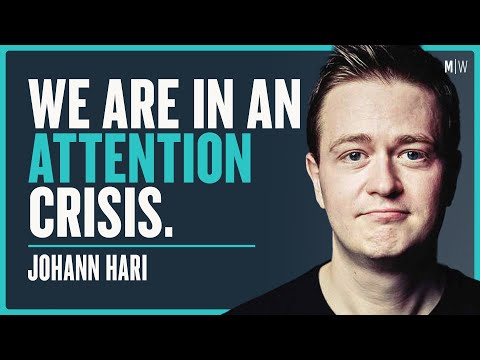
Why You Can't Pay Attention And Focus - Johann Hari
WatchChris Williamson // 1:53:09
