The Art of Misery and Motion: Navigating Modern Chaos with Sam Morril
Living a life of intention doesn't mean finding a path free of friction. In fact, real growth often requires us to embrace the very irritations that define our environment. Whether it's the sensory overload of a concrete jungle or the digital exhaustion of a modern dating app, our ability to find gratitude within the grind is what builds true resilience. By examining the quirky, often bizarre norms of our culture through a lens of psychological insight, we can better understand how to maintain our sense of self in an increasingly fragmented world.
The Psychology of the Urban Grind
There is a specific kind of mental fortitude required to thrive in New York City. It is a city that demands you exist in a constant state of dual awareness: a baseline level of irritation coupled with a profound sense of gratitude. This isn't just a quirky local trait; it's a survival mechanism. When you step out of your door and into a world of construction noise, crowded subways, and the relentless hustle of street vendors, your nervous system is on high alert. To find peace here, you must learn to harmonize with the chaos rather than fight it.
We often talk about the importance of silence for mental health, yet many lifelong urbanites find silence unsettling. This "noise addiction" is actually a form of comfort found in ambient presence. The sound of neighbors arguing or the distant hum of traffic serves as a reminder that you are part of a living, breathing collective. In a psychological sense, this connectivity—even when it's annoying—combats the isolation that so often plagues modern life. You aren't just an individual; you are a cell in a massive, vibrating organism. Recognizing that your personal "misery" is shared and comfortable can actually be a grounding force for your identity.
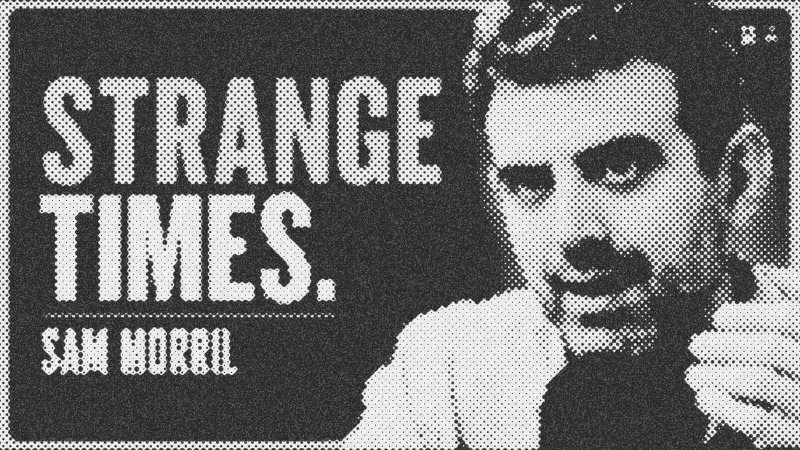
Vulnerability and the Comedian's Mirror
The most effective way to process trauma or embarrassment is to transform it into a narrative where you aren't the hero. In the world of stand-up, Sam Morril exemplifies a vital psychological principle: the power of self-deprecation. When we share stories of our failures—like a botched romantic encounter or a humiliating childhood memory—we strip those events of their power to shame us.
There's a reason why the most successful "insult comics" like Don Rickles or self-reflective artists don't lead with perfection. Perfection is a wall; it prevents connection. By leading with your flaws, you invite the audience (or your social circle) to relax. This is a profound coaching tool: if you want to influence or connect with others, start by being the "loser" in your own story. It builds trust and psychological safety. When you stop trying to win every social interaction, you gain the freedom to be authentic, which is the ultimate goal of personal growth.
The Digital Fatigue of Modern Connection
We are currently living through a massive experiment in human connection. From the "pineapple" dating craze in Spain to the endless swiping on apps like Raya, we are over-complicating the simple act of saying "I like you." This over-complication stems from a fear of direct rejection. We use these rituals—flipping fruit in a grocery store or sending carefully curated voice notes—as buffers for our egos.
However, these buffers often lead to "dating admin" fatigue. When the process of meeting someone feels like a second job, we lose the spark of spontaneous human energy. Psychologically, we are wired for face-to-face interaction where we can pick up on non-verbal cues and micro-expressions. The move toward "walking dates" or video-first platforms is a healthy regression. It’s an attempt to bring back the humanity that algorithms have stripped away. To improve your emotional intelligence, you must occasionally step away from the digital funnel and re-engage with the messy, unpredictable reality of in-person connection.
The Celebrity Arc as a Cautionary Tale
Watching the public trajectory of figures like Will Smith provides a fascinating look at the toll of prolonged fame. When a person's entire identity is tied to being a "hero" or a "masculine icon" for decades, the pressure to maintain that facade can lead to a psychological breaking point. The infamous 94th Academy Awards slap wasn't just an isolated incident; it was a symptom of a fractured self-image and a lack of stability at home.
This serves as a reminder for all of us: your public persona must be grounded in a private reality that is healthy and honest. If there is a massive gap between who you pretend to be and who you actually are, that pressure will eventually find an exit point. Success—whether it's Travis Kelce winning back-to-back Super Bowl or Ryan Reynolds building a business empire—only remains sustainable if the individual has a way to "mentalize" their private life and keep it separate from the public gaze. Guarding your inner world is just as important as conquering the outer one.
Resilience in the Face of the Unpredictable
Whether it’s the lingering trauma of September 11 attacks or the modern anxiety of flying on a Boeing aircraft, we are constantly reminded that the world is unpredictable. Resilience isn't about ignoring these threats; it's about our capacity to respond to them with community and humor. New York’s response to tragedy—lining up to donate blood despite the daily rudeness of the streets—shows that our best selves often emerge during our worst moments.
When you feel overwhelmed by the state of the world or the speed of the latest "meme cycle," remember that your agency lies in your perspective. You can choose to see a flight delay as a personal affront, or you can see it as a shared human experience. You can view the censorship of digital platforms as a barrier, or as a prompt to find new, more authentic ways to communicate. Growth happens when we stop waiting for the world to make sense and start making sense of our own place within it.
In our journey toward self-discovery, we must be willing to look at the absurdities of our culture with a critical but kind eye. Embrace the noise, own your failures, and never stop looking for the gratitude hidden in the irritation. That is how you achieve your true potential, one intentional step at a time.
- 94th Academy Awards
- 4%· events
- AG1
- 4%· companies
- Bodega Cat Whiskey
- 4%· products
- Boeing
- 4%· companies
- Chris Williamson
- 4%· people
- Other topics
- 78%
The Strangest Norms You'll Only Find In America - Sam Morril (4K)
WatchChris Williamson // 1:08:17
