The Malleability of Self: Decoding the Science of Personality Change
Redefining the Self Beyond Biological Predisposition
Most people view their personality as a fixed set of coordinates, an unchangeable map of who they are from birth to death. We often treat our tendencies—whether we are chronically anxious, naturally outgoing, or hopelessly disorganized—as a life sentence. However, psychological science reveals a far more dynamic reality. Personality is not a static monolith; it is a collection of habits in thought, feeling, and relating to others that can be intentionally shifted over time. While we certainly start with a biological "set point," our personalities are more like an oil tanker than a mountain. They possess immense momentum and are difficult to turn, but with consistent, deliberate effort, they can be steered in an entirely new direction.
To understand personality change, we must first look at what personality actually is. Researchers primarily use the Big Five Personality Traits model, which includes openness, conscientiousness, extraversion, agreeableness, and neuroticism. Unlike popular but unscientific tools like the Myers-Briggs, the Big Five model provides a robust framework that correlates with real-world outcomes such as longevity, career success, and relationship stability. When we talk about changing who we are, we are talking about shifting our scores on these specific continuums. The goal is not to become someone else entirely but to move toward a version of ourselves that makes navigating life more efficient and fulfilling.
The Physiological Architecture of Personality
One of the most profound insights into personality is that it "gets under the skin." It is not merely a collection of learned behaviors; it has a measurable physiological footprint. For instance, individuals high in Neuroticism—those who are less emotionally stable—often exhibit less brain folding and surface area in regions dedicated to emotion regulation. On the other hand, those high in Conscientiousness show lower levels of cortisol in their hair, suggesting a biological predisposition toward lower chronic stress and better inflammatory regulation.
However, this biological foundation is not a one-way street. There is a continuous feedback loop between our physiology and our behavior. While genetics account for roughly 50 percent of the variation in personality between people, the remaining 50 percent is shaped by our environment, relationships, and lifestyle choices. Factors like sleep deprivation, smoking, and poor physical fitness can adversely affect our traits over time, dragging us toward higher neuroticism or lower extraversion. Conversely, hacking these loops—using the body to change the mind—allows us to create upward spirals. When we improve our physical health, we aren't just getting fit; we are potentially altering the biological substrate of our personality, making it easier to maintain the traits we desire.
Social Investment and the Power of Life Roles
Personality often shifts most dramatically when we are forced to adapt to new, meaningful roles. This is known as Social Investment Theory. When we enter a career that we are passionate about, get married, or join an organization with clear expectations, the environment demands certain behaviors from us. If these roles are rewarding, we receive positive reinforcement for meeting those demands, which eventually bakes those behaviors into our permanent personality structure.
Interestingly, not all major life events trigger the changes we might expect. For example, becoming a parent often leads to a short-term increase in neuroticism and a decrease in self-esteem and extraversion. This happens because the role of a parent is often a "maelstrom of chaos" where the requirements are not always clear, and the opportunities for social reward outside the home diminish. This highlights a crucial principle: for a life role to positively shape your personality, it must provide clear signposts for behavior and a consistent reward for fulfilling them. If you want to become more conscientious, finding a job that demands and rewards organization is often more effective than simply trying to "will" yourself into being a more organized person.
The Dark Side as a Catalyst for Growth
In the quest for personal growth, we often ignore the more aggressive or dominant traits associated with the Dark Triad—psychopathy, narcissism, and Machiavellianism. While the emotional coldness and impulsivity of these traits are destructive, sub-traits like Fearless Dominance can be incredibly advantageous when channeled correctly. Fearless dominance is essentially extreme extraversion coupled with exceptionally low neuroticism. It is the quality that allows surgeons, special forces, and CEOs to remain calm and decisive under immense pressure.
We can emulate this "ice in the veins" approach by adopting a Challenge Mindset over a Threat Mindset. When faced with a daunting task, a threat mindset focuses on the fear of failure, the potential for embarrassment, and a lack of skills. A challenge mindset, however, views the situation as a learning opportunity. It focuses on controllable factors and reminds the individual of their relevant skills and past efforts. By deliberately choosing to view stress as excitement and obstacles as data points, we can effectively use the "wisdom of psychopaths" to navigate high-stakes environments without losing our empathy or moral compass.
Tactical Strategies for Lasting Transformation
If you are serious about shifting your traits, you must be willing to shake up your environment radically. Hanging out with the same people in the same town while working the same job provides too much "behavioral gravity," keeping your old habits locked in place. Lasting change requires a philosophy of being a "work in progress" and utilizing specific psychological tools to bridge the gap between who you are and who you want to be.
To increase Conscientiousness, focus on environment design rather than willpower. Research shows that highly conscientious people don't necessarily have more willpower; they simply avoid temptation more effectively. They design their lives so they don't have to exercise self-control constantly. Additionally, adopting a mindset that views willpower as a self-perpetuating Dynamo—where exerting effort actually energizes you—prevents the self-fulfilling prophecy of "ego depletion."
To improve Emotional Stability, utilize Affective Labeling. When you feel a surge of anger or anxiety, pause and specifically label the emotion. This creates a "mindfulness gap" that dampens the emotional charge and allows for a constructive response. For those seeking to boost Extraversion, the "fake it till you make it" approach is scientifically backed. Engaging in the Best Possible Self Exercise—visualizing a future where all your goals have been met—can increase the optimism necessary to throw yourself into social situations. The more you practice the "skills" of extraversion, the more your baseline will recalibrate, making what once felt forced eventually feel natural.
Conclusion: The Long-Term Horizon of Growth
Personality change is not a project that is completed in a weekend. It is a long-term trend, much like a stock market graph; there will be pullbacks, resets, and bad days where you fall into old patterns. The key is to monitor the trend over years rather than weeks. By designing a life that engenders the traits you value and surrounding yourself with people who reinforce those traits, you can eventually look back and see a genuine, tangible shift. We are not prisoners of our predispositions. We have the inherent power to navigate our challenges and, through intentional steps, become the people we were always meant to be.
- Affective Labeling
- 9%· people
- Best Possible Self Exercise
- 9%· products
- Big Five Personality Traits
- 9%· people
- Challenge Mindset
- 9%· people
- Christian Jarrett
- 9%· people
- Other topics
- 55%
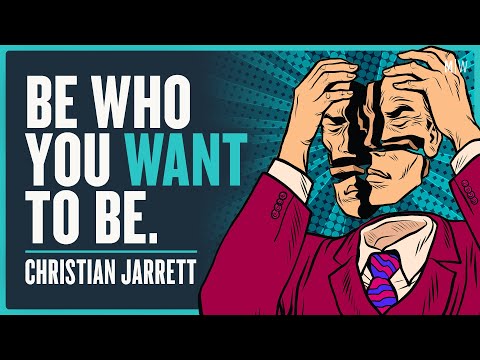
The Science Of Personality Change - Christian Jarrett
WatchChris Williamson // 1:13:47
