The Science of Hope: Dismantling the Cynical Genius Illusion
The Psychological Architecture of Cynicism
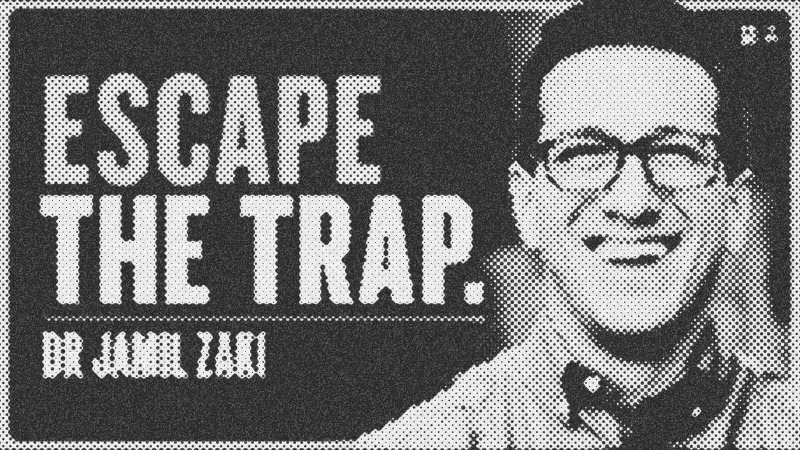
Cynicism is a theory about people. In modern psychology, specifically through the work of experts like Jamil Zaki, it is defined as the belief that people are fundamentally selfish, greedy, and dishonest. This worldview suggests that because humans are inherently untrustworthy, we must protect ourselves at all costs. This is a far cry from the ancient Greek school of philosophy where Diogenes and Antisthenes sought virtue through the rejection of worldly possessions. Today, cynicism is less a pursuit of truth and more a defensive shield.
Our brains are naturally primed for this through negativity bias. For hundreds of thousands of years, humans survived by prioritizing threatening information over the positive. If you missed a sunset, you were fine; if you missed a predator, you were dead. In our modern context, this ancient survival mechanism has been hijacked. We pay more attention to visual threats, remember negative events with greater clarity, and make decisions based on loss aversion. Cynicism happens when this bias hardens into an entire worldview, moving from mere observation to a predictive philosophy of the future.
The Cynicism Safety Blanket
Many of us treat cynicism as a safety blanket. It is a preemptive strike against disappointment. By telling yourself that everything is broken and everyone is out for themselves, you excuse yourself from trying. This fatalism is often mislabeled as pragmatism. It is a form of sour grapes at an existential level. If you assume failure is inevitable, you never have to feel the sting of rejection or the vulnerability of being a sucker.
This behavior manifests in two primary ways: a refusal to trust and the deployment of preemptive strikes. Trust is essentially a bet on another person's integrity. Cynics view these bets as being for suckers. Consequently, they are more likely to spy on others, act selfishly, or threaten those around them. They imagine they are simply beating everyone else to the punch. While this may provide a short-term sense of security, it creates a psychological prison that withers the spirit and prevents the deep connections required for a fulfilling life.
Debunking the Cynical Genius Illusion
One of the most pervasive myths in our culture is the Cynical Genius Illusion. We tend to glamorize the cynic as a wise, sophisticated figure who has seen the world for what it truly is. Data shows that 70% of people believe cynics would perform better on cognitive tasks, and 85% believe they are better at spotting liars. These beliefs are factually incorrect. Research proves that cynics perform worse on cognitive tests and are significantly less accurate at detecting deception than their non-cynical counterparts.
Cynicism is not a sign of intellect; it is a replacement for it. While a gullible person unthinkingly trusts everyone, a cynical person unthinkingly trusts no one. Neither is evaluating evidence. True wisdom requires the mental labor of assessing each person and situation individually. By adopting a blanket assumption of negativity, the cynic stops processing new information. They become trapped in a feedback loop where their own behavior brings out the worst in others, confirming their initial bias in a tragic self-fulfilling prophecy.
The Cost of the Trust Recession
We are living through a massive trust recession. In 1972, half of Americans believed most people could be trusted. By 2018, that number plummeted to one-third. This decline is not a local phenomenon; a survey of 28 countries revealed that in 24 of them, the default stance is now one of mistrust. This shift is driven largely by two factors: economic inequality and media saturation. Inequality fosters a zero-sum mindset where your gain is perceived as my loss. Meanwhile, the hyper-modern media ecosystem feeds our ancient negativity bias to keep us scrolling.
This lack of trust has devastating physical and professional consequences. High-cynicism individuals are more likely to suffer from heart disease, depression, and loneliness. They have higher rates of all-cause mortality and die younger than those with a more hopeful outlook. Professionally, cynics earn less money and are less likely to rise to leadership positions. Because they struggle to build teams or collaborate, they miss the coalitional power necessary to thrive in complex organizations. They may avoid being cheated, but they lose the game of life by folding every hand before the cards are even dealt.
From Cynicism to Data-Driven Skepticism
If you find yourself stuck in cynical loops, the path out begins with a shift toward skepticism. While cynicism is a blanket assumption, skepticism is a scientific approach. It involves hitting the pause button on your inner chatter and asking: What evidence do I actually have for this negative judgment? Often, the answer is none. We must move toward a reciprocity mindset, recognizing that our trust is a gift that often inspires the other person to rise to our expectations.
Practical tools like encounter counting can help rewire the brain. Because we naturally remember the one bad interaction among fifty good ones, keeping a physical log of social encounters helps align our memories with reality. Additionally, we must balance our media diets. Organizations like the Solutions Journalism Network provide a necessary anesthetic to the constant barrage of outrage, focusing on how people are actively solving problems rather than just identifying them.
The Social Risk of Hope
True growth requires taking social risks. We often view risk-taking in business or sports as brave, yet we dismiss social risk-taking as naive. Hope is the social version of a high-performance athlete's risk-taking. It is the action-oriented belief that a better future is possible through our agency. Unlike complacent optimism, hope requires us to envision a specific goal, chart a map to reach it, and take the necessary steps to walk that path.
Choosing hope means being willing to be the chump occasionally in exchange for the chance to find love, friendship, and collaboration. It is about becoming a good Bayesian—updating your worldview as you encounter the surprising goodness of strangers and the warmth of community. When you stop carrying the hot stone of past betrayals, you open yourself to a life that is not just safer, but significantly more beautiful and successful.
- Antisthenes
- 7%· people
- Betrayal Aversion
- 7%· concepts
- Cynical Genius Illusion
- 7%· concepts
- Diogenes
- 7%· people
- Donald Cook
- 7%· people
- Other topics
- 64%
How To Be More Hopeful In A Cynical World - Dr Jamil Zaki
WatchChris Williamson // 1:08:19
