The Science of Emotional Sovereignty: Strategies for Resilience and Self-Control
The Architecture of Feeling: Defining the Emotional Self
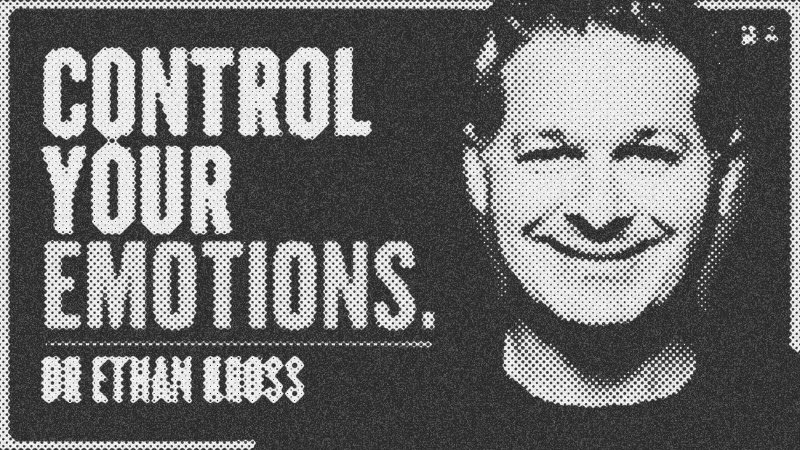
Many of us live our lives at the mercy of our moods, viewing emotions as mysterious weather patterns that arrive unbidden and depart without explanation. However, as Ethan Kross, director of the Emotion and Self-Control Laboratory at the University of Michigan, clarifies, emotions are not random. They are sophisticated, evolutionary software programs designed to help us navigate meaningful circumstances. An emotion is a coordinated response involving physiological changes, cognitive shifts, and motor impulses. It is the "software" that loads when our attention is captured by something significant in our environment or our imagination.
Crucially, we must distinguish between an emotion and a feeling. An emotion is the broad umbrella—the biological and behavioral shifts occurring beneath the surface. A feeling, by contrast, is the conscious component of that response. It is the part we are aware of, much like a fever is the symptom of an underlying infection that we can actually perceive. Understanding this distinction is the first step toward regaining control. We may not be able to stop the initial "software" from loading—the sudden spike in heart rate or the flash of anger—but we have immense power over how we engage with that response once it is activated.
The Evolutionary Edge: Why We Feel
There is no such thing as a "bad" emotion when viewed through the lens of survival. Every emotional state exists because it gave our ancestors an edge. Anger acts as a tool for correction; it zooms our focus onto a transgression and motivates us to rectify a wrong. Anxiety is a sentinel, a response to a potential threat that forces us to prepare and focus. Even sadness serves a vital social function. When we experience loss, sadness slows us down physiologically, encouraging inward reflection while simultaneously signaling to our community that we need support through visible facial cues.
The modern struggle with these tools arises from two factors: intensity and duration. While a flash of anxiety can sharpen a performance, chronic rumination can lead to cardiovascular disease and systemic inflammation. The goal of mental fitness is not "toxic positivity" or the elimination of negative vibes. Such a goal is unattainable and biologically counterproductive. Instead, the objective is to build a "users' manual" for these unwieldy tools, ensuring they serve us rather than destroying us. As Ethan Kross notes, humans evolved the capacity for Emotion Regulation, but we aren't born knowing how to use the machinery.
Sensory and Attention Shifters: Quick-Response Tactics
When caught in an emotional storm, the fastest way to alter the internal state is through Sensory Shifters. These are non-invasive levers like music, touch, and scent. Music, in particular, is an underutilized emotional regulator. It can reroute a collective experience in seconds, yet studies show only a small fraction of people use it strategically when distressed. If the goal is to break a funk, we must intentionally choose music that moves us toward our desired state rather than wallowing in songs that mirror our current sadness.
Attention Shifters involve the strategic use of avoidance and approach. While chronic avoidance is detrimental, strategic avoidance—taking a "time-out" from a frustrating email or a heated argument—provides the psychological distance necessary for objectivity. This isn't about running away; it's about dosing our exposure to triggers so we can process them from a position of strength. Ethan Kross shares the story of his grandmother, who survived the The Holocaust in Poland by strictly dosing her memories of the war, allowing herself to think of it only once a year during a remembrance ceremony. This selective attention allowed her to build a vibrant life despite immense past trauma.
Psychological Jiu-Jitsu: Perspective and Distancing
Perhaps the most potent tools in the kit are Perspective Shifters, or what can be termed "psychological jiu-jitsu." When we are in the "cauldron" of a crisis, our perspective zooms in on the awfulness, making the pain feel permanent. Mental Time Travel breaks this illusion. By asking, "How will I feel about this a year from now?" we highlight the temporary nature of our distress. Conversely, looking back at historical hardships—like the survival of ancestors in war-torn Europe—puts our current "curveballs" into a broader, more manageable context.
Another highly effective tactic is Distant Self-Talk. We are notoriously better at giving advice to others than to ourselves. By coaching yourself through a problem using your own name and the second-person pronoun "you" (e.g., "Ethan, here is what you are going to do next"), you switch your brain into a constructive, objective mode. High performers, from Novak Djokovic at Wimbledon to NASA astronauts dealing with space fires, have utilized this technique to maintain composure under extreme pressure. It bypasses the self-critical loop and activates the "wise mentor" within.
Environmental Design and Relationship Shifters
Our physical surroundings, or Space Shifters, exert a quiet but constant influence on our resilience. Compensatory Control is the phenomenon where creating order in our physical environment—cleaning a desk or organizing a room—provides a sense of stability when our internal world feels chaotic. Furthermore, the presence of "safe houses" (restorative places like a favorite park or library) and small jolts of resilience (pictures of loved ones or greenery) can speed up recovery from stress.
In our social lives, we must be wary of Venting. While talking to a friend is crucial for bonding, pure venting often keeps the wound open without offering a path to healing. The most effective Relationship Shifters are people who provide both emotional empathy and cognitive reframing. We need an "Emotional Advisory Board"—individuals who will listen but also help us broaden our perspective. We must also be ruthless in our "digital environmental design," removing triggers like social media feeds that spark toxic envy, recognizing that it is far easier to avoid a temptation than to resist it once it's in front of us.
From Knowing to Doing: The WOOP Framework
Growth happens when knowledge is converted into automatic habits. To make Emotion Regulation instinctive, we can use the WOOP acronym, a framework popularized in the book Shift by Ethan Kross.
- Wish: Define your emotional goal (e.g., "I want to stay calm during meetings").
- Outcome: Visualize the benefit (e.g., "I will be seen as a leader and feel more confident").
- Obstacle: Identify what stands in your way (e.g., "When I feel criticized, I get defensive").
- Plan: Create an "If-Then" statement (e.g., "If I feel criticized, then I will use distant self-talk to coach myself through it").
By rehearsing these plans, we create neural shortcuts that allow us to respond with intention rather than impulse. We move from being victims of our biology to being architects of our experience. Ultimately, the quality of our lives is determined by the emotions we feel 90% of our waking hours. By layering these tools—sensory, perspective, environmental, and social—we don't just endure life; we begin to savor it, transforming even our challenges into catalysts for profound personal growth.
- Ethan Kross
- 25%· people
- Emotion Regulation
- 13%· concepts
- Chris Williamson
- 6%· people
- Emotion and Self-Control Laboratory
- 6%· companies
- Europe
- 6%· places
- Other topics
- 44%
How To Stop Feeling Negative Emotions All The Time - Dr Ethan Kross
WatchChris Williamson // 2:06:44
