The Architecture of Remembering: Transforming Your Mind Through Cognitive Neuroscience
Beyond the Archive: Memory as a Blueprint for the Future
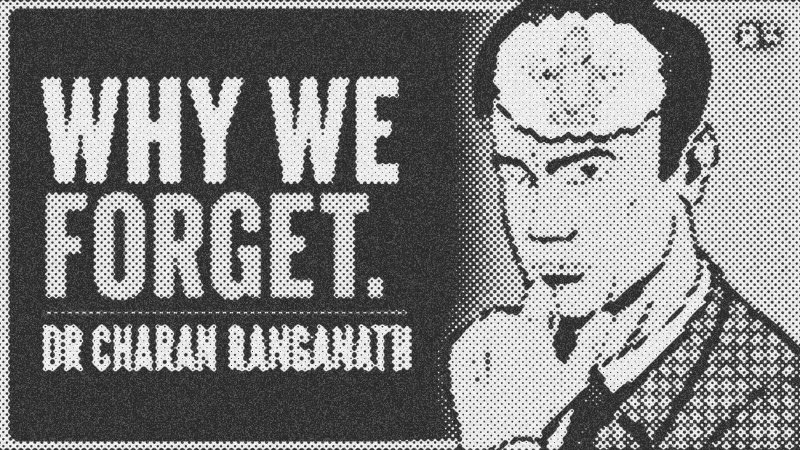
Most people view memory as a dusty filing cabinet, a place where the past goes to be stored and, more often than not, misplaced. We lament the forgotten name or the lost set of keys, seeing these lapses as failures of a system meant to record our lives. However, Charan Ranganath suggests that this perspective is fundamentally flawed. Memory is not actually about the past; it is a vital tool for navigating the present and imagining a possible future. It is the central nervous system of our identity, allowing us to understand our position in space and time. When this system falters, as seen in patients with severe memory disorders, the tragedy isn't just the loss of yesterday. It is the inability to function today—forgetting if they have eaten or losing the capacity to plan a simple afternoon.
Your greatest power lies in recognizing that memory is a selective process designed by millennia of evolution. It is not intended to be a literal transcript of every waking second. Instead, it is a curated collection of data points that help you survive and thrive. By shifting your focus from "remembering more" to "remembering better," you begin to see memory as a co-pilot rather than a burden. This shift in mindset is the first step toward building a more resilient, intentional life. Memory is the lens through which we interpret every current interaction and the engine we use to simulate what comes next.
The Dual Self: Experience Versus Recollection
There is a profound tension between the self that lives through an event and the self that remembers it. Drawing on concepts popularized by Daniel Kahneman, the distinction between the experiencing self and the remembering self reveals why our life satisfaction often feels disconnected from our daily reality. The experiencing self exists only in the now, moving through the vast majority of life's moments which are destined to be forgotten. In contrast, the remembering self is the storyteller. It has access to only a tiny fraction of what actually occurred, yet it is this version of the self that makes all our future decisions.
Consider a vacation. The experiencing self might endure hours of flight delays, humidity, and mediocre meals. Yet, if the trip ends on a high note or includes a few highly distinctive, positive moments, the remembering self will label the entire trip a success. We choose our future paths based on these edited highlights, not the raw footage of our lives. While this might seem irrational, it is actually a survival mechanism. Accessing the totality of our experiences—a phenomenon seen in those with Highly Superior Autobiographical Memory—can be a form of torture. These individuals are often plagued by every minor negative detail from years ago. A healthy mind is a minimalist packer; it carries only the essential tools needed for the journey ahead.
Decoding the MEDIC Framework for Lasting Impressions
To bridge the gap between experience and recollection, we must understand the specific variables that cause a memory to stick. The MEDIC acronym serves as a psychological toolkit for intentional living. Each letter represents a lever you can pull to increase the likelihood of retention and the quality of your personal narrative.
Meaning and Error-Driven Learning
Meaning is the bedrock of memory. It is why a basketball expert like LeBron James can recall specific plays from a decade ago with surgical precision. He isn't memorizing random movements; he is slotting information into a pre-existing structure of deep knowledge. To remember something new, you must hook it onto something you already understand. Error, conversely, is the productive struggle of retrieval. When you find it difficult to recall a name and then eventually find the answer, your brain repairs and stabilizes that memory. This is why active testing is infinitely more effective than passive reading. Struggle is not a sign of failure; it is the sound of your brain updating its software.
Distinctiveness, Importance, and Context
Distinctiveness explains why mindlessly filming a concert on your phone often erases the memory of the event itself. When you are not immersed in the unique details, the experience becomes a blur. To create a lasting memory, you must seek out the features that make a moment different from any other. Importance is driven by our internal chemistry—dopamine and noradrenaline—which flag certain events as vital for survival. Finally, Context acts as the filing system. Our memories are glued to specific times and places. This is why walking into a different room can cause you to forget why you went there; you have physically stepped out of the cognitive "folder" where that intention was stored.
The Psychology of Forgetting and Emotional Bias
Forgetting is not always a bug; it is often a feature. There are two primary ways we lose access to information: the physical decay of neural connections or a failure to find the right "cue" to trigger the memory. Much of what we think is gone is actually just hidden, waiting for a specific smell or sound to bring it rushing back. However, we also have a degree of agency over this process. Through a process known as voluntary forgetting, we can suppress certain retrievals, making them harder to access over time.
We must also be wary of how our current mood colors our past. Memory is a recursive loop. If you are in a negative state of mind, your brain will preferentially retrieve negative memories to match your current environment. This creates a vicious cycle, particularly in conditions like clinical depression, where rumination reinforces a dark worldview. By consciously forcing the retrieval of even a single positive memory—like a good sandwich or a brief pleasant conversation—you can shift your emotional context and gain access to a wider, more balanced set of past experiences. You are not a passive observer of your past; you are its active editor.
Actionable Strategies for Mindset Mastery
If you want to train your memory, you must first stop sabotaging it. Multitasking is the primary malady of our age, acting as a direct memory blocker. When you divide your attention, you fail to encode the distinctive details required for the MEDIC framework to function. To remember your life as it happens, you must set an intention. Before an important event, ask yourself: "What is the one thing I want my remembering self to take away from this?"
Focus on sensory details—the smell of the air, the specific hue of the sunset, or the feeling of a hand on your shoulder. These sensory anchors are much more effective than abstract thoughts. Furthermore, embrace the "done list" or "well-done list" at the end of each day. By reflecting on small wins, you are practicing retrieval and strengthening the neural pathways associated with competence and gratitude. This isn't just about feeling good; it is about building a database of evidence that your future self can use to make confident, informed decisions.
Conclusion: The Evolution of the Self
Memory is the thread that weaves our individual moments into a coherent identity. It is a dynamic, shifting landscape that responds to our curiosity and our focus. By understanding the neuroscience behind how we remember, we move away from the frustration of forgetting and toward the empowerment of intentional living. The future belongs to those who can effectively synthesize their past experiences to create new, innovative predictions. As you move forward, treat your memory as a co-pilot. Invest in experiences that are worthy of recollection, embrace the struggle of learning, and remain fiercely curious. Your life is not the sum of what happened to you; it is the sum of what you choose to carry with you into the next moment.
- Charan Ranganath
- 8%· people
- Daniel Kahneman
- 8%· people
- Episodic Memory
- 8%· concepts
- Error-Driven Learning
- 8%· concepts
- Highly Superior Autobiographical Memory
- 8%· concepts
- Other topics
- 58%
The Neuroscience Of How To Improve Your Memory & Focus - Dr Charan Ranganath
WatchChris Williamson // 1:12:15
