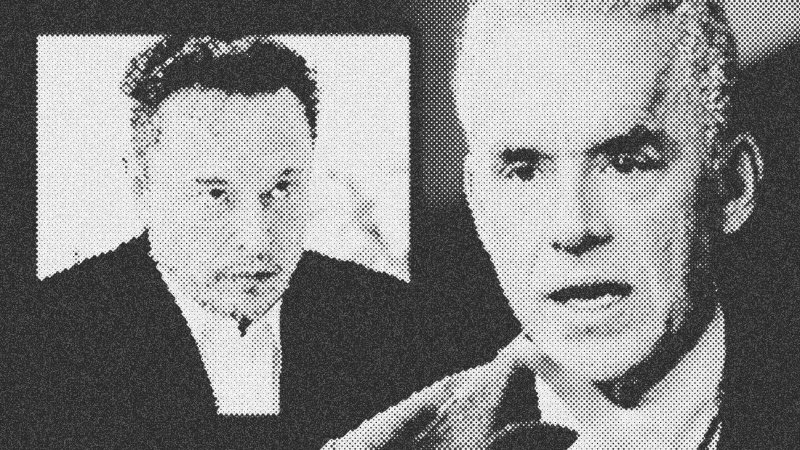
Jordan Peterson says most people couldn't handle Elon Musk's 'storm' mind
The crushing weight of high-level genius
Elon Musk recently described his internal state as a "storm," a sentiment Jordan Peterson interprets as a sign of hypermania. This isn't just about being smart; it’s about a rate of thought so aggressive it borders on pathological. While admirers see the rockets and the wealth, the internal reality is often a relentless barrage of ideas that refuse to settle. Jordan Peterson argues that the average person lacks the neurological hardware to survive this level of mental velocity without breaking.
Verbal fluency as a window into the manic edge
Psychologists measure this intensity through verbal fluency tests. Most people can list a dozen words starting with a specific letter in three minutes. Those at the Elon Musk level produce 150. This speed correlates directly with lifetime creative achievement but carries a heavy tax. When the mind moves five times faster than its peers, it enters a hypomanic state. Without strict control, this accelerates into mania—a state where enthusiasm outpaces reality, leading to total financial and personal ruin.
The rare fusion of creativity and conscientiousness
What sets Elon Musk apart isn't just his creativity; it is his terrifying level of conscientiousness. Jordan Peterson notes that there is statistically no correlation between these two traits. Most creative geniuses lack the discipline to execute, while most disciplined engineers lack the vision to innovate. Elon Musk represents a one-in-a-billion anomaly who possesses both. His "hypertrophied executive function" acts as a cage for his manic energy, forcing the storm into specific, productive channels like engineering and physics.
The physical cost of a non-stop mind
Living with this brain is an exhausting exercise in self-regulation. Jordan Peterson recalls his own struggle during the writing of Maps of Meaning, where thoughts arrived at 1,200 words per minute for 16 hours a day. He resorted to heavy weightlifting just to force his brain to shut down. This reveals the "dark side" of genius: the constant need for external anchors—be it work, exercise, or substances—to prevent the mind from consuming itself.
- Elon Musk
- 31%· people
- Jordan Peterson
- 31%· people
- Ben Shapiro
- 8%· people
- Eric Weinstein
- 8%· people
- Maps of Meaning
- 8%· books
- Other topics
- 15%
The Dark Side Of Extreme Intelligence - Jordan Peterson
WatchChris Williamson // 7:18
