Butterfield: grand romantic gestures are just displays of emotional dysregulation
The biological trap of the grand romantic gesture
When Norwegian biathlete Sturla Holm Lægreid utilized his Olympic podium moment to confess to cheating and plead for his ex-girlfriend’s return, he wasn’t just performing a high-stakes romantic stunt; he was exhibiting a textbook case of acute emotional dysregulation. Dr. Max Butterfield, an experimental psychologist, suggests that such public displays of "social suicide" are rarely the result of rational planning. Instead, they represent a desperate attempt to quiet an internal storm. When we are slighted or abandoned, the brain enters a fight-or-flight state that narrows our cognitive horizons. We stop looking for what is effective and start looking for what is loud.
From a scientific perspective, the "grand gesture" is often a fundamental miscalculation of human receptivity. It assumes that the intensity of the sender's pain should dictate the receiver's response. However, for the person who has been cheated on or wronged, this sudden, explosive re-entry into their life doesn't feel like love—it feels like further instability. Max Butterfield compares this to trying to rescue a scared cat hiding under a car. If you dive under and grab it by the tail, the cat will flee and likely never return. Rebuilding trust requires a slow, predictable approach that signals safety, not a high-octane performance that demands an immediate emotional payout to settle the performer's own anxiety.
Why breakups feel like physical death to the brain
The neurological impact of a breakup is not merely a "sad feeling"; it is a comprehensive system failure of our attachment machinery. Our regulatory systems are remarkably blunt instruments. The same biological circuitry that fires when we are chased by a predator activates when we experience the loss of a primary attachment figure. Whether it is the death of a grandmother or the end of a six-month relationship, the brain processes the absence as a threat to survival. This explains why people who are otherwise rational suddenly find themselves unable to eat, sleep, or focus on basic tasks. The "attachment wound" is the exact shape and size of the missing person, and the brain believes that only slotting that specific person back into place will stop the pain.
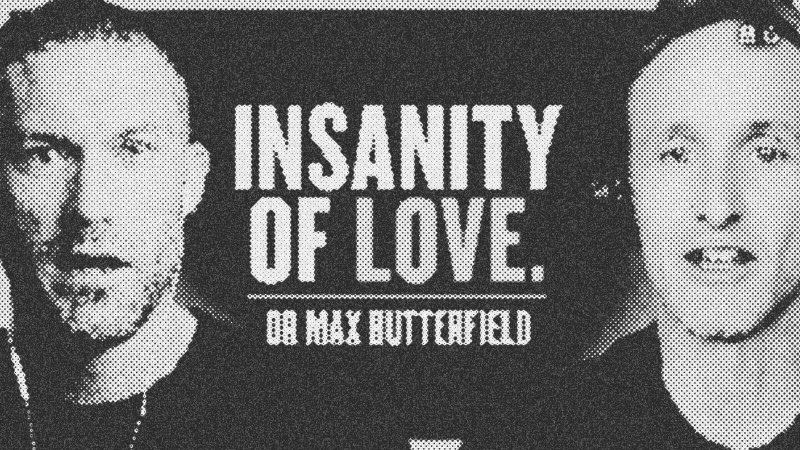
To recover, one must recognize that the brain is essentially going through withdrawal. Max Butterfield advocates for "healthy distraction" as a primary recovery tool. This is not about avoiding feelings, but about giving the nervous system a chance to down-regulate. Activities like lifting heavy weights, long-distance running, or even deep immersion in video games serve a physiological purpose: they tire the body out and force the mind to inhabit fresh territory. Every night of actual sleep is a win for the nervous system, allowing it to begin the long process of recalibrating a baseline that does not include the former partner.
The evolutionary utility of the rumination loop
Rumination is often viewed as a cognitive defect, yet it persists because it once served an evolutionary function. If a primitive ancestor accidentally cut off a finger with a sharp rock, a brain that ruminated on that mistake—"remember that time I smashed my finger, don't do that again"—was more likely to survive. In the context of modern relationships, the mind abhors uncertainty and ambiguity. Anxiety thrives in the space between "what happened" and "what does this mean for my future?" To close that loop, the brain would rather imagine a catastrophe than deal with the unknown. By ruminating, we are essentially trying to solve a problem that has no current solution, effectively "collapsing the superposition" of all possible bad outcomes into one manageable, albeit painful, story.
However, the brain is also a "cognitive miser," preferring the path of least resistance. Once a neural pathway for rumination is established, it becomes easier to use that path again and again. To break the loop, Max Butterfield suggests "chipping away" at the thoughts rather than trying to overpower them. If you are convinced your ex is living their best life, simply introduce a tiny bit of counter-possibility: "How do I know they didn't step in gum today?" This small act of cognitive flexibility disrupts the pattern. Physical changes to routine are equally vital. If you wake up and immediately ruminate while looking at your phone, you must put the phone in the garage before bed. You cannot out-think a pattern you are physically reinforcing.
Rejection sensitivity and the distorted social lens
High rejection sensitivity is a lens that causes individuals to see abandonment even in neutral interactions. For someone high in this trait, a delayed text response isn't just a busy friend; it is an active rejection that demands a pre-emptive strike. "He hasn't texted me back in an hour, so he clearly hates me; I'll show him by never speaking to him again." This creates a turbulent social environment where the individual is constantly reacting to ghosts. Max Butterfield notes that this trait is frequently found in constellations of neurodivergence, such as ADHD or autism, and can lead to a self-fulfilling prophecy of social isolation.
Developing self-compassion is the primary antidote, yet it remains one of the hardest skills to teach. Research by figures like Kristin Neff suggests that there is a massive disparity between how we judge others and how we judge ourselves. We can easily forgive a friend for a mistake, but we view our own errors as permanent stains on our character. One effective intervention is writing a letter to oneself from the perspective of a friend. By externalizing the advice, we bypass the shame-heavy circuitry of the internal critic and allow more rational, compassionate thoughts to take root.
The Armani suit effect and intrasexual competition
Human attraction is rarely as simple as "liking" someone's personality; it is deeply influenced by status signaling and intra-sexual competition. A classic study cited by Max Butterfield demonstrates that a man wearing an Armani suit is rated as significantly more attractive and "mate-worthy" by women than the exact same man wearing a Burger King uniform. Interestingly, this effect does not replicate when men rate women; men generally find an attractive woman appealing regardless of whether she is in business attire or a fast-food uniform. This suggests that women’s attraction is more sensitive to cues of resource acquisition and social power.
Furthermore, much of how women dress and groom is directed at other women, not men. In the social hierarchy of female competition, beauty standards serve as a way to guard mates and signal status. Men often remain oblivious to these nuances—rarely noticing a specific brand of bag or the intricacy of a manicure—yet the competition remains fierce. This "panopticon" of judgment is often coming from within the same gender. If men and women understood how little the opposite sex actually cares about their niche status symbols—be it Birkin bags or specific BMW exhaust tips—they might reallocate their efforts toward more effective signaling, such as direct communication and emotional stability.
Identifying the green flags of emotional stability
While the internet is obsessed with "red flags," Max Butterfield and colleagues like David Buss emphasize the paramount importance of emotional stability as a "green flag." The key metric is not how often someone gets upset, but the duration of their "return to baseline." Everyone becomes dysregulated; the question is how quickly they can burble back down to a calm state after a flight is delayed or a dinner plan falls through. A partner who can sit with uncertainty without lashing out is worth more than one who performs grand gestures but remains a volatile actor in daily life.
Beyond stability, traits like conscientiousness and agreeableness are high-value indicators. However, personality is not a static mandate; it is situation-specific. Max Butterfield argues that we shouldn't just look for a fixed set of traits, but for "trajectory" and cognitive flexibility. Is this person open to growing? Can they handle the inherent ambiguity of adulthood? Adulthood, contrary to childhood expectations, creates more uncertainty, not less. Finding a partner who can navigate that fog without needing "magic spells" or universal rules is the hallmark of a healthy, evidence-based relationship.
- Max Butterfield
- 38%· people
- Armani
- 5%· companies
- Birkin
- 5%· products
- Burger King
- 5%· companies
- Chris Williamson
- 5%· people
- Other topics
- 43%
The Internet is Clueless About Relationships - Dr Max Butterfield
WatchChris Williamson // 1:39:48
