The Anatomy of Tyranny: Understanding the Modern Dictator
The Great Paradox of Modern Power
History is not merely a record of dates; it is a map of the human psyche under pressure. The 20th century serves as a profound laboratory for this exploration. We see two distinct, clashing currents: one pushing toward the separation of powers and the fragile beauty of civil society, and another pulling toward the total concentration of power in a single individual. This latter trend birthed the modern dictator, a figure who—unlike the kings of old—must navigate the age of democracy.
Dr. Frank Dikötter, in his analysis of history’s most effective autocrats, reveals a startling truth: the modern dictator does not claim divine right. Instead, they claim to be the ultimate expression of the people's will. This creates a permanent tension where the regime must use the tools of the 18th-century revolutions—elections, popular sovereignty, and mass movements—to mask a fundamentally anti-democratic reality. To understand a dictator is to understand the art of the illusion.
The Cult of Personality as a Survival Mechanism
A dictator’s power rests on two pillars: terror and the cult of personality. While the secret police and concentration camps provide the necessary coercion, terror is a blunt and expensive instrument. It is far more efficient to manufacture the appearance of consent. This is why we see the obsessive propagation of the leader's image. From Mao Zedong to Kim Il-sung, the goal remains the same—to force the population into a state of "perpetual enthusiasm."
This cult serves a specific psychological function for the inner circle. In a world where power is seized through violence, the leader lives in a state of chronic paranoia. By forcing rivals and allies to publicly acclaim him with hyperbolic praise, the dictator forces them to lie. When everyone lies, it becomes impossible for potential rebels to find each other or gauge true levels of dissent. The cult of personality is not just about vanity; it is a sophisticated method of breaking trust between people, ensuring the leader remains the only fixed point in an ocean of manufactured loyalty.
The Opportunist’s Journey
We often wonder if these figures are born with a grand design for tyranny or if they are simply careerists who found an opening. The evidence suggests they are hard opportunists. Adolf Hitler turned the failure of the 1923 Beer Hall Putsch into a propaganda victory by using the courtroom as a stage. He possessed a true instinct for power, treating politics as performance art. These leaders are rarely rigid ideologues; they are pragmatists who will flip a creed on its head if it secures their position. Kim Il-sung eventually edited Marxism out of his own constitution, replacing it with a doctrine of self-reliance that centered entirely on his own person. In the end, the only ideology that matters to a dictator is their own survival.
The High Cost of Absolute Control
Maintaining a dictatorship is an exhausting, 24-hour endeavor that often leads to a specific type of psychological collapse. Benito Mussolini attempted to manage half a dozen ministries simultaneously, even dictating the color of women's magazine covers. This level of neuroticism stems from a refusal to delegate. To delegate is to empower a potential rival, and in the shark tank of an autocratic regime, the "Number Two" is the most dangerous position to hold.
This leads to a fascinating metadata of behavior: the dictator must be a master actor, but they also require the population to become actors. In North Korea, the performative grief seen upon a leader's death is a survival tactic. People learn how to jump to attention and chant slogans to avoid being shot. This creates a society where two realities exist simultaneously—the public show of unification and the private, hidden life where a person might finally open a bottle of wine to celebrate a tyrant’s demise.
The Geopolitical Context of the 20th Century
It is easy to forget how recently the world was dominated by these figures. Until the mid-1970s, even Western Europe was not entirely democratic. Countries like Portugal under António de Oliveira Salazar and Spain under Francisco Franco were run by repressive regimes. The 20th century was a century of dictators, from the rural poverty of Haiti under Papa Doc Duvalier to the industrial war machine of the Soviet Union.
Each regime was tailored to its local culture. Mengistu Haile Mariam in Ethiopia absorbed the "charisma" of the Emperor he deposed, quite literally placing his desk over the spot where he reportedly had the former ruler buried. These leaders do not just take power; they consume the existing cultural symbols to make their rule feel inevitable.
Resilience and the Future of Democracy
Are we seeing a resurgence of these figures today? While terms like "dictator" are often thrown around in modern political discourse, we must maintain perspective. In a true dictatorship, you cannot criticize the leader without vanishing. The hallmark of the 21st century is the resilience of checks and balances. Every time a dictator falls, democracy fortifies its institutions.
However, technology has changed the game. While we once hoped the internet would be a tool for liberation, regimes like the People's Republic of China have used it to create an Orwellian system of monitoring. Xi Jinping oversees a regime where the party is present at every level of society, from business to academia. This represents a "clash of civilizations" between the open world and the total state.
Conclusion: The Breaking Point of Fear
The ultimate fate of most dictatorships is a sudden, often violent collapse. Fear is a powerful fuel, but it is volatile. We saw this in Romania in 1989. Nicolae Ceaușescu stood on a balcony, expecting the usual scripted cheers, only to hear the first boos. In that televised moment, you can see the fear break. Once the collective illusion of support vanishes, the regime typically crumbles within days.
Understanding the mechanics of the dictator is our best defense against their rise. It reminds us that our greatest strength lies in the transparency of our institutions and our refusal to play along with the scripts of power. Growth, whether personal or societal, requires us to step out of the shadows of coercion and into the light of self-awareness and accountability.
- Kim Il-sung
- 9%· people
- Adolf Hitler
- 4%· people
- António de Oliveira Salazar
- 4%· people
- Benito Mussolini
- 4%· people
- Ethiopia
- 4%· places
- Other topics
- 74%
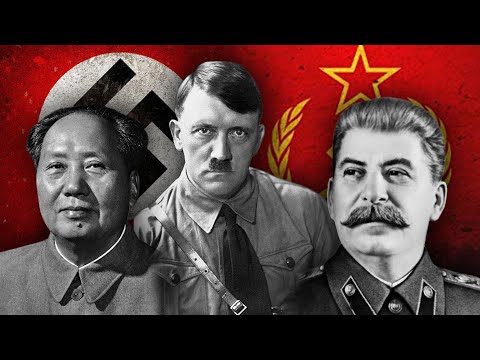
How To Be A Dictator | Frank Dikotter | Modern Wisdom Podcast 102
WatchChris Williamson // 41:41
