Houpert reveals why optimizing your life eventually leaves you empty
The Mirage of the Perfect Inputs
We live in an era obsessed with the mechanics of self-mastery. We track our macros, program our sleep cycles, automate our businesses, and optimize our social interactions. We treat life as a series of engineering problems to solve. This optimization paradigm promises that if you dial in the right behavioral inputs, you will inevitably secure the desired outputs: wealth, status, physical attractiveness, and respect.
Yet, a quiet crisis awaits at the summit of this climb. You achieve the revenue targets, secure the partner you once only dreamed of dating, and build a pristine lifestyle, only to find an unyielding, unexplainable emptiness waiting for you. This is the existential plateau. It represents a fundamental challenge in personal growth: the tools that rescue us from mediocrity eventually become the very cages that prevent our deeper development.
To understand this transition, we must frame it not as a failure of willpower, but as a structural shift in human consciousness. When we begin our journey of self-improvement, we often operate from victim consciousness. We believe our limitations—shyness, financial instability, physical weakness—are fixed traits. When we discover that we can change our behavior to get different results, it feels like a revelation. We read books like The Game or How to Win Friends and Influence People and realize we have agency.
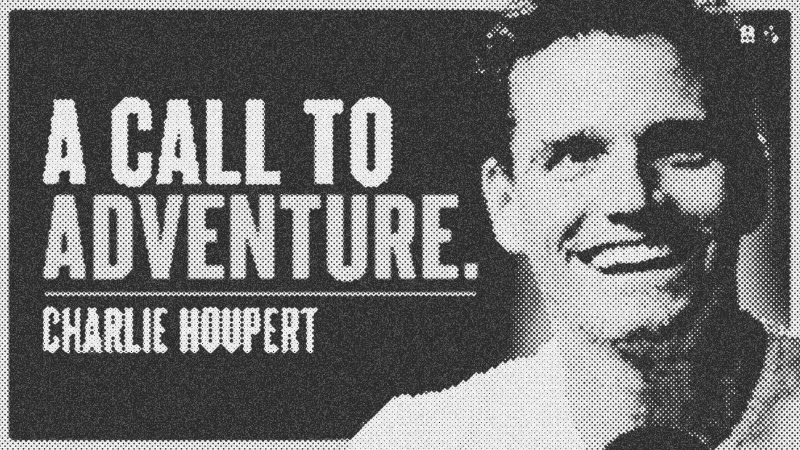
This realization propels us into the hyper-optimized phase. But eventually, this optimization engine runs out of clean fuel. You move the goalposts continuously, yet the void remains. This is where the old self begins to fragment, initiating a painful, chaotic process of shedding an identity that no longer serves your internal reality.
The Four-Tier Pyramid of Human Development
To navigate this shift, we can map human growth onto a four-tier pyramid of attention and development. Each layer represents a deeper level of inquiry, a shift in motivation, and a distinct operating system for interacting with the world. Undergoing this progression requires moving from external metrics of success to internal, subjective states of being.
          /\
         /  \
        / SP \
       /------\
      /  EMO   \
     /--------\
    /   BEH    \
   /----------\
  /    RES     \
 /____________\
1. Results (The Apex of Victim Consciousness)
At the very top of the pyramid is a hyper-focus on outcomes. This is where most people begin. In this stage, our attention remains glued to what we lack. We look at others and wish we had their wealth, their relationships, or their social ease. However, we take no concrete action to alter our reality. We talk, complain, and plan in our heads, but our behavior remains unchanged. We want the trophy without the training.
2. Behavior (The Optimization Engine)
When we drop down to the behavioral tier, we make a massive evolutionary leap. We stop asking, "Why don't I have the result?" and start asking, "What are my behavioral inputs?" We hit the gym, manage our calendars, and build systems. We trade short-term comfort for long-term progress. This is the domain of discipline, willpower, and metrics. It is highly effective at producing real-world outcomes, but it treats the human psyche as a machine to be programmed.
3. Emotion (The Gateway to Presence)
Eventually, the mechanical approach of the behavioral tier bottoms out. You realize you can have every system in place, yet still feel miserable. This is the transition to the emotional tier. Here, you shift your focus from discipline to emotional presence. You stop using rage or anxiety as fuel to drive your actions. Instead, you learn to sit with difficult, uncomfortable emotional states—shame, grief, helplessness, and anger. You begin to understand that emotions are not obstacles to be bypassed, but indicators of your internal state.
4. Spirituality (The Foundation of Belonging)
At the base of the pyramid lies the spiritual or existential tier. This level addresses our deepest wounds: our sense of separation from life, our disconnection from our ancestry, and our lack of systemic belonging. While the behavioral tier asks, "How do I perform?" and the emotional tier asks, "How do I feel?", the spiritual tier asks, "Who am I in relation to the whole?" Accessing this layer requires relinquishing our obsession with control and surrender to a larger reality.
The Cost of Moving Inward
Transitioning down this pyramid is not a smooth, triumphant march. It is a series of ego deaths. At every single level of development, you must sacrifice your current definition of success to pursue a deeper truth. This process reliably triggers what can be termed the "second lonely chapter."
The first lonely chapter is well-known: when you decide to optimize your life, you leave behind your old friends who prefer to remain comfortable. But the second lonely chapter is far more disorienting. It occurs when you outgrow the optimization paradigm itself. Your friends are still firmly entrenched in the achiever phase, conquering the world, moving goalposts, and denying how they feel. When you step off that treadmill to address your emotional and spiritual reality, you will look like you are backsliding.
Your business growth may slow down. Your certainty will waver. You will trade the crisp, socially validated metric of a high income or a perfect physique for the messy, invisible work of emotional processing. The people around you have a massive incentive to keep you exactly where you are. Your evolution throws their lack of change into a harsh spotlight. When you change, you force your relationships into new structures, which triggers fear of abandonment in those close to you. They may consciously or unconsciously try to pull you back, begging you to return to the predictable, optimized version of yourself.
To make matters more difficult, you will experience intense self-doubt. You are trading a system that gave you predictable real-world results for a path that offers no guarantees. It is a profound sacrifice: giving up the lower for the higher without any promise of success.
Reclaiming the Sentient Self
For those standing on the edge of this transition, the path forward requires a radical shift in style. You must move from the masculine mode of initiating, structuring, and ordering to the feminine mode of listening, receiving, and feeling. This does not mean discarding your analytical mind; rather, it means demoting the mind from master to tool.
To begin reintegrating your emotional and intuitive self, implement the following daily and weekly practices:
- Run Intuitive Experiments: Break your hyper-structured routine by choosing activities based entirely on curiosity or aesthetic pull rather than productivity. Play a game simply for the art, write without an outline, or take a walk with no destination.
- Name the Pain with "Ouch": When an interaction or an event hurts you, stop your immediate urge to solve the problem, defend yourself, or optimize a solution. Instead, acknowledge the vulnerability of the moment. Say "ouch" out loud or mentally to allow yourself to experience the raw sensation of being hurt before rushing into action.
- Locate the Ancestral and Natural Disconnect: Spend unstructured time in nature, away from screens and city noise. Reconnect with elements of reality that are durable and slow—the moon, the stars, the trees. This helps quiet the hypervigilance of the analytical mind and opens space for spiritual belonging.
- Attend to Accumulated Emotional Debts: Identify relationships or past conflicts where you prioritized efficiency over emotional truth. Initiate conversations to offer apologies, express withheld feelings, or speak your vulnerability without trying to manage the other person's response.
The Sacred Union of Action and Flow
The ultimate goal of this journey is not to become a passive, detached observer who can no longer function in consensus economic reality. That is a common trap—trading hyper-optimization for a form of spiritual bypassing where you avoid the challenges of life under the guise of being "spiritual."
Instead, the work is to achieve what Carl Jung called the hieros gamos—the sacred marriage of the divine masculine and divine feminine principles within yourself. You want to build an internal vessel strong enough to contain intense emotional and spiritual realities without being destroyed by them, while retaining the capacity to take disciplined, effective action in the world.
When you integrate these two currents, your relationship to achievement changes. You no longer pursue success to fill an internal void or run away from childhood wounds. Instead, your work becomes an act of service. You create beauty, solve problems, and connect with others not to get love, but to radiate the wholeness you have cultivated within. You realize that you cannot avoid bumping your head on life's unteable lessons, but once you step through the dark forest, you emerge with a deeper, indestructible sense of enoughness.
- Carl Jung
- 10%· people
- Charlie Houpert
- 10%· people
- Function
- 10%· companies
- How to Win Friends and Influence People
- 10%· books
- Joe Hudson
- 10%· people
- Other topics
- 50%
How to Survive the Death of Your Old Self - Charlie Houpert (4K)
WatchChris Williamson // 2:17:09
