Beyond Truth: The Psychological Power of Reframing and Useful Beliefs
The Liberation of Useful Beliefs
Most of us spend our lives in a desperate search for objective truth, believing that if we can just find the "correct" way to see the world, our problems will vanish. However, as Derek Sivers argues in his latest work, the pursuit of truth is often less effective than the pursuit of usefulness. This shift in mindset represents a profound change in how we process reality. When we prioritize usefulness over literal truth, we stop asking, "Is this factually accurate?" and start asking, "What happens to my life if I believe this?"
Consider the common struggle with chronic lateness. A person who is "literally true" about time knows it takes exactly twenty minutes to get to the office. Consequently, they leave exactly twenty minutes before their meeting, only to be derailed by a single red light. Conversely, someone who adopts the "useful but untrue" belief that their meeting starts fifteen minutes earlier than scheduled will likely arrive on time. The belief is a lie, but the outcome is a success. This is the heart of Derek Sivers's philosophy: we can deliberately choose beliefs as countermeasures to our natural tendencies.
The Fallibility of Memory and Personal Narrative
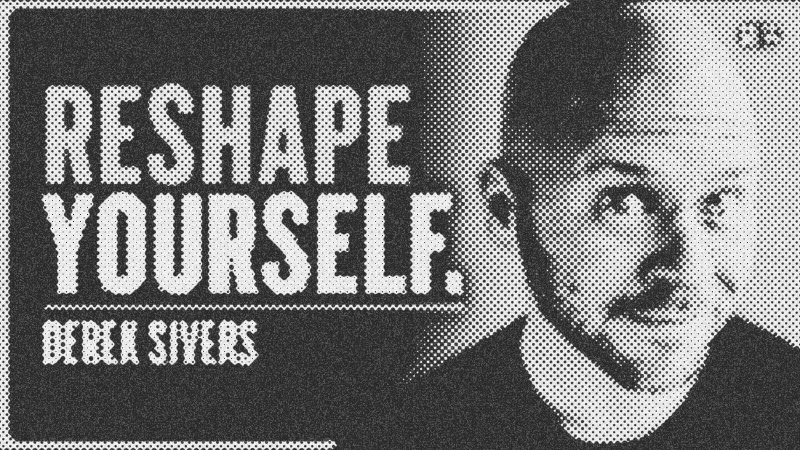
One of the most striking realizations in the journey of self-discovery is that our past is not a concrete, unchangeable record. It is a story we retell ourselves, often with significant errors. Derek Sivers shares a harrowing account of a car accident from his youth where he believed for eighteen years that he had paralyzed a woman. This belief shaped his identity, infusing his life with a constant, heavy burden of guilt. When he finally confronted the reality years later, he discovered the woman was walking perfectly fine and, even more surprisingly, she believed she was at fault for hitting him.
This phenomenon illustrates that two people can experience the exact same event and walk away with two diametrically opposed, yet equally felt, "truths." Our minds act like film editors, as seen in the movie 500 Days of Summer. We select specific frames—the way someone smiled, a brief moment of hand-holding—to support the narrative we want to believe (e.g., "She loved me"). Meanwhile, we edit out the frames where the person looked away or felt uncomfortable. Recognizing this inherent bias in our own memory allows us to detach from the "truth" of our suffering and explore alternative reframes that might offer peace instead of regret.
Reframing as a Strategic Tool
Reframing is not merely a tool for emotional regulation; it is a high-level strategy for navigating life and business. It requires the ability to detach from our first, instinctual reaction to an event. When something happens—a business failure, a rejected proposal, a personal conflict—our initial response is often emotional and defensive. However, by engaging in what psychologists call "Type 2" thinking—effortful, deliberate analysis—we can brainstorm multiple ways to view the situation.
Derek Sivers highlights techniques used by Tim Ferriss to illustrate this. Tim Ferriss intentionally seeks out critical reviews of books or hires journalists to find flaws in his ideas. This is a counter-intuitive reframe: instead of looking for validation, he looks for discouragement. By reframing criticism as a protective filter rather than an attack, he builds more resilient projects. The goal is to push past the first three obvious interpretations of an event and reach the "edges" of thought, where radically different and more effective strategies reside.
The Illusion of Social and Internal Truth
We often treat social rules and even our own internal thoughts as if they were laws of physics like gravity. In reality, most social structures are arbitrary. A striking example from American history is the creation of the United States Constitution. Many delegates originally assumed the country would have a council of multiple presidents. The decision to have only one president passed by a narrow 7-3 vote. This reveals that the bedrock of modern society is built on a "useful" decision, not a fundamental truth. Rules exist to help the system run smoothly, but they are guidelines, not absolute mandates.
More importantly, we must realize that our own brains are unreliable narrators. Psychological studies on split-brain patients show that the brain will "confabulate" or invent reasons for actions after the fact. If a patient is told to close a door via a message to only one hemisphere, and then asked why they did it, they won't say "I don't know." Instead, they will make up a plausible reason, such as "I felt a draft." We all do this. We attribute deep, logical reasons to our career choices or relationship moves, when in reality, we are often driven by subconscious impulses. The wise path is to stop asking "why" and focus solely on our actions. If our brain is going to lie to us anyway, we might as well provide it with a narrative that makes us more effective.
Building a Diversified Thought Portfolio
Just as an investor diversifies their financial assets to mitigate risk, we should maintain a "diversified thought portfolio." Most people fall into the trap of tribalism, adopting a single, narrow worldview that they defend with high emotionality. However, the more emotional a belief is, the less likely it is to be an objective truth. Emotion is usually a sign that a belief is tied to identity rather than evidence.
To build resilience, we must seek out uncorrelated worldviews. Derek Sivers describes his efforts to learn from people whose perspectives are as far from his own as possible—such as an emirati man with 1,800 years of family history or an evangelical father with eight children. When we can inhabit these different shoes, we gain a massive competitive advantage. We no longer feel threatened by opposing views; instead, we see them as additional tools in our mental toolbox. We can use Stoicism when we need to endure hardship and Skepticism when we need to evaluate a new business deal. We are not our beliefs; we are the composers using these beliefs as instruments to create the life we want.
The Practice of Deliberate Action
Ultimately, the philosophy of "Useful Not True" leads back to the primacy of action. There is a common obsession with "authenticity"—the idea that we must always act according to our inner feelings. However, Derek Sivers argues that authenticity is often a cage. If your "authentic" self is an introvert who is afraid of public speaking, that identity prevents growth.
Instead, we can follow Kurt Vonnegut's advice: "We are what we pretend to be, so we must be careful about what we pretend to be." By pretending to be a social person for an hour, you are being social. By pretending to be a patient parent, you are being a patient parent. The internal struggle or the feeling of being an "imposter" is irrelevant to the world. The world only experiences your output. When we judge ourselves by our actions rather than our intentions or feelings, we regain control. We can choose the mask that serves the moment, knowing that the mask, if worn long enough, becomes the most useful version of ourselves.
- Derek Sivers
- 23%· people
- Tim Ferriss
- 8%· people
- 500 Days of Summer
- 4%· movies
- AJ Jacobs
- 4%· people
- CD Baby
- 4%· organizations
- Other topics
- 58%
The Life-Changing Power Of Changing Your Perspective - Derek Sivers
WatchChris Williamson // 2:02:52
