Rick Glassman: why your people-pleasing is actually a selfish survival tactic
The Hidden Cost of Relational Condoms
Social interaction often feels like a performance where we wear metaphorical armor to protect ourselves and others from the discomfort of our true nature. Rick Glassman describes this phenomenon as "wearing a condom" in a friendship. We filtered our responses, suppressed our quirks, and avoided direct communication to ensure the other person remains comfortable. However, this safety comes at the expense of presence. When you are hyper-focused on the barrier between you and another person—much like being aware of a contact lens in your eye—you cannot truly be with them.
The challenge lies in the fact that many of us fear that our unvarnished selves are "too much." We worry that our sensitivities, whether they are sensory issues like OCD or personality quirks like obsessive punning, will alienate others. But true intimacy, whether romantic or platonic, requires the bravery to be seen without the protective layer. If you cannot tell someone that you are not present, or that you need a boundary set, you are effectively having a "procedural" relationship. You are going through the motions of connection without the soul of it.
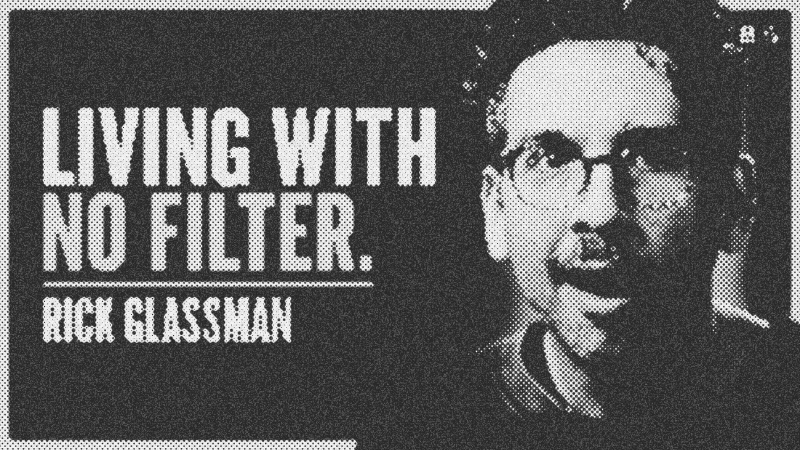
Why Your People-Pleasing is Secretly Selfish
We often label people-pleasing as an act of kindness or selflessness, but it is frequently a strategy for self-protection. When you refuse to tell someone they have a booger in their nose or that they have offended you, you aren't necessarily protecting their feelings; you are protecting yourself from the discomfort of being the person who delivers difficult news. You are managing their perception of you to ensure you remain "the nice one."
This behavior is a form of manipulation because it denies the other person the data they need to navigate the world accurately. If you find someone's jokes offensive but laugh anyway to keep the peace, you are lying to them about the reality of your connection. Rick Glassman argues that we should aim to be as nice as we can be, but "no nicer than we are able to be." Turning yourself into a pretzel to accommodate others eventually leads to resentment and a lack of genuine self-worth because you are never actually being loved for who you are—only for the mask you've crafted.
The Tension Between Self-Acceptance and Growth
The Self-Love movement is a vital correction to a culture of self-flagellation, but it can become a trap if it stops at the point of pathology. There is a fine line between accepting your neuroses and making your quirks everyone else's burden. Chris Williamson notes that the ideal state is a "teeter-totter" of micro-adjustments between accepting who you are today and striving for who you could be tomorrow.
Rick Glassman illustrates this through his own experience with OCD. He requires guests in his home to sit on blankets if they are wearing "outdoor clothes." While he accepts this need in himself, he also recognizes it as a burden on others. The growth happens in the middle: he provides the blankets so people can still visit, but he also works on his internal reactions so that if a guest accidentally sits off the blanket, he doesn't lose his mind. You must love yourself enough to be present, but care about the world enough to refine your edges. If you smooth every spike off your personality, you become a generic shape that anyone can perceive but no one can truly love for its uniqueness.
Calling Out the Game Instead of Playing It
Most social interactions follow a set of unwritten rules—a "game" where we exchange pleasantries like "Good thanks, how are you?" even when we are struggling. Rick Glassman advocates for a radical alternative: calling out the game itself. This involves stepping out of the conversational flow to acknowledge what is actually happening in the room.
If a conversation is boring, or if there is a weird energy shift, most people will just drain their battery trying to force it to work. Calling out the game—saying, "I feel like I'm talking too much," or "I'm not feeling connected right now"—requires immense social bravery. It is the "black belt" level of communication. While it might feel discordant in the moment, it allows for a reset. It moves the interaction from a two-dimensional "flatland" into a three-dimensional space where both participants can be honest. When you acknowledge the rules, you give yourself and the other person the freedom to change them.
The Power of Reverse Charisma
We often think of charisma as the ability to be the most interesting person in the room—the one with the electric aura and the best stories. But there is a more sustainable and impactful form of connection called "Reverse Charisma." This is the ability to make the other person feel like the most interesting person in the room.
This is achieved primarily through the art of asking deep, insightful questions. By being genuinely interested rather than trying to be interesting, you create a space where the other person feels seen. This is a superpower for those who identify as shy or introverted. You don't need to have the perfect punchline; you just need the curiosity to ask, "Why did that make you feel that way?" This shifts the focus from your own performance to the shared experience of the conversation. When you make someone else feel clever and seen, you create a bond that is far stronger than any flashy performance could produce.
Navigating the Trap of Productivity Debt
Many high-achievers suffer from what Chris Williamson calls "productivity debt." This is the feeling that you wake up every morning in the red, having already failed the day before it begins. You feel you must work flawlessly just to get back to a baseline of zero. This mindset is an unrelenting tyrant of the self that prevents any real sense of peace or presence.
To counter this, Rick Glassman suggests a shift toward "presence" as the primary metric of success. Whether he is on stage for a stand-up set or in a recording session, he tells himself that his only responsibility is to be present. If he is present and not funny, he wasn't going to be funny that day anyway. By moving the goalpost from a specific outcome (which you cannot always control) to an internal state (which you can), you relieve the pressure of the "debt" and allow your natural talents to surface without the weight of shame.
Embracing the Spiky Bits of Humanity
Ultimately, the goal of personal growth isn't to become a perfect, frictionless being. It is to become more deeply yourself. We fall in love with people's uniqueness—their "non-fungible" qualities. The stories we tell at funerals aren't about the times someone was perfectly polite or on time; they are about the times they stopped traffic to stop a fight or insisted everyone wear "indoor clothes."
Growth happens one intentional step at a time, but it must be rooted in the recognition of your inherent strength. You are allowed to have boundaries, you are allowed to be sensitive, and you are allowed to be weird. The more you embrace these spiky bits, the more likely you are to find the people whose frequencies actually match yours. Stop trying to please everyone and start trying to find the people who think your "bits" are as funny as you do.
- Rick Glassman
- 26%· people
- Chris Williamson
- 11%· people
- OCD
- 11%· psychology
- Andrew Huberman
- 5%· people
- Jim Parsons
- 5%· people
- Other topics
- 42%
The Case Against Condoms & Fake Friendship - Rick Glassman (4K)
WatchChris Williamson // 2:28:11
