The Evolutionary Architecture of Happiness: Why Satisfaction is Designed to Be Elusive
The Flaw in Our Pursuit of Permanent Satisfaction
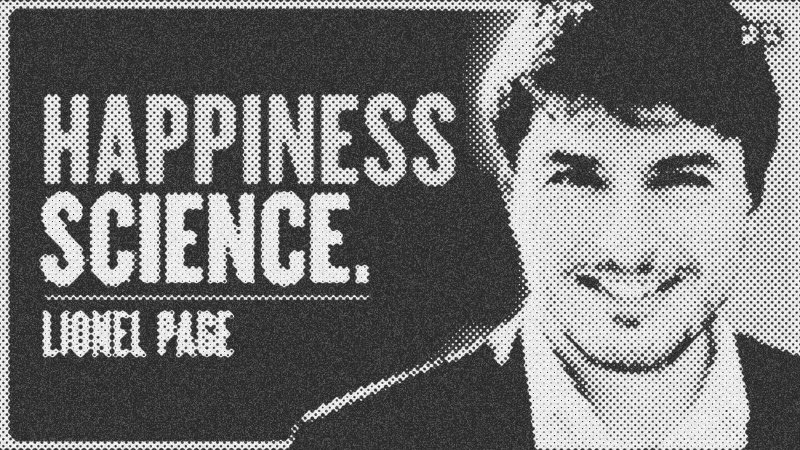
Most of us treat happiness like a destination—a mountain peak where we can finally unpack our bags and enjoy the view. We believe that if we just secure the right partner, the right salary, or the right social standing, we will enter a state of perpetual contentment. However, as Lionel Page suggests, this perspective misses the fundamental design of our psychology. Happiness is not a reward for a life well-lived; it is a sophisticated valuation system built by evolution to nudge us toward behaviors that improved our ancestors' survival and reproductive success.
When we look at the psychological literature, we often see a fragmented picture. One school of thought emphasizes social connection, another suggests the stoic control of desire, and a third advocates for the relentless pursuit of high-performance goals. These are not conflicting truths but different views of the same "elephant." From an evolutionary lens, our subjective feelings are the dashboard of an impersonal biological process. This process doesn't care if we are actually happy; it only cares that we are competitive and successful. If we were designed to be permanently satisfied, we would stop striving. In the harsh environment of our ancestors, a satisfied individual was an easy target for a more motivated rival.
The Relativity of Success and the Social Comparison Trap
We are social creatures to our core, which means our internal sense of well-being is inherently relative. We don't judge our success by absolute metrics; we judge it by looking at the people standing next to us. This is why a billionaire might feel miserable if they are the "poorest" person in an exclusive social circle. Lionel Page explains that we learn what is possible and what we should aim for by observing our peers. If someone from your high school becomes significantly more successful than you, it sends a signal to your brain that you are underperforming based on your shared starting point.
This relativity creates a psychological "advantage of disadvantage." Individuals from lower social backgrounds often experience greater spikes in happiness as they rise because their reference point remains low. Conversely, those born into high-status families face immense pressure; for them, achieving an elite education or a high-paying job isn't a victory—it's merely the baseline for not being a failure. To escape this constant, crushing comparison, many children of the elite move into different fields like art or niche academia where direct comparison with their parents' success is impossible.
Digital Mismatches and the Friendship Paradox
Our evolutionary programming never anticipated the digital age. In a small tribe, you might have been the best hunter or the most skilled artisan, providing a clear sense of status. Today, Social Media forces us to compare our mundane reality against the curated, filtered highlights of the global elite. This creates a massive evolutionary mismatch. We are using ancient hardware to process a high-speed stream of unrealistic data.
Furthermore, we are victims of the "Friendship Paradox." In any network, your friends, on average, will have more friends than you do. This occurs because popular people are simply more likely to be in your social circle. This skew makes your reference point perpetually higher than reality. When you combine this with the fact that people only post their wins, you end up feeling like an outlier in your own life. You are comparing your internal "behind-the-scenes" footage with everyone else's "best-of" reel.
The Moving Goalpost: Why Nature Lies to Us
One of the most frustrating aspects of human psychology is our tendency to move the goalposts the moment we score. This isn't a bug; it's a feature. Nature uses a "if you can, you must" logic. If you achieve a goal easily, your brain realizes you are more talented than it previously assumed. To keep you sharp, it immediately resets your expectations.
This creates the "Focusing Illusion," a concept popularized by Daniel Kahneman. we focus intensely on a single change—like moving to California or getting a promotion—thinking it will be the key to our happiness. In reality, once the change occurs, we habituate. Within six months, the new circumstances become the new normal. We are designed to overestimate how much future success will change our internal state because if we knew the truth—that the destination won't satisfy us—we wouldn't bother making the trip.
Status and the Zero-Sum Game of Happiness
While we habituate quickly to material comforts like better food or a bigger TV, we are much slower to habituate to status. Status remains a primary reward because, throughout history, higher status meant better access to resources and protection. However, status is a zero-sum game. For one person to move up, others must relatively move down. This makes "maximizing national happiness" an impossible task for policy makers if status remains the primary driver of well-being. We can give everyone a fridge, and eventually, the fridge stops being a source of joy. But we cannot give everyone the highest status in the room.
Meaning vs. Pleasure: The Conflict Across Time
A critical distinction in psychological health is the tension between short-term hedonic signals and long-term life satisfaction. Pleasure is about the "now"—the meal, the video game, the immediate comfort. Meaning is about the "then." It is the feeling that we are on a trajectory toward a successful life, often requiring us to sacrifice current pleasure for future standing.
Lionel Page notes that many modern struggles, particularly for young men, stem from the overabundance of "fake" status rewards in the form of video games or digital validation. These provide immediate dopamine but no long-term capital. When we look back on our lives, we don't care about the hours of pleasure; we care about the challenges we overcame and the contributions we made. A life of pure pleasure often leads to a mid-life crisis of meaning because the brain's long-term evaluation system realizes the "player" has not actually moved forward on the board of life.
Conclusion: Navigating the System
Understanding that your brain is not designed to make you happy, but rather to make you effective, is the first step toward true resilience. We are the descendants of the most anxious, neurotic, and driven overachievers in history. By recognizing that our feelings of inadequacy or the urge to compare ourselves to others are just ancient survival signals, we can begin to choose our goals more intentionally. Growth happens when we align our short-term actions with the long-term signals of meaning, accepting that while the "carrot" will always move, the act of striving is what keeps us human.
- Lionel Page
- 27%· people
- Andre Agassi
- 9%· people
- Dan Gilbert
- 9%· people
- Daniel Kahneman
- 9%· people
- Glenn Loury
- 9%· people
- Other topics
- 36%
The Invisible Psychology Of Happiness & Meaning - Lionel Page
WatchChris Williamson // 1:27:50
