The Mask of Success: Navigating the Silent Storm of High-Functioning Depression
The Fatal Dose of Contrast
Many of us move through life performing a version of ourselves that we believe the world demands. We internalize the expectations of our industries, our social circles, and our families until the reflection in the mirror feels like a stranger. For Chris Williamson, this realization didn't come in a moment of quiet meditation, but through a "fatal dose of contrast" while filming Love Island. Surrounded by people who naturally embodied the party-heavy, shallow persona he had spent ten years simulating as a club promoter, the internal disconnect became unbearable.
This gap between the internal self and the external performance is where psychological distress often takes root. When your success is built on a foundation of "acceptability over honesty," you create a glass ceiling for your own well-being. You might be winning by every measurable metric—followers, business growth, social status—while drowning in a nebulous sense of dread. This is the hallmark of high-functioning depression: the ability to maintain the facade while the core is crumbling. Recognizing that your life is a performance is the first, albeit painful, step toward reclamation.
The Shame of the Undeserved Struggle
One of the most insidious aspects of mental health struggles is the shame associated with feeling defeated by "nothing." We often tell ourselves that because we haven't experienced a singular, catastrophic trauma, our low moods are illegitimate. This creates a feedback loop of guilt: you feel bad, and then you feel bad for feeling bad when your life looks perfect on paper. This shame is what keeps people trapped in bed for days, hiding behind the independence of being their own boss because there is no one to hold them accountable.
Chris Williamson describes this as being at the mercy of an experience you don't even understand. You might experience shaking hands and assume you’re just cold, only to realize years later it was a localized anxiety attack. The refusal to name the struggle—to type "what is depression" into a search engine—is a defense mechanism against the perceived weakness of vulnerability. Breaking this cycle requires a radical shift in perspective: acknowledging that vulnerability isn't a lack of strength, but the highest form of it.
Rebuilding the Biological Foundation
Before we can tackle the complex psychological narratives that drive our behavior, we must address the biological house they live in. It is impossible to think clearly or feel emotionally stable when your body is built out of "Budweiser and Domino's." True resilience starts with the unglamorous work of physiological regulation. This means establishing a consistent sleep-wake cycle, prioritizing seven to eight hours of rest, and fueling the brain with actual nutrition rather than convenience.
Consistency in physical movement, such as CrossFit, provides more than just aesthetic benefits; it offers fresh air, open spaces, and a domain of competence outside of work. These fundamentals aren't just "self-care" buzzwords; they are the baseline requirements for emotional regulation. When your biological foundation is stable, you gain the clarity needed to begin the harder, more ephemeral work of self-discovery. You move from a state of constant survival to a state where introspection is finally possible.
The Practice of Truth-Telling
At the core of a fulfilling life is the enactment of the logos—the commitment to speaking your truth forward. For years, many of us play the game of saying what is typical rather than what is true. We dumb ourselves down to fit in, or we adopt the rhetoric we think others want to hear. But the truth acts as a superpower; it insulates you from the exhausting labor of maintaining a lie.
Learning to be honest about your vulnerabilities, your interests, and your boundaries changes the quality of your relationships. It moves them from transactional encounters to sacred connections. As Jordan Peterson suggests, being friends with people who want the best for you is a prerequisite for growth. True friends aren't "yes-men" who feed you sugary comforts; they are the people who hold you to a high standard and tell you what you need to hear, even when it’s uncomfortable. Every time you compromise on your principles for the sake of fitting in, you lose a piece of your self-respect. Reclaiming that respect starts with a commitment to honesty, both with others and with yourself.
Curating the Inner Universe
We are teleological beings—we are designed to move toward a target. Without goals, we drift into the void. This makes the curation of our mental environment essential. In a world of infinite digital noise, we must be intentional about the content we consume. Shifting away from mindless scrolling and toward "crushing amounts of appropriate content" can rewire your perspective. Deep diving into the works of thinkers like Johann Hari on the causes of depression or Matthew Walker on the science of sleep provides the instruction manual that our brains didn't come with.
Growth happens when you spend time around people and ideas that challenge your cognitive biases. It involves turning over the "dirty stones" of your psyche—looking at the terrifying, disgusting parts of yourself and choosing to integrate them rather than hide them. This isn't a quick fix or a "cheat code" for happiness; it’s a daily practice of gratitude, goal-setting, and habit formation. Your inner universe is as vast as any galaxy, and it deserves the same level of exploration and respect.
The Path to Self-Actualization
You are not a finished product, and you are not a victim of your biology. While the medical model often suggests that depression is merely a chemical imbalance you must manage with medication, your environment and habits are powerful levers for change. You may not have unlimited happiness in your back pocket, but you have the capacity to choose your principles and stick to them, no matter the situation.
If you are struggling, start with the smallest possible domain of competence: clean your room. Tidy your immediate environment. Set one goal for tomorrow. Seek out communities that share your deeper interests, whether in person or online. Most importantly, stop acting out a role that doesn't belong to you. The path to a virtuous, fulfilling life isn't found in avoiding the storm, but in building the internal resilience to navigate it with your eyes wide open. You have the power to change your story, one truthful word at a time.
- 12 Rules for Life
- 10%· books
- Chris Williamson
- 10%· people
- CrossFit
- 10%· products
- Johann Hari
- 10%· people
- John Devitt
- 10%· people
- Other topics
- 50%
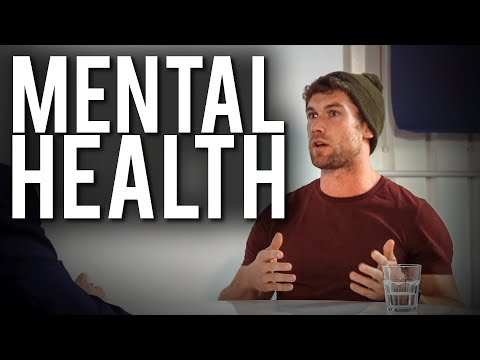
Chris Williamson | My Experience With Depression
WatchChris Williamson // 43:06
